

How to Choose Hose Reels in Australia for Industrial Applications
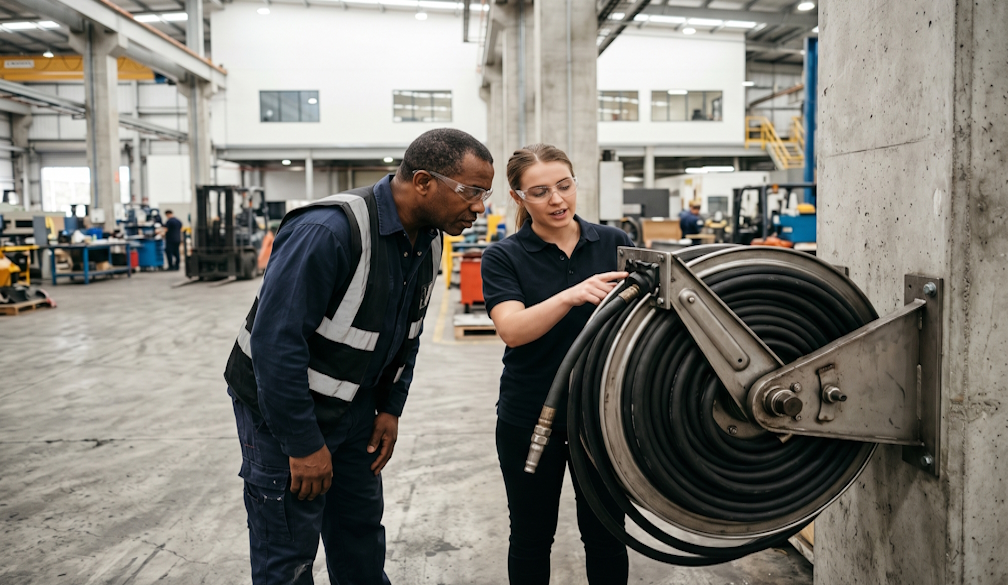
Businesses sourcing hose reels Australia suppliers provide need to assess the products against their own operating requirements. A reel used for a workshop air line may have very different demands from one used for washdown, manufacturing, mining or fluid transfer. Begin with the hose’s length, diameter and weight, then confirm the working pressure, temperature and substance being carried.
An industrial hose reel should suit the equipment and process it supports, not simply fit the available space. Reel Tech supplies hose and cable reel solutions for industrial customers, including standard and customised options. Clear application details make it easier to compare relevant products and avoid choosing a reel that is unsuitable for the duty.
Compare capacity and operating limits
Capacity should be checked against the exact hose specification. Confirm that the drum can accommodate the full hose length and weight, and check the recommended bend radius to avoid tight winding. A reel that is too small for the hose can be difficult to operate and may contribute to premature wear. The hose should deploy and return along a practical path without being dragged across sharp edges. Buyers comparing hose reels australia suppliers offer should confirm capacity against the hose specifications.
Pressure and temperature ratings are equally important. The reel, hose, fittings and swivel connections must be appropriate for the application as a complete assembly. If the hose carries chemicals, hot water, oil or another specialist medium, confirm compatibility before purchase. Product descriptions may summarise intended uses, but the technical specifications should guide the final decision. When sourcing hose reels australia sites depend on, verify technical data before ordering.
Select materials for the environment
Material choice depends on the conditions around the installation. Steel can provide strength for demanding settings, and protective coatings may help limit corrosion. Stainless steel may be appropriate where cleaning routines or corrosive exposure are key considerations. Aluminium can be useful where a lighter assembly is preferred. No single material is automatically right for every industrial site. An industrial hose reel should match the site’s cleaning and corrosion requirements.
Assess whether the reel will face outdoor weather, moisture, dust, vibration, chemicals or repeated impact. Also consider whether it will be fixed in place or mounted on a vehicle or skid. The supporting structure needs to carry the loaded reel securely, and the layout should leave sufficient room for operation and service. A site review can identify restrictions that are not obvious from a product listing.
Choose a rewind mechanism and mounting style
Manual, spring, air, electric and hydraulic systems offer different ways to manage hose storage. The most suitable option depends on hose weight, frequency of use, available power and operator requirements. A simple manual system may be adequate for occasional use, while a powered mechanism may be worth considering for heavier hoses or repeated cycles. Hose reels australia buyers compare may use different rewind systems, so check the exact model details.
Mounting also affects usability. Wall-mounted equipment may suit a fixed work bay, while floor, vehicle or skid mounting may be more appropriate in other settings. Position the reel so the hose reaches the required work area without crossing busy routes or bending sharply. Leave access for inspections and ensure controls can be reached without unsafe stretching. Businesses sourcing hose reels australia wide should confirm the mounting arrangement fits the site.
Plan for safe use and routine checks
Proper storage can reduce loose hose on the floor, but operators still need to follow safe work procedures. Train staff to deploy and retract the hose correctly, keep clear of moving parts and use any locking features as instructed. The reel should be secured to a suitable support, and the hose path should not create an obstruction for people or equipment.
Routine checks should cover the hose, couplings, swivel joint, frame, mounting points and rewind system. Look for leaks, cracking, corrosion, loose fixings and inconsistent movement. Any unusual operation should be investigated before the reel returns to service. Maintenance frequency should reflect the operating cycle and site conditions, with inspection records used to help identify recurring problems. An industrial hose reel should be inspected for wear at the hose, fittings, mounting points and rewind mechanism.
Compare suppliers on relevant specifications
When reviewing products, ask for details about capacity, materials, operating limits, rewind type, mounting requirements and compatible accessories. Also consider how the reel will be inspected and maintained and whether a standard configuration can meet the job requirements. If the application is unusual, share measurements and operating details with the supplier before requesting a recommendation. Compare each industrial hose reel against the same operating requirements to make the differences clear.
Reel Tech provides standard and customised reel solutions for industrial hose and cable handling. A clear discussion of the intended use can help establish whether an available model is appropriate or a tailored option should be considered. The aim is to select equipment that matches the task, supports controlled hose handling and can be maintained as part of normal site procedures. Reel Tech can help assess whether an industrial hose reel suits the intended application.
