NewsPronto

 
Times Advertising


.

The Conversation

The EPA is banning chlorpyrifos, a pesticide widely used on food crops, after 14 years of pressure from environmental and labor groups

  • Written by Gina Solomon, Clinical Professor of Medicine, University of California, San Francisco
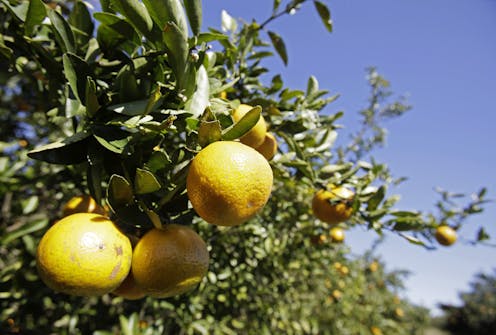
imageChlorpyrifos is widely used on crops, including fruits, vegetables, nuts, corn and soybeans.AP Photo/John Raoux

On Aug. 18, 2021, the U.S. Environmental Protection Agency announced that it will end use of chlorpyrifos – a pesticide associated with neurodevelopmental problems and impaired brain function in children – on all food products...
Read more: The EPA is banning chlorpyrifos, a pesticide widely used on food crops, after 14 years of pressure...

In 'Rumors,' Lizzo and Cardi B pull from the ancient Greeks, putting a new twist on an old tradition

  • Written by Grace B. McGowan, PhD Candidate in American Studies, Boston University

It isn’t often that a pop star releases a music video that aligns so well with my academic research.

But that’s exactly what Lizzo did in her new song, “Rumors.” In it, she and Cardi B dress in Grecian goddess-inspired dresses, dance in front of classically inspired statuary, wear headdresses that evoke caryatids and...

Read more: In 'Rumors,' Lizzo and Cardi B pull from the ancient Greeks, putting a new twist on an old tradition

The fertility industry is poorly regulated – and would-be parents can lose out on having children as a result

  • Written by Naomi Cahn, Professor of Law, University of Virginia
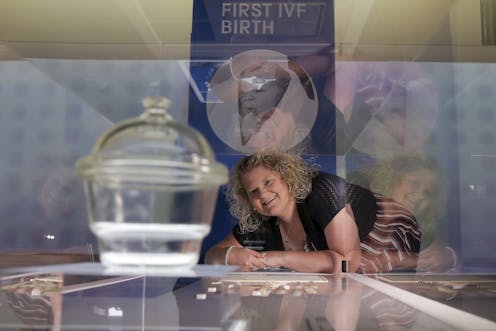
imageLouise Brown, who was the world's first baby to be born from in vitro fertilization (IVF) in 1978, poses with equipment used in early IVF treatments. Daniel Leal-Olivas/ Getty

When embryologist Joseph Conaghan arrived at work at San Francisco’s Pacific Fertility Center on March 4, 2018, nothing seemed awry. He did routine inspections of the...

Read more: The fertility industry is poorly regulated – and would-be parents can lose out on having children...

How would planting 8 billion trees every year for 20 years affect Earth's climate?

  • Written by Karen D. Holl, Professor of Restoration Ecology, University of California, Santa Cruz
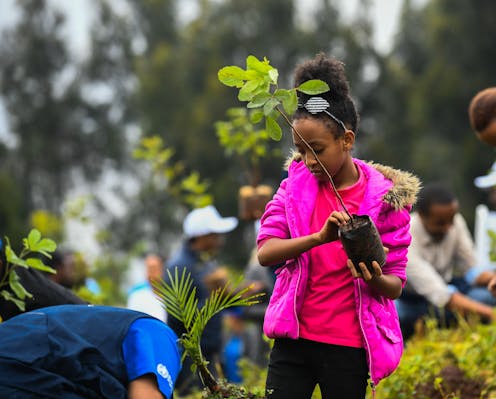
imagePlanting 8 billion trees a year would replace about half of the 15 billion cut down annually.Michael Tewelde/AFP via Getty Imagesimage

Curious Kids is a series for children of all ages. If you have a question you’d like an expert to answer, send it to curiouskidsus@theconversation.com.


If we planted 8 billion trees a year for 20 years, what would...

Read more: How would planting 8 billion trees every year for 20 years affect Earth's climate?

Why the feds are investigating Tesla's Autopilot and what that means for the future of self-driving cars

  • Written by Hayder Radha, Professor of Electrical and Computer Engineering, Michigan State University
imageTesla's Autopilot enables hands-free driving, but it's not meant to allow drivers to take their eyes off the road.Marcus Zacher/Flickr, CC BY-NC

It’s hard to miss the flashing lights of fire engines, ambulances and police cars ahead of you as you’re driving down the road. But in at least 11 cases in the past three and a half years,...

Read more: Why the feds are investigating Tesla's Autopilot and what that means for the future of...

Italy – once overwhelmed by COVID-19 – turns to a health pass and stricter measures to contain virus

  • Written by Sara Belligoni, Ph.D. Candidate in Security Studies, University of Central Florida
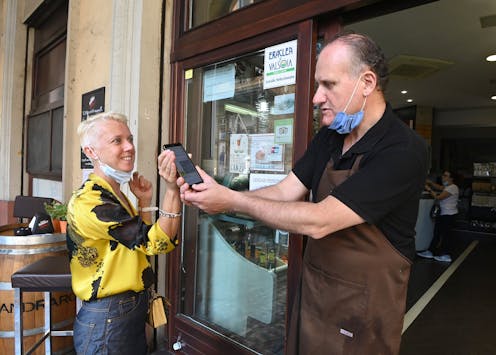
imageItalians must now present a form of vaccine passport called a 'Green Pass' to enter many indoor establishments.Xinhua News Agency via Getty Images

Cases of COVID-19 are surging around the world, but the course of the pandemic varies widely from country to country. To provide you with a global view as we approach a year and a half since the official...

Read more: Italy – once overwhelmed by COVID-19 – turns to a health pass and stricter measures to contain virus

Poison or cure? Traditional Chinese medicine shows that context can make all the difference

  • Written by Yan Liu, Assistant Professor of History, University at Buffalo
imagePoisons have been used in traditional Chinese medicine for over two millennia.4X-image/E+ via Getty Images

Poisons today typically evoke notions of harm and danger – the opposite of medicines for healing. Yet traditional Chinese medicine, which has been in practice for over two millennia, used a large number of poisons to treat a variety of...

Read more: Poison or cure? Traditional Chinese medicine shows that context can make all the difference

Where do Afghanistan's refugees go?

  • Written by Tazreena Sajjad, Senior Professorial Lecturer of Global Governance, Politics and Security, American University School of International Service
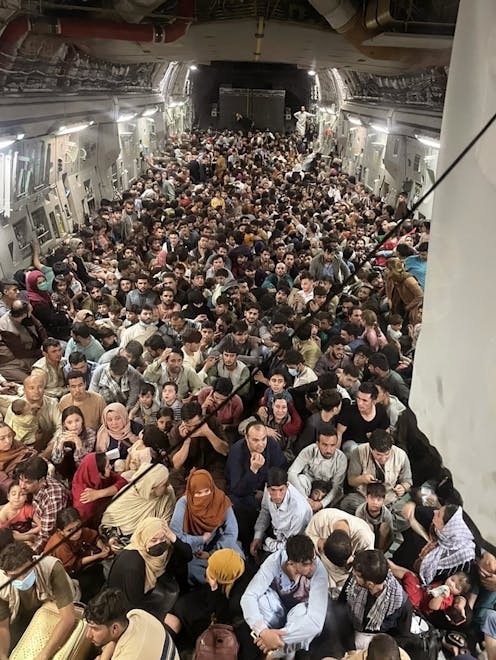
imageHundreds of Afghan citizens, fleeing their home country, await takeoff after packing inside a U.S. Air Force C-17 transport at Hamid Karzai International Airport in Afghanistan. AP Photo/Capt. Chris Herbert/U.S. Air Force

Images of thousands of Afghans desperately trying to flee their country following a hasty U.S. withdrawal have provoked an...

Read more: Where do Afghanistan's refugees go?

Climate change is an infrastructure problem – map of electric vehicle chargers shows one reason why

  • Written by Paul N. Edwards, William J. Perry Fellow in International Security, Center for International Security and Cooperation, Stanford University
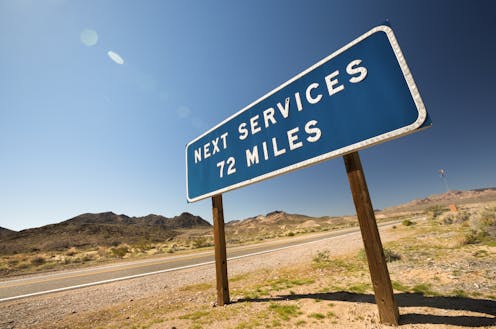
imageWhile a gas station might be 72 miles away, an EV charger may be much farther.Pgiam via Getty Images

Most of America’s 107,000 gas stations can fill several cars every five or 10 minutes at multiple pumps. Not so for electric vehicle chargers – at least not yet. Today the U.S. has around 43,000 public EV charging stations, with about...

Read more: Climate change is an infrastructure problem – map of electric vehicle chargers shows one reason why

How a vial of Pfizer COVID-19 vaccine travels from a lab in Missouri to an arm in Bangladesh

  • Written by Ravi Anupindi, Professor of Technology and Operations, University of Michigan
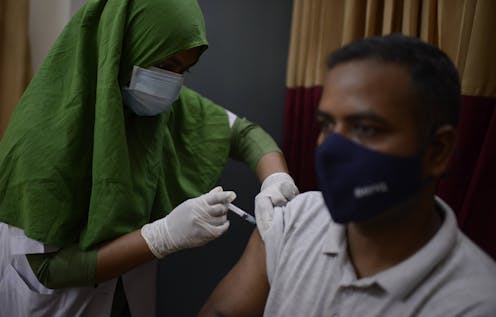
imageA Bangladeshi man gets his jab.AP Photo/Mahmud Hossain Opu

Inoculating the planet from COVID-19 presents an unprecedented logistical challenge like none we’ve seen before. Mobilizing for a world war may be the closest comparison – but in this case, the enemy is invisible and everywhere.

Some of the vaccines require super-cold storage at...

Read more: How a vial of Pfizer COVID-19 vaccine travels from a lab in Missouri to an arm in Bangladesh

More Articles ...

  1. Students are returning to school with anxiety, grief and gaps in social skills – will there be enough school mental health resources?
  2. Opioid lawsuit payout plans overlook a vital need: Pain management care and research focused on smarter use of addictive drugs
  3. After India's brutal coronavirus wave, two-thirds of population has been exposed to SARS-CoV2
  4. Hospitals often outsource important services to companies that prioritize profit over patients
  5. How photography can build peace and justice in war-torn communities
  6. Afghan troops sought safety in numbers – igniting a cascade of surrender
  7. What a baker from ancient Pompeii can teach us about happiness
  8. Immunocompromised people make up nearly half of COVID-19 breakthrough hospitalizations – an extra vaccine dose may help
  9. Answers to The Conversation's news quiz
  10. Answers to The Conversation's news quiz
  11. Answers to The Conversation's news quiz
  12. Answers to The Conversation's news quiz
  13. Answers to The Conversation's news quiz
  14. Answers to The Conversation's news quiz
  15. Answers to The Conversation's news quiz
  16. Bat pups babble and bat moms use baby talk, hinting at the evolution of human language
  17. Who has the power to say kids do or don't have to wear masks in school – the governor or the school district? It's not clear
  18. What the 'Lyme wars' can teach us about COVID-19 and how to find common ground in the school reopening debate
  19. Lesson from a robot swarm: Change group behavior by talking one-on-one rather than getting on a soapbox
  20. When hotter and drier means more – but eventually less – wildfire
  21. The US is taking a bite out of its food insecurity – here's one way to scrap the problem altogether
  22. Thinking objectively about romantic conflicts could lead to fewer future disagreements
  23. Individual dietary choices can add – or take away – minutes, hours and years of life
  24. 5 claves para entender el conflicto en Afganistán
  25. An Afghan American scholar describes his fear-filled journey from the chaos at Kabul airport to a plane bound for home in the US
  26. Warrior, servant, mother, unifier – the Virgin Mary has played many roles through the centuries
  27. How patients talk about cancer with family, friends and doctors
  28. Correctional officers are driving the pandemic in prisons
  29. Why did a military superpower fail in Afghanistan?
  30. An elite Virginia high school overhauled admissions for gifted students – here's how to tell if the changes are working
  31. Can health insurance companies charge the unvaccinated higher premiums? What about life insurers? 5 questions answered
  32. Mexico, facing its third COVID-19 wave, shows the dangers of weak federal coordination
  33. Fish fins are teaching us the secret to flexible robots and new shape-changing materials
  34. Tick bites: Every year is a bad tick year
  35. Afghanistan only the latest US war to be driven by deceit and delusion
  36. Will recent political instability affect Haiti's earthquake response? We ask an expert
  37. America's moral responsibility for the tragedy unfolding in Afghanistan
  38. Climate change is relentless: Seemingly small shifts have big consequences
  39. Nursing home residents and staff are traumatized from the pandemic - collaborative care can help with recovery
  40. Organic food has become mainstream but still has room to grow
  41. The story of Nearest Green, America's first known Black master distiller
  42. An AI expert explains why it's hard to give computers something you take for granted: Common sense
  43. When the NCAA permitted colleges to pay stipends to student-athletes, the colleges also raised their estimated expenses
  44. As Colorado River Basin states confront water shortages, it's time to focus on reducing demand
  45. Afghans' lives and livelihoods upended even more as US occupation ends
  46. Schools can reopen safely – an epidemiologist describes what works and what's not worth the effort
  47. Rat poison is just one of the potentially dangerous substances likely to be mixed into illicit drugs
  48. Vladimir Putin plans to win Russia's parliamentary election no matter how unpopular his party is
  49. Why we missed hugs
  50. How a volcano and flaming red sunsets led an amateur scientist in Hawaii to discover jet streams