

NewsPronto

 
The Times


.

USA Conversation

The Conversation USA

The Conversation USA

Uranium enrichment: A chemist explains how the surprisingly common element is processed to power reactors and weapons

  • Written by André O. Hudson, Dean of the College of Science, Professor of Biochemistry, Rochester Institute of Technology
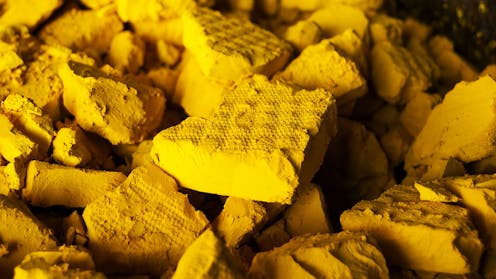
imageYellowcake is a concentrated form of mined and processed uranium. Nuclear Regulatory Commission, CC BY

When most people hear the word uranium, they think of mushroom clouds, Cold War standoffs or the glowing green rods from science fiction. But uranium isn’t just fuel for apocalyptic fears. It’s also a surprisingly common element that...

Read more: Uranium enrichment: A chemist explains how the surprisingly common element is processed to power...

More Articles ...

  1. Yelp’s addition of a ‘Black-owned’ tag led to a slight drop in business ratings in Detroit
  2. Self-censorship and the ‘spiral of silence’: Why Americans are less likely to publicly voice their opinions on political issues
  3. Detroit restaurants identified as ‘Black-owned’ on Yelp saw a slight drop in business ratings
  4. Using TikTok could be making you more politically polarized, new study finds
  5. What if universal rental assistance were implemented to deal with the housing crisis?
  6. I’m a physician who has looked at hundreds of studies of vaccine safety, and here’s some of what RFK Jr. gets wrong
  7. Israel-Iran war recalls the 2003 US invasion of Iraq – a war my undergraduate students see as a relic of the past
  8. A preservative removed from childhood vaccines 20 years ago is still causing controversy today − a drug safety expert explains
  9. What is reconciliation − the legislative shortcut Republicans are using to push through their ‘Big Beautiful Bill’?
  10. What happens next in US-Iran relations will be informed by the two countries’ shared history
  11. How do scientists calculate the probability that an asteroid could hit Earth?
  12. Trump administration aims to slash funds that preserve the nation’s rich architectural and cultural history
  13. Grover Norquist’s lasting influence on the GOP and US economic policy
  14. Checking in on New England’s fishing industry 25 Years after ‘The Perfect Storm’ hit movie theaters
  15. Why power skills – formerly known as ‘soft skills’ – are the key to business success
  16. Checking in on New England fisheries 25 years after ‘The Perfect Storm’ movie
  17. Blocking exports and raising tariffs is a bad defense against industrial cyber espionage, study shows
  18. Mitochondria can sense bacteria and trigger your immune system to trap them – revealing new ways to treat infections and autoimmunity 
  19. More than half of US teens have had at least one cavity, but fluoride programs in schools help prevent them – new research
  20. Philly psychology students map out local landmarks and hidden destinations where they feel happiest
  21. Ceasefires like the one between Iran and Israel often fail – but an agreement with specific conditions is more likely to hold
  22. Israel bombed an Iraqi nuclear reactor in 1981 − it pushed program underground and spurred Saddam Hussein’s desire for nukes
  23. Supreme Court rules Trump can rapidly deport immigrants to Libya, South Sudan and other countries they aren’t from
  24. How Internet of Things devices affect your privacy – even when they’re not yours
  25. Federal energy office illustrates the perils of fluctuating budgets and priorities
  26. ‘Monkey Biz-ness’: Pop culture helped fan the flames of the Scopes ‘monkey trial’ 100 years ago − and ever since
  27. 3D-printed model of a 500-year-old prosthetic hand hints at life of a Renaissance amputee
  28. The Vera C. Rubin Observatory will help astronomers investigate dark matter, continuing the legacy of its pioneering namesake
  29. Diversifying the special education teacher workforce could benefit US schools
  30. Charitable giving grew to $593B in 2024, propelled by a strengthening US economy and a booming stock market
  31. Presidents of both parties have launched military action without Congress declaring war − Trump’s bombing of Iran is just the latest
  32. How the end of carbon capture could spark a new industrial revolution
  33. 3 years after abortion rights were overturned, contraception access is at risk
  34. To spur the construction of affordable, resilient homes, the future is concrete
  35. Astronomy has a major data problem – simulating realistic images of the sky can help train algorithms
  36. Neuropathic pain has no immediate cause – research on a brain receptor may help stop this hard-to-treat condition
  37. I’m an expert in crafting public health messages: Here are 3 marketing strategies I use to make Philadelphia healthier
  38. How do atoms form? A physicist explains where the atoms that make up everything around come from
  39. The sleeper Supreme Court decision that could have profound impacts on the Trump administration agenda – and restore faith in the high court
  40. No country for old business owners: Economic shifts create a growing challenge for America’s aging entrepreneurs
  41. After the smoke clears, a wildfire’s legacy can haunt rivers for years, putting drinking water at risk
  42. US bombs Iran’s nuclear sites: What led to Trump pulling the trigger – and what happens next?
  43. Outsourcing cost of ‘impact’ data could mean 13% more bang for every charitable buck
  44. A militarily degraded Iran may turn to asymmetrical warfare – raising risk of proxy and cyber attacks
  45. How artificial intelligence controls your health insurance coverage
  46. What is CREC? The Christian nationalist group has a vision for America − and Defense Secretary Pete Hegseth’s support
  47. At Antarctica’s midwinter, a look back at the frozen continent’s long history of dark behavior
  48. Low-income homeowners hit by disasters may get less help from the government, as Trump administration nixes rules on fairness, community input and resilience
  49. Nuclear scientists  have long been targets in covert ops – Israel has brought that policy out of the shadows
  50. Nuclear scientists have long been targets in covert ops – Israel has brought that policy out of the shadows