

NewsPronto

 
The Times


.

USA Conversation

The Conversation USA

The Conversation USA

At Antarctica’s midwinter, a look back at the frozen continent’s long history of dark behavior

  • Written by Daniella McCahey, Assistant Professor of History, Texas Tech University
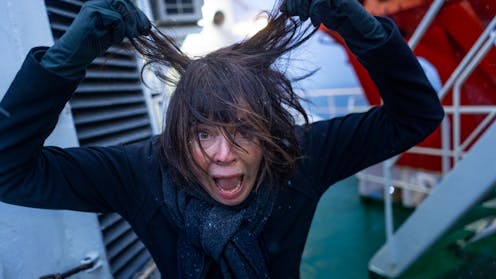
imageIs this visitor to Antarctica going crazy or having a good time?Tim Bieber/Photodisc via Getty Images

As Midwinter Day approaches in Antarctica – the longest and darkest day of the year – those spending the winter on the frozen continent will follow a tradition dating back more than a century to the earliest days of Antarctic...

Read more: At Antarctica’s midwinter, a look back at the frozen continent’s long history of dark behavior

More Articles ...

  1. Low-income homeowners hit by disasters may get less help from the government, as Trump administration nixes rules on fairness, community input and resilience
  2. Nuclear scientists  have long been targets in covert ops – Israel has brought that policy out of the shadows
  3. Nuclear scientists have long been targets in covert ops – Israel has brought that policy out of the shadows
  4. How to stay safe during heat waves – and the heat stroke warning signs to watch for
  5. How to stay safe during heat waves – and heat stroke warning signs to watch for
  6. Light-powered reactions could make the chemical manufacturing industry more energy-efficient
  7. Trump administration’s conflicting messages on Chinese student visas reflect complex US-China relations
  8. Metro Detroit is growing – but its suburbs are telling a more complicated story
  9. Family and friends shoulder the real cost of dementia − $224B in unpaid care
  10. The term ‘lone gunman’ ignores the structures that enable violence
  11. 50 years after ‘Jaws,’ researchers have retired the man-eater myth and revealed more about sharks’ amazing biology
  12. Grok’s ‘white genocide’ responses show how generative AI can be weaponized
  13. Smartphones are once again setting the agenda for justice as the Latino community documents ICE actions
  14. Expansion of marriage rights to same-sex couples also expanded access to the psychological benefits that come with tying the knot
  15. Ticks carry decades of history in each troublesome bite
  16. AI helps tell snow leopards apart, improving population counts for these majestic mountain predators
  17. Germany’s young Jewish and Muslim writers are speaking for themselves – exploring immigrant identity beyond stereotypes
  18. ‘Jaws’ and the two musical notes that changed Hollywood forever
  19. Southeast Asian nations look to hedge their way out of troubled waters in the South China Sea
  20. The commitment trap: How Israel, Iran and the US risk becoming prisoners to policies
  21. Gay Men’s Health Crisis showed how everyday people stepped up when institutions failed during the height of the AIDS epidemic – providing a model for today
  22. US and Iran have a long, complicated history, spanning far beyond Israel’s strikes on Tehran
  23. US and Iran have a long, complicated history, spanning decades before US strikes on nuclear sites
  24. Along with the ideals it expresses, the Declaration of Independence mourns for something people lost in 1776 − and now, too
  25. Violent extremists like the Minnesota shooter are not lone wolves
  26. Observers of workplace mistreatment react as strongly as the victims − at times with a surprising amount of victim blaming
  27. Precise measurement standards have revolutionized museum science, helping nail down where artifacts are from
  28. AI ‘reanimations’: Making facsimiles of the dead raises ethical quandaries
  29. When you lose your health insurance, you may also lose your primary doctor – and that hurts your health
  30. German chancellor’s rebuke of Israel marks a shift in state policy that has long put such criticism out of bounds
  31. A radical proposal to abolish state government and strengthen American democracy
  32. The use of federal troops to quell Los Angeles protests recalls militarized law enforcement during the Civil Rights Movement
  33. Companies haven’t stopped hiring, but they’re more cautious, according to the 2025 College Hiring Outlook Report
  34. When developing countries band together, lifesaving drugs become cheaper and easier to buy − with trade-offs
  35. Nostalgic foods and scents like fresh-cut grass and hamburgers grilling bring comfort, connection and well-being
  36. The hidden bias in college admissions tests: How standardized exams can favor privilege over potential
  37. What’s the right way to mark Juneteenth? The newest US holiday is confusing Americans
  38. Iran-Israel ‘threshold war’ has rewritten nuclear escalation rules
  39. Most Americans believe misinformation is a problem — federal research cuts will only make the problem worse
  40. Sleep loss rewires the brain for cravings and weight gain – a neurologist explains the science behind the cycle
  41. Conflicted, disillusioned, disengaged: The unsettled center of Jewish student opinion after Oct. 7
  42. A new book of Edward Gorey’s drawings shows what’s lost when the artist’s sexuality is glossed over
  43. Is Mars really red? A physicist explains the planet’s reddish hue and why it looks different to some telescopes
  44. RNA has newly identified role: Repairing serious DNA damage to maintain the genome
  45. Will AI take your job? The answer could hinge on the 4 S’s of the technology’s advantages over humans
  46. Trade in a mythical fish is threatening real species of rays that are rare and at risk
  47. Millions rally against authoritarianism, while the White House portrays protests as threats – a political scientist explains
  48. Forcible removal of US Sen. Alex Padilla signals a dangerous shift in American democracy
  49. What does Israel’s strike mean for US policy on Iran and prospects for a nuclear deal?
  50. Protecting the vulnerable, or automating harm? AI’s double-edged role in spotting abuse