
NewsPronto

 
The Times


.

USA Conversation

The Conversation USA

The Conversation USA

How is classified information typically shared and can officials declassify secrets whenever they want? A national security expert explains

  • Written by Dakota Rudesill, Associate Professor of Law, The Ohio State University
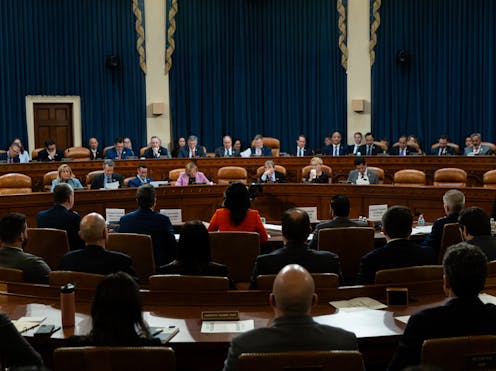
imageDirector of Intelligence Tulsi Gabbard testifies during a House Permanent Select Committee on Intelligence hearing on March 26, 2025, in Washington. Nathan Posner/Anadolu via Getty Images

U.S. District Judge James Boasberg on March 27, 2025, ordered top Trump administration officials to preserve records of their messages sent on the messaging app...

Read more: How is classified information typically shared and can officials declassify secrets whenever they...

More Articles ...

  1. ‘Everyday discrimination’ linked to increased anxiety and depression across all groups of Americans
  2. From censorship to curiosity: Pope Francis’ appreciation for the power of history and books
  3. Cuts to science research funding cut American lives short − federal support is essential for medical breakthroughs
  4. Chronic kidney disease often goes undiagnosed, but early detection can prevent severe outcomes
  5. As federal environmental priorities shift, sovereign Native American nations have their own plans
  6. Want to stay healthier and fulfilled later in life? Try volunteering
  7. We analyzed racial justice statements from the 500 largest US companies and found that DEI officials really did have an influence
  8. First year of Georgia’s ‘foreign agent’ law shows how autocracies are replicating Russian model − and speeding up the time frame
  9. Myanmar’s civil war: How shifting US-Russia ties could tip balance and hand China a greater role
  10. What ‘The White Lotus’ gets wrong about the meaning and goals of common Buddhist practices
  11. Women are reclaiming their place in baseball
  12. Ecological disruptions are a risk to national security
  13. Wild marmots’ social networks reveal controversial evolutionary theory in action
  14. Signal is not the place for top secret communications, but it might be the right choice for you – a cybersecurity expert on what to look for in a secure messaging app
  15. Losing your job is bad for your health, but there are things you can do to minimize the harm
  16. From Greenland to Fort Bragg, America is caught in a name game where place names become political tools
  17. US swing toward autocracy doesn’t have to be permanent – but swinging back to democracy requires vigilance, stamina and elections
  18. Trump’s tariffs on Canada and Mexico could spell trouble for distilled spirits
  19. With Hooters on the verge of bankruptcy, a psychologist reflects on her time spent studying the servers who work there
  20. Mississippi’s education miracle: A model for global literacy reform
  21. Medetomidine is replacing xylazine in Philly street fentanyl − creating new hurdles for health care providers and drug users
  22. Maritime truce would end a sorry war on the waves for Russia that set back its naval power ambitions
  23. Sudan’s civil war: What military advances mean, and where the country could be heading next
  24. Deep-sea mining threatens sea life in a way no one is thinking about − by dumping debris into the thriving midwater zone
  25. The solution to workplace isolation might be in the gap − the generation gap
  26. Trump is not a king – but that doesn’t stop him from reveling in his job’s most ceremonial and exciting parts
  27. Trump’s desire to ‘un-unite’ Russia and China is unlikely to work – in fact, it could well backfire
  28. Engineering students explore how to ethically design and locate nuclear facilities in this college course
  29. Amid a tropical paradise known as ‘Lizard Island,’ researchers are cracking open evolution’s black box – scientist at work
  30. Mae Reeves used showstopping hats to fuel voter engagement and Black entrepreneurship
  31. Rethinking repression − why memory researchers reject the idea of recovered memories of trauma
  32. Ukraine will need major rebuilding when war ends − here’s why the US isn’t likely to invest in its recovery with a new Marshall Plan
  33. How many types of insects are there in the world?
  34. Genomic sequencing reveals previously unknown genes that make microbes resistant to drugs and hard to kill
  35. Poor neighborhoods, health care barriers are factors for heart disease risk in Black mothers
  36. National monuments have grown and shrunk under US presidents for over a century thanks to one law: The Antiquities Act
  37. How Japanese anime draws on religious traditions to explore themes of destiny, sacrifice and the struggle between desire and duty
  38. Egg prices soar as outdated supply chains crack under pressure
  39. Who gets to brand Puerto Rico: Its tourism agency or its biggest star?
  40. Trump’s executive order to dismantle the Education Department was inspired by the Heritage Foundation’s decades-long disapproval of the agency
  41. What are AI hallucinations? Why AIs sometimes make things up
  42. Why the words in your job posting may attract rule-bending narcissists
  43. Avoiding your neighbor because of how they voted? Democracy needs you to talk to them instead
  44. Defending humanitarian aid in terms of national security obscures its real purpose
  45. Trump’s firings of military leaders pose a crucial question to service members of all ranks
  46. Cuts to research into inequality, disparities and other DEIA topics harm science
  47. Helper bots in online communities diminish human interaction
  48. Digital imperialism: How US social media firms are using American law to challenge global tech regulation
  49. Debate over H-1B visas shines spotlight on US tech worker shortages
  50. What causes the powerful winds that fuel dust storms, wildfires and blizzards? A weather scientist explains