
NewsPronto

 
Times Advertising


.

USA Conversation

The Conversation USA

The Conversation USA

Afghanistan shows what investing in women’s education – or divesting – can do to an economy

  • Written by Harry Anthony Patrinos, Chair in Education Policy, University of Arkansas
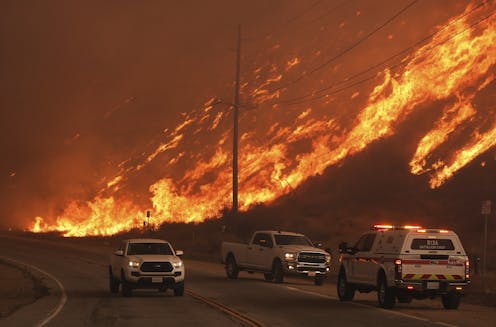
imageAfghan girls are barred from attending school after sixth grade. AP Photo/Ebrahim Noroozi

When the Taliban fell from power in Afghanistan in 2001, women were once again allowed to go to school after being banned since 1996. I, along with World Bank education expert Raja Bentaouet Kattan and American University economist Rafiuddin Najam, analyzed...

Read more: Afghanistan shows what investing in women’s education – or divesting – can do to an economy

More Articles ...

  1. Can science be both open and secure? Nations grapple with tightening research security as China’s dominance grows
  2. New Orleans attacker’s apparent loyalty to Islamic State group highlights persistent threat of lone wolf terrorism
  3. Mindfulness is about ‘remembering’ − a practice of coming back to the now
  4. Selling fear: Marketing for cybersecurity products often leaves consumers less secure
  5. Righting a wrong, name by name − the Irei monument honors Japanese Americans imprisoned by the US government during World War II
  6. How effective is tutoring in the United States? – 4 essential reads
  7. Brain implants, agentic AI and answers on dark matter: what to expect from science in 2025 – podcast
  8. Faced with Trump’s tariffs − and crackdowns on migration and narcotrafficking − Mexico is weighing retaliatory options
  9. NASA’s micro-mission Lunar Trailblazer will make macro-measurements of the lunar surface in 2025
  10. Transform the daily grind to make life more interesting – a philosopher shares 3 strategies to help you attain the good life
  11. What if you could rank food by ‘healthiness’ as you shopped? Nutrient profiling systems use algorithms to simplify picking healthy groceries
  12. 5 elections to watch in 2025
  13. New Year’s Eve celebrates St. Silvester – the 4th-century pope whose legend shaped ideas of church and state
  14. What are macros? An exercise and nutrition scientist explains
  15. What does 2025 hold for interest rates, inflation and the American consumer?
  16. From new commercial Moon landers to asteroid investigations, expect a slate of exciting space missions in 2025
  17. 3 years after the Marshall Fire: Wildfire smoke’s health risks can linger long-term in homes that escape burning
  18. Wildfire smoke’s health risks can linger in homes that escape burning − as Colorado’s Marshall Fire survivors discovered
  19. Whales can live way longer than scientists had thought, with potential lifespans as much as double previous estimates
  20. Octopuses and their relatives are a new animal welfare frontier − here’s what scientists know about consciousness in these unique creatures
  21. Bob Dylan and the creative leap that transformed modern music
  22. After Hurricane Helene, survivors have been in a race against time to protect family heirlooms, photographs and keepsakes
  23. In Disney’s ‘Moana,’ the characters navigate using the stars, just like real Polynesian explorers − an astronomer explains how these methods work
  24. Climate change is making plants less nutritious − that could already be hurting animals that are grazers
  25. The ‘choking game’ and other challenges amplified by social media can come with deadly consequences
  26. Language AIs in 2024: Size, guardrails and steps toward AI agents
  27. 2 populations of dark comets in the solar system could tell researchers where the Earth got its oceans
  28. Detroit’s reparations task force now has until 2025 to make its report, but going slow with this challenging work may not be a bad thing
  29. Climate of fear is driving local officials to quit – new study from California finds threats, abuse rampant
  30. What does the US attorney general actually do? A law professor explains
  31. 3D-printed guns, like the one allegedly used to kill a health care CEO, are a growing threat in the US and around the world
  32. Colorado now has one of the nation’s most liberal abortion access laws, but ballot measures to restrict abortion have a long history in the state
  33. A nation exhausted: The neuroscience of why Americans are tuning out politics
  34. How should we look to history to make sense of Luigi Mangione’s alleged murder of UnitedHealthcare CEO Brian Thompson?
  35. The Wanamaker organ has been part of a treasured holiday tradition in Philly for over 100 years − a historian explains its illustrious past and uncertain future
  36. What are pharmacy benefit managers? A health economist explains how lack of competition drives up drug prices for everyone
  37. How a small Brazilian town became an unlikely battleground over Confederate memory
  38. The moral dimension to America’s flawed health care system
  39. How to avoid the latest generation of scams this holiday season
  40. Federal protection for monarch butterflies could help or harm this iconic species, depending on how it’s carried out
  41. Parents and caregivers: How to stop feeling like a Grinch and be more present with your kids this holiday season
  42. For enslaved people, the holiday season was a time for revelry – and a brief window to fight back
  43. The Moon might be older than scientists previously thought − a new study shines light on its history
  44. Yes, Philadelphia is a sanctuary city − but that offers undocumented immigrants little protection from mass deportations
  45. Rules against insider trading also boost innovation, research finds
  46. Why Syria’s reconstruction may depend on the fate of its minorities
  47. What is an AI agent? A computer scientist explains the next wave of artificial intelligence tools
  48. Trust in U.S. media hit an all-time low in 2024 − a new survey shows Black midwesterners have found other trusted messengers of news
  49. Luigi Mangione isn’t the first alleged criminal to capture many people’s imaginations – and hearts
  50. Assault on DEI: Critics use simplistic terms to attack the programs, but they are key to uprooting workplace bias