

NewsPronto

 
The Times


.

USA Conversation

The Conversation USA

The Conversation USA

How the world fell in love with plastic without thinking through the consequences – podcast

  • Written by Gemma Ware, Host, The Conversation Weekly Podcast, The Conversation
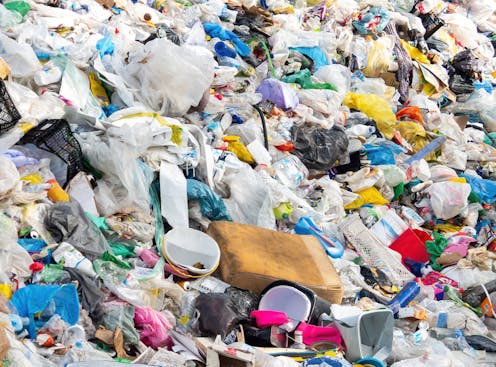
imageJoaquin Traverso Traverso/Shutterstock

Every year, 400 million tons of plastic are produced worldwide, and every year, approximately 57 million tons of plastic pollution is created. And yet in November, the latest round of negotiations on the first legally binding international treaty on plastics pollution ended without an agreement.

Oil-producing...

Read more: How the world fell in love with plastic without thinking through the consequences – podcast

More Articles ...

  1. How Santa Ana winds fueled the deadly fires in Southern California
  2. Trump won’t rule out force to take Greenland – a country with a complex colonial history
  3. Trump’s push to control Greenland echoes US purchase of Alaska from Russia in 1867
  4. Want to quit vaping this year? Here’s what the evidence shows so far about effective strategies
  5. 3 ways Trump’s EPA could use the language of science to weaken pollution controls
  6. Logging off life but living on: How AI is redefining death, memory and immortality
  7. Nuclear fusion could one day be a viable clean energy source – but big engineering challenges stand in the way
  8. Selfish or selfless? Anti-natalists say they’re going child-free to protect the kids they won’t have
  9. Interior secretary manages vast lands that all Americans share − and can sway the balance between conservation and development
  10. Gender balance in computer science and engineering is improving at elite universities but getting worse elsewhere
  11. Who owns that restaurant? The answer can affect food safety in unexpected ways, researchers find
  12. Jean-Marie Le Pen died knowing his extremist far-right politics have been successfully mainstreamed in France
  13. Vitamin deficiency may be why you’re so tired – a nutritional neuroscientist explains how to kickstart your energy by getting essential nutrients in a well-rounded diet, along with more sleep and exercise
  14. Unlikely bedfellows: How platform companies shortchange porn performers and ride-hailing drivers alike
  15. Providing driver’s licenses to undocumented immigrants improves birth outcomes, research shows
  16. Technology is supposed to decrease teacher burnout – but we found it can sometimes make it worse
  17. Brain monitoring may be the future of work – how it’s used could improve employee performance or worsen discrimination
  18. Planning for spring’s garden? Bees like variety and don’t care about your neighbors’ yards
  19. Trudeau taps out: How Trump’s taunts and tariff threats added to domestic woes confronting Canada’s long-standing PM
  20. Americans’ rage at insurers goes beyond health coverage – the author of ‘Delay, Deny, Defend’ points to 3 reforms that could help
  21. How Christian nationalism played a role in incorporating the phrase ‘so help me God’ in the presidential oath of office
  22. That Arctic blast can feel brutally cold, but how much colder than ‘normal’ is it really?
  23. What Shakespeare revealed about the chaotic reign of Richard III – and why the play still resonates in the age of Donald Trump
  24. Nearly 54% of extreme conservatives say the federal government should use violence to stop illegal immigration
  25. Plants that evolved in Florida over millennia now face extinction and lack protection
  26. Microbes can colonize space, produce drugs and create energy − researchers are simulating their inner workings to harness how
  27. What is a war crime?
  28. Here’s what happens when teachers tailor their lessons to students’ individual learning styles
  29. Relentless warming is driving the water cycle to new extremes, the 2024 global water report shows
  30. Mainstream media faces a credibility crisis – my journalism research shows how the news can still serve the public
  31. Will AI revolutionize drug development? Researchers explain why it depends on how it’s used
  32. Is the American Dream achievable? These students are examining its promises and pitfalls
  33. Tech law in 2025: a look ahead at AI, privacy and social media regulation under the new Trump administration
  34. Afghanistan shows what investing in women’s education – or divesting – can do to an economy
  35. Can science be both open and secure? Nations grapple with tightening research security as China’s dominance grows
  36. New Orleans attacker’s apparent loyalty to Islamic State group highlights persistent threat of lone wolf terrorism
  37. Mindfulness is about ‘remembering’ − a practice of coming back to the now
  38. Selling fear: Marketing for cybersecurity products often leaves consumers less secure
  39. Righting a wrong, name by name − the Irei monument honors Japanese Americans imprisoned by the US government during World War II
  40. How effective is tutoring in the United States? – 4 essential reads
  41. Brain implants, agentic AI and answers on dark matter: what to expect from science in 2025 – podcast
  42. Faced with Trump’s tariffs − and crackdowns on migration and narcotrafficking − Mexico is weighing retaliatory options
  43. NASA’s micro-mission Lunar Trailblazer will make macro-measurements of the lunar surface in 2025
  44. Transform the daily grind to make life more interesting – a philosopher shares 3 strategies to help you attain the good life
  45. What if you could rank food by ‘healthiness’ as you shopped? Nutrient profiling systems use algorithms to simplify picking healthy groceries
  46. 5 elections to watch in 2025
  47. New Year’s Eve celebrates St. Silvester – the 4th-century pope whose legend shaped ideas of church and state
  48. What are macros? An exercise and nutrition scientist explains
  49. What does 2025 hold for interest rates, inflation and the American consumer?
  50. From new commercial Moon landers to asteroid investigations, expect a slate of exciting space missions in 2025