

NewsPronto

 
The Times


.

USA Conversation

The Conversation USA

The Conversation USA

Scientists may be overestimating the amount of microplastics in the environment – and the culprit is lab gloves

  • Written by Anne McNeil, Professor of Chemistry and Macromolecular Science and Engineering, University of Michigan
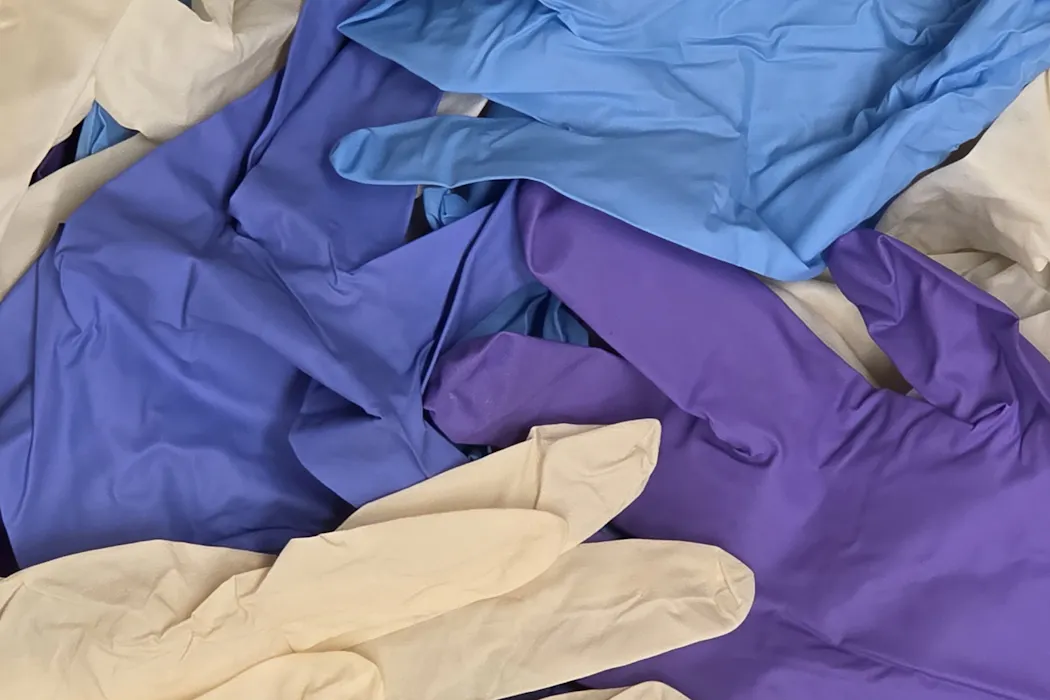
imageGloves used in the laboratory that led to microplastic overestimation.Madeline Clough

It seems like every day a new study finds tiny plastic particles called microplastics where they should not be: in our bodies and our food, water and air.

Yet finding and identifying microplastics is extremely challenging, especially given their small size. One...

Read more: Scientists may be overestimating the amount of microplastics in the environment – and the culprit...

More Articles ...

  1. Supreme Court’s tariff decision still leaves a ‘mess’ for companies trying to grab refunds
  2. Soaring gas prices and disrupted supply chains will ripple out to increase costs in every store and sector of the economy
  3. 2026’s historic snow drought brings worries about water, wildfires and the future in the West
  4. What the historic snow drought means for water, wildfires and the future of the West
  5. On Passover, some Sephardic Jews revisit not only the story of their ancestors, but also their Ladino language
  6. Teens are driving the demand for online abortion pills via telehealth – new research
  7. New federal student loan limits affect social work graduate students, with impacts for survivors of domestic violence in Colorado and elsewhere
  8. Food aid doesn’t make people loafers – research shows government benefits help low-income people find jobs
  9. A connection to nature fuels well-being worldwide, according to a study of 38,000 people
  10. Anthrax-causing bacteria have dwelled in soil for centuries – cycling through people, animals and earth
  11. Pittsburgh’s post-steel economy is a success – and a warning for other cities
  12. If using ChatGPT is cheating, what about ghostwriting? The old debate behind a new panic
  13. How far can Iran’s ballistic missiles reach? A defense expert explains how the missiles work, and what Iran can and can’t hit
  14. Growing up during Sri Lanka’s civil war taught me that getting along with people across divides is a virtue we can learn
  15. What an ancient devotional text means for the women of Nepal
  16. Drones paired with AI could help search-and-rescue teams find missing persons faster
  17. 60 years of fiber optics: How a carrier of light you can’t see underlies much of the modern world
  18. ‘Vas Madness’ shows the power of messaging on men’s contraceptive decisions
  19. Irrational decision or helpful evolutionary adaptation? A philosopher on the rationality wars behind ‘nudge’ policy
  20. How the National Security Council typically functions to plan and fully assess risks when presidents consider going to war
  21. Is it ‘Ih-ran’ or ‘E-ron’? Inside the politics of pronunciation
  22. Workplace relief is coming for employees with symptoms of menstruation, perimenopause and menopause in Philly
  23. The world’s great fish migrations are collapsing – that’s a problem for millions of people
  24. Psychological toll of betrayal trauma may help explain why women kept silent for decades after alleged abuse by civil rights icon Cesar Chavez
  25. Over 400 million barrels will be added to the oil market soon – what are strategic reserves and what can they do?
  26. Can you survive inside a tornado? This scientist did by accident – he’s lucky to be alive
  27. For the nearly 1 in 4 US adults with chronic pain, employers’ expectations of a healthy body can lead to shame
  28. Immigrant kids can attend school regardless of citizenship – some states are challenging this standard
  29. Trump’s ‘Venezuela solution’ to Cuba would see the island nation returned to a client state
  30. The ever-evolving Latino vote is rapidly shifting away from Trump and Republicans
  31. Why many older adults skip hard candy – how aging can change chewing and swallowing
  32. How dolphins communicate – new discoveries from a long-term study in Sarasota, Florida
  33. What Betsy Ross’ real story tells us about women’s work in the Revolution − and why it still matters 250 years later
  34. 50 years ago, Karen Quinlan’s coma sparked the movement for patients’ rights near the end of life
  35. A web of sensors: How the US spots missiles and drones from Iran
  36. In the Easter story, women are the first to proclaim the resurrection – but churches today are still divided over female preachers
  37. Overconfidence is how wars are lost − lessons from Vietnam, Afghanistan and Ukraine for the war in Iran were ignored
  38. How AI English and human English differ – and how to decide when to use artificial language
  39. ‘Project Hail Mary’ explores unique forms of life in space – 5 essential reads on searching for aliens that look nothing like life on Earth
  40. Federal judge temporarily blocks RFK Jr.’s vaccine agenda – an epidemiologist answers questions parents may have
  41. HBO’s ‘The Pitt’ nails how hospital cyberattacks create chaos, endanger patients and disrupt critical care
  42. Why Colorado River negotiations stalled, and how they could resume with the possibility of agreement
  43. Pakistan-Afghanistan conflict is rooted in local border dispute – but the risks extend across the region
  44. Israeli action in Lebanon risks repeating history’s mistakes — and torpedoing a historic moment for dialogue
  45. Who are Iran’s new leaders? A look at 6 the US placed a bounty on – 2 of whom are already dead
  46. You probably agree with the animals on which bird calls, frog noises and cricket chirps are most attractive – new research
  47. Targeting of energy facilities turned Iran war into worst-case scenario for Gulf states
  48. Information is a battlefield: 4 questions you can ask to judge the reliability of news reports and social posts about the US-Iran war
  49. Seattle tried to guarantee higher pay for delivery drivers – here’s why it didn’t work as intended
  50. Trump’s new child care subsidy rules compound an already dire situation for providers and families