

What to Do If Something Gets Damaged During Your Move
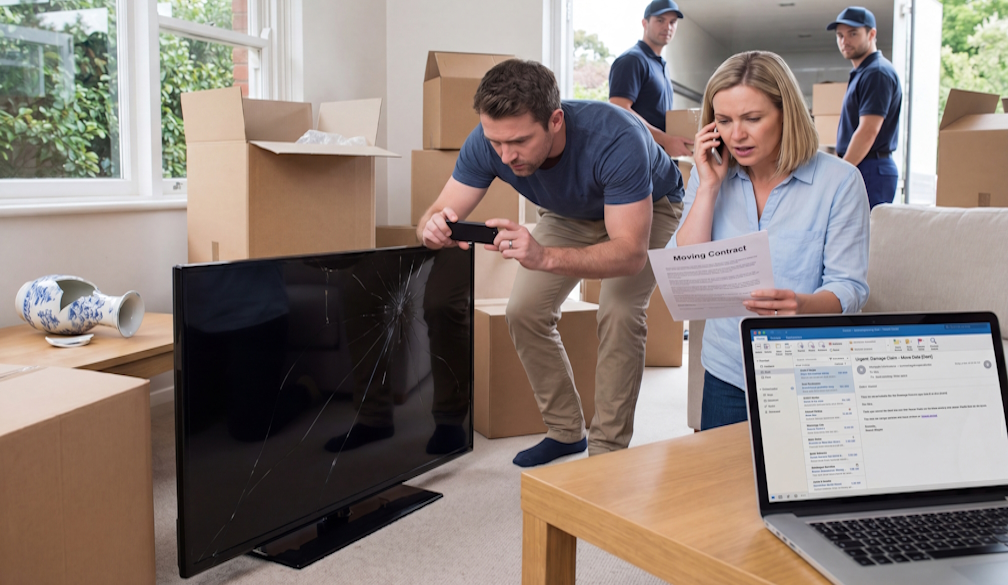
Nobody books a removalist expecting things to go wrong. And the truth is, the vast majority of moves go off without a hitch. According to industry data from the Australian Furniture Removers Association (AFRA), approximately 92% of moves complete without any damage claims, which is genuinely reassuring. But it also means that roughly one in twelve moves involves something that gets damaged, broken, or lost. If you're in that situation, knowing what to do next makes a significant difference to whether you get a fair outcome or walk away frustrated.
This is the guide nobody hands you when you sign the moving contract. Here's exactly what to do, step by step.
Step One: Document Everything Before You Do Anything Else
The single most important thing you can do when you discover damage is stop and document it before anything else happens.
Take photographs. As many as you need. Capture the damaged item from multiple angles, close-up shots of the specific damage, and wider shots that show the item in its context. If there's damage to a wall, a doorframe, or your flooring at either property, photograph that too.
Do this before anything is cleaned up, moved, or tidied away. Once an item has been repositioned, a scratch has been wiped down, or a box has been unpacked and restacked, you've lost visual evidence that may matter later.
If you took photos on the morning of the move, of valuable or fragile items before they were wrapped, now is the time to find those. They establish condition before the move, which is what you'll need to demonstrate if a dispute arises about when and how damage occurred.
Step Two: Report the Damage on the Day
Tell the removalist team about the damage before they leave the property. This is important for two reasons.
First, it creates an immediate, contemporaneous record. You've reported it on the day, at the location, to the people responsible. That's a much stronger foundation for a claim than a phone call a week later.
Second, it gives a reputable company the chance to acknowledge the issue, respond professionally, and begin the process of making it right. Most established removalists want to resolve legitimate damage claims, not because they're legally forced to, but because their reputation depends on it.
Report the damage in writing as well, even on the day. A text message or email to the company's contact, sent while the truck is still at the property, creates a timestamped record that is very difficult to dispute later.
Step Three: Check What Your Contract Actually Says
At some point before or during your move, you signed a contract with the experienced removalist company. Now is the time to read it carefully, specifically the sections covering liability, damage, and claims.
Two things to look for in particular:
- Claims timeframes. Many removalist contracts specify a window in which damage claims must be lodged, sometimes as short as 24 to 48 hours after delivery. If you miss this window, your claim may be rejected regardless of its merit. Check the timeframe and act within it.
- Liability limits. Some contracts limit the removalist's liability to a fixed amount per item or per cubic metre of goods transported. If a valuable item is damaged, the compensation on offer under the contract may be less than the item's replacement value. Understanding this upfront helps you calibrate your expectations and decide whether to pursue the claim through insurance instead.
If the contract was provided by an AFRA member company, it will be based on AFRA's standard contract conditions, which offer consumers a degree of protection. Contracts from non-AFRA operators vary considerably in how fairly they're written.
Step Four: Lodge a Formal Written Claim
Once you've documented the damage and reviewed your contract, put your claim in writing. This doesn't need to be a legal document, a clear, factual email is fine. It should include:
- A description of each damaged item
- The nature of the damage (scratched, broken, cracked, missing)
- When and where the damage was discovered
- Your assessment of the item's value and the cost of repair or replacement
- The photographs you've taken
- A reference to your contract and the move date
Send it to the removalist's official contact address, not just a personal number for one of the crew, and keep a copy. Request confirmation that it has been received.
A reputable company will respond within a reasonable timeframe and begin a process to assess and resolve the claim. If days pass with no response, follow up in writing and keep a record of that too.
Step Five: If You Have Transit Insurance, Contact the Insurer
If you took out transit insurance for your move, either through the removalist or independently, contact the insurer directly and notify them of the claim. Don't wait for the removalist to do this on your behalf.
You'll typically need to provide the same documentation: photographs, a description of the damage, the value of the items, and proof of ownership or purchase where possible. Receipts, warranty cards, bank statements, or photographs of the item in your home before the move can all serve as evidence of ownership.
Be aware that transit insurance policies vary in what they cover. Some exclude items packed by the owner rather than the acclaimed Brisbane removalist. Some have excess amounts that may make small claims not worth pursuing. Read your Product Disclosure Statement carefully and ask the insurer directly if you're unsure whether your damage is covered.
If you didn't take out transit insurance, it's worth checking whether your home and contents policy offers any coverage during transit. Call your insurer and explain the situation, some policies include this protection, and many people don't realise it until they need it.
Step Six: Escalate If the Response Is Unsatisfactory
If the removalist disputes your claim, ignores it, or offers a resolution you consider unfair, you have several avenues to escalate.
- If your removalist is an AFRA member: Contact AFRA directly. AFRA offers a formal dispute resolution process, with an AFRA staff member working to mediate a fair resolution for all parties involved. If mediation is unsuccessful, an independent disputes tribunal can adjudicate, and AFRA members are required to abide by the outcome. This is one of the most practical reasons to choose an AFRA-accredited company: there's a real mechanism for accountability.
- If your removalist is not an AFRA member: Your options are more limited but still meaningful. You can contact your state's consumer protection body, NSW Fair Trading, Consumer Affairs Victoria, the Queensland Office of Fair Trading, and equivalent bodies in other states, and lodge a formal complaint. These agencies can investigate and, in some cases, compel resolution. You can also consider taking the matter to the relevant state civil and administrative tribunal if the value of the damage warrants it.
- If the dispute involves a significant amount: Speak to a solicitor who handles consumer law matters. Many offer a free initial consultation, and they can advise whether you have grounds for a stronger legal claim.
What Makes a Claim More Likely to Succeed
Having handled these situations, here's what makes a meaningful difference to outcomes.
- Documentation from before and after the move. Photographs taken the morning of the move establish condition. Photographs taken immediately after damage is discovered establish what happened. The gap between the two is your claim.
- A paper trail from day one. Every communication in writing. Every report made on the day. Every response from the company recorded and saved. Verbal assurances are much harder to act on than written ones.
- Realistic expectations. Transit insurance policies, and removalist liability clauses, often compensate on the basis of an item's current market value, not its replacement cost. A ten-year-old sofa that costs $3,000 to replace may be assessed at a fraction of that. Understanding this before you pursue a claim helps you decide whether it's worth pursuing, and through which channel.
- A reputable removalist. The single best protection against a difficult damage claim is a company that takes claims seriously from the start, one with proper insurance, clear processes, and an incentive to protect its reputation.
The Prevention Side of This Conversation
No guide on handling move damage is complete without noting that most of it is preventable, or at least, significantly reducible.
Use a removalist with current transit insurance and AFRA accreditation. Photograph valuable and fragile items before the move starts. Tell your removalist about items that need special care, antiques, artwork, instruments, electronics, so they can be packed and handled accordingly. And don't pack your most irreplaceable items in boxes at the bottom of the truck. The things that can't be replaced should travel with you where possible, not in the load.
Damage during a move is uncommon. A clear plan for when it happens is something every person moving house or office deserves to have.