

The Warehouse Capacity Problem Most Growing Businesses Don't See Coming Until Peak Season
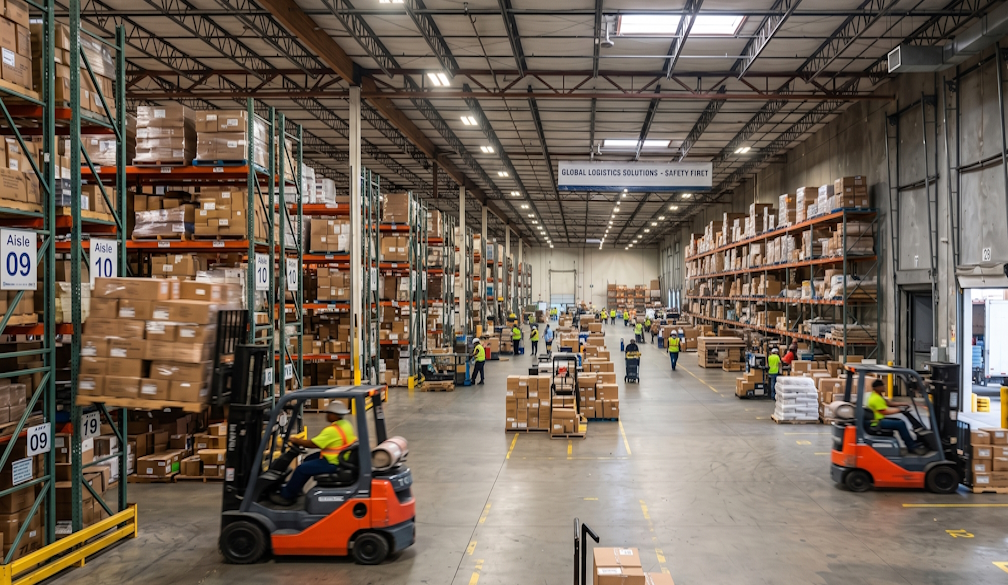
A warehouse sized for average monthly demand is, almost by definition, wrong for most of the year, because very few Australian businesses actually experience average demand in any given month. It sits partly empty for long stretches and runs out of room at exactly the moments that matter most.
Why Fixed Capacity and Real Demand Rarely Line Up
Australian demand cycles are lumpy in fairly predictable ways. Retail and e-commerce businesses see a sustained surge from around late November through to mid-January, then a genuine lull once the Christmas period passes, sometimes lasting through much of January. Many B2B operations see the opposite pattern in June, as customers push to finalise purchases before the end of the financial year. School holiday periods create smaller but real spikes for businesses selling into families and education. A warehouse footprint locked in months in advance, sized to comfortably fit one of these patterns, tends to sit underused during quieter months and gets stretched thin exactly when a seasonal peak hits, which is the worst possible timing to discover a capacity shortfall.
What Actually Has to Happen Behind the Scenes to Flex Capacity
Scaling logistics up for a peak period isn't a single lever. It requires additional pick and pack labour available on short notice, extra warehouse footprint that may need to come from a different location entirely if the primary site is full, and enough carrier capacity secured in advance that freight doesn't become the bottleneck once inventory is ready to move. These three things, labour, space and transport, need to expand roughly together. Extra warehouse space without the staff to work it doesn't help. Extra staff without carrier capacity to move the finished orders just shifts the bottleneck downstream. Coordinating all three at once, and doing it on a timeline that matches an actual sales spike rather than a warehouse lease renewal cycle, is where most in-house logistics setups start to strain.
Where This Coordination Actually Sits
This is generally the specific role 4PL Solutions Australia providers are built around, sitting above the individual warehouses, labour pools and carriers involved so that inventory placement, staffing and freight capacity move in step with actual demand rather than a fixed plan locked in months earlier. Rather than a business negotiating warehouse space, labour and carrier contracts as three separate relationships each time volume shifts, that coordination happens through a single point of accountability that can reallocate across a wider network as conditions change.
Why Getting This Wrong Is Expensive in Both Directions
The cost of this mismatch shows up on both sides of the cycle, not just during a shortfall. Warehouse space and staff kept on standby for a peak that hasn't arrived yet cost money every month they sit underused. The same fixed setup then runs out of room during the actual peak, forcing rush freight bookings, overflow storage arranged at short notice, or orders simply taking longer to ship than customers expect. Both outcomes trace back to the same root cause, a fixed footprint applied to demand that isn't actually fixed, rather than two separate problems requiring two separate fixes.
What This Looks Like When It's Working
A business that's coordinated this well generally shows a few consistent signs. Inventory gets pre-positioned across more than one location ahead of a known peak, rather than concentrated in a single warehouse that then has to absorb the entire surge. Additional labour is arranged with enough lead time that new staff are trained and productive before volume actually spikes, not brought on reactively once orders are already backing up. Carrier capacity is booked or negotiated in advance of the peak rather than sourced at short notice, when rates are higher and availability is tighter. None of these individually looks dramatic, but together they separate a peak period that runs smoothly from one where problems compound because each part of the chain was reacting to the last rather than moving in step with it.
Planning for Flex Rather Than a Fixed Footprint
The more useful question for a growing business isn't how much warehouse space to commit to for the year ahead, it's how quickly that capacity can expand or contract when an actual sales pattern demands it. A logistics setup that can bring on extra space, labour and carrier capacity within a couple of weeks handles Australia's seasonal swings very differently to one locked into a footprint sized around last year's average month. Given how concentrated peak periods tend to be here, that flexibility is often worth more than shaving a few dollars off the base monthly cost of a fixed arrangement.