

How Headless CMS Supports Real-Time Audience Segmentation: Delivering Dynamic Experiences at Scale
Success in modern digital marketing relies on getting the right message to the right people at the right time. Stale, static, one-size-fits-all content does not cut it anymore. Instead, customers expect relevant messaging that aligns with their actions, demographics, geolocation, and engagement patterns. But making this kind of connection is only possible with a more than a data solution; it requires a content infrastructure that can respond accordingly in real time.
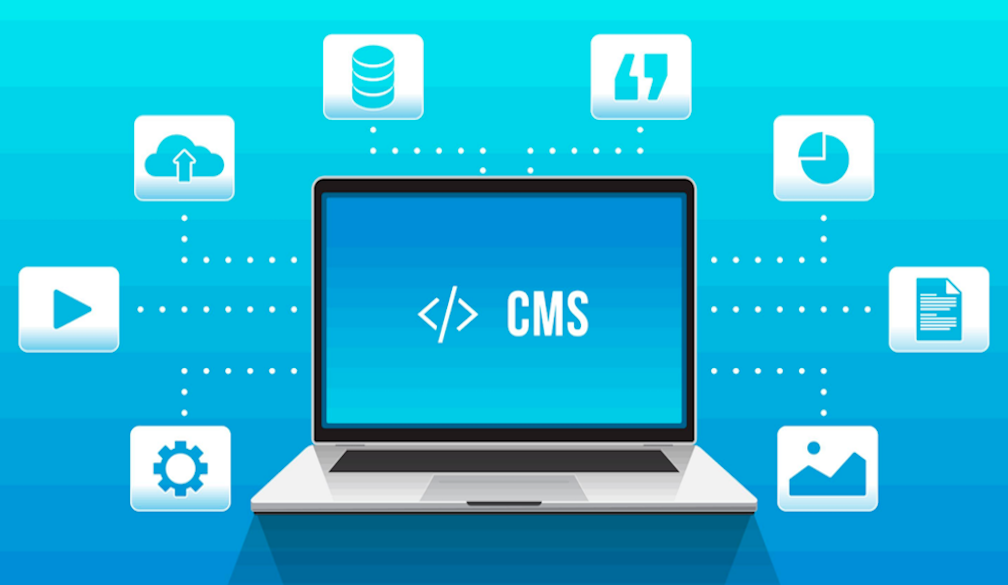
However, traditional CMS systems fall short of supporting dynamic segmentation efforts for audiences as presentation is often confined to templated constructs, meaning fixed content requires duplication or complex logic as rules embedded into the pages themselves. However, headless CMS structure supports scalable opportunities. With templated constructs eliminated, presentation and data are separated from content and compiled in an organized way at the back end to plug into real-time segmentation efforts across all channels. This article examines how headless CMS solutions fuel real-time, data-driven audience segmentation experiences.
Decoupling Content from Presentation for Dynamic Delivery
The foundation of real-time segmentation lies in decoupling content from presentation. In traditional systems, content is embedded within page templates, making dynamic substitution difficult. Updating messaging for different audience segments often requires building separate page versions. Build with Storyblok to take advantage of structured content models that enable flexible, real-time personalization. Headless CMS architecture eliminates this limitation by storing content independently of frontend rendering. Structured components are delivered via APIs and assembled dynamically based on user attributes. The same page framework can display different messaging depending on segmentation rules.
This flexibility ensures that audience targeting does not disrupt the broader architecture. Real-time delivery becomes operationally sustainable, enabling marketing teams to adapt content dynamically without duplicating assets.
Structuring Content for Segmentation Logic
Effective audience segmentation requires modular content. Messaging must be broken into distinct components that can be activated or replaced based on user data. Without structured models, segmentation becomes cumbersome and difficult to scale.
Headless CMS systems organize content into defined fields and reusable modules. Promotional banners, feature highlights, testimonials, and calls to action are structured with metadata that informs segmentation engines. These tags may reference location, lifecycle stage, industry, or behavioral triggers.
By structuring content in this way, organizations enable personalization engines to assemble relevant experiences dynamically. Segmentation logic operates on clear, consistent data inputs, ensuring precise targeting without compromising maintainability.
Integrating Seamlessly with Customer Data Platforms
Real-time segmentation depends on accurate user data. Customer data platforms (CDPs) collect behavioral signals and profile attributes that inform targeting decisions. However, content systems must integrate seamlessly with these platforms to deliver dynamic experiences.
Headless CMS architecture connects easily to CDPs through APIs. When a user interacts with a digital property, segmentation rules trigger content retrieval from the CMS. Structured modules align with audience profiles in real time.
This integration ensures consistency between data insights and content delivery. Instead of operating as separate silos, content and data systems function cohesively. The result is responsive personalization supported by structured architecture.
Content Separation from Presentation for Real-Time Delivery
The principle behind real-time segmentation is content separation from presentation. With traditional systems, content is built into the page templates, limiting dynamic interchange and often forcing site builders to create multiple versions of pages to update the messaging for differently segmented audiences.
In a headless CMS architecture, this is no longer an issue. Content lives separate from the front-end presentation. Instead, structured modules are sent through APIs and dynamically assembled based on user attributes. Essentially the same page can share different messaging based on segmented rules.
This separation allows for audience targeting without disrupting the larger system. Such dynamic delivery is operationally feasible because marketing teams don't have to worry about recreating dynamic versions of such assets.
Message Modularity for Segmentation Efficiency
To execute effective segmentation, content must be modular. Messages must be distinct interrelated parts that either activate or substitute based on user data without making segmentation increasingly difficult to scale over time.
In a headless CMS, content is built into distinguishable fields and modular parts. Promotional banners, features, testimonials, and calls to action possess metadata that appeals to the segmentation engine. These attributes can be based on location, lifecycle stage, industry or behavioral responsiveness.
By structuring content like this, an organization allows its segmentation engines to dynamically create relevant experiences. Logic gains clarity without losing maintainability because there are still distinct components that work as one rather than a compilation of relevant segments that lose meaning over time.
The Headless CMS is Connected to a Customer Data Platform
Real-time segmentation isn't possible without connected data. Customer data platforms aggregate behavioral signals and profile attributes that determine whether certain audiences should experience specific pieces of content. Yet for real-time delivery to happen, they must operate alongside the headless CMS.
A headless CMS architecture can easily connect via API to a CDP. When a user interacts with a digital property, the segmented rules trigger the content procurement from the CMS. The structured modules will align with the user profile automatically.
This ensures consistent delivery based on insights derived from data. Instead of operating as two separate realms, the content and data systems become unified efforts. Responsive personalization becomes possible with an architecture that supports such structured success.
Facilitating Personalization Across Multiple Channels
Website segmentation isn't enough. Email campaigns, mobile apps and in-app experiences require personalized messaging, too. Yet creating additional content versions for each channel increases management challenges.
With a Headless CMS, content is treated like agnostic data. Structured components can go to any interface even at the same time. Personalization can be applied across various channels since the information is in one place.
This cross-channel performance deepens user experience. Regardless of where customers interact with a brand, they'll see consistent messaging. Real-time segmentation grows as more digital interactions become available.
Enabling Contextual Targeting Through Behavior
Real-time segmentation is often dependent on behavior, whether the pages users visit, what they've bought before, or how they engaged recently. Contextually relevant messaging requires on-the-fly assembling of content.
Headless CMS systems open those assemblies quickly by exposing structured components that can be accessed based on contextual indications. For example, if users have been there before, they might see loyalty perks but if it's their first time, they'll see welcome discounts.
Such contextual targeting relies on a seamless function without needing multiple pages to be built. With a structured architecture, behavioral segmentation works within a defined segment framework.
Minimizing Redundancies and Maintenance Effort
Without a structured architecture, segmentation often means redundant content models. Multiple pages do the same thing with minor tweaks, increasing maintenance need and confusion down the road.
In a Headless CMS, the alternative content models exist in the same place. Conditional logic detects what components should render for each audience model. Updates are made once and done dynamically.
This keeps scalability possible. The more segments the more maintainable it is. There are no redundancies with a segmented approach through structure.
Supporting Real-Time Performance Optimization
Real-time segmentation should not hinder performance. When loading a personalized version of a web page takes exponentially longer than waiting for the next generic page in line, UX suffers, and the marketer's intentions fail.
A headless architecture facilitates optimal performance through API-driven access and channels to content delivery networks. When specific pieces of information are requested by the API, tagged modules of content ensure that only necessary components are presented to meet segmentation standards.
This approach limits lag but does not sacrifice any dynamic potential. Real-time performance is instead fluid and not computationally heavy.
Reinforcing Governance and Brand Messaging Consistency
Without appropriate governance in place, dynamic segmentation poses a risk to messaging consistency. One audience segment could receive one version of a message while another gets something more personalized, yet it's off-brand.
Headless systems promote centralized governance through moderated permissions and designed content models. Standardized elements remain unchanged while segmentation operates within defined parameters.
Brand messaging personalization does not need to suffer; instead, what can more easily change in the name of personalization is kept in check for compliance. Seamless, real-time updates remain in line with organizational objectives and outside regulations.
Keeping Engagement Efforts Future-Ready
Methods of audience segmentation will evolve alongside artificial intelligence advancements and predictive capabilities. Therefore, a content architecture that can support such evolutions is mandatory.
Headless systems are future-ready. Content is structured modularly but remains accessible via API without dependence from a front-end system. New engines that promote the latest capabilities will easily plug into a central repository.
Such accommodations lend themselves to scalable means of engagement efforts. Organizations can implement new technology for targeting without being bogged down by content architecture limitations. Instead, they have agility over time.
Powering Predictive Segmentation Through Structured Requirements
As organizations mature with audience segmentation, many will naturally progress beyond retrospective targeting systems to predictive models supported by machine learning. Predictive segmentation utilizes retrospective behavior trends, intent signals, and engagement patterns to propose actions before users know what they want. Yet this predictive possibility requires structured inputs for success.
A headless CMS brings predictive engines the structured data they need to thrive. Content modules are consistently tagged via metadata and categorized for AI analytics to compare user interests with relevant messaging components. Because content is developed independently of presentation capabilities, predictive models can create responsive arrangements preemptively.
Those educated guesses become even more personalized to the audience due to cross-functionality among predictive analytics and structured data needs. Organizations need not wait until users do something to respond; instead, relevancy can come into play before users even realize their own needs. Over time, predictive segmentation only gets better because organizations use a scalable approach where the architecture supports this agility within an ecosystem.
Supporting Lifecycle-Based Audiences
Often segmentation occurs as audiences are defined along the lifecycle process (awareness, consideration, purchase, onboarding, retention). Proper messaging needs to be rendered at each step, requiring flexible content models that can adapt as people travel through the process.
Headless CMS systems support lifecycle-based audiences by creating compiled, modular options that are structured in a way in which certain components can be deemed relevant at certain times. For instance, first-time onboarding messaging would only be available to those registering as new users, while returning customers would have loyalty discount components. Such segmentation engines would be able to trigger when certain lifecycle-based data is rendered.
This organization of the lifecycle ensures that everyone hears the same story at the same time. It avoids separate pages that need to be crafted; instead, the modules themselves are what dictate how aligned audiences hear structured messaging. Thus, lifecycle targeting becomes scalable and systematic instead of being orchestrated by hand.
Supporting Regional/Cultural Segmentation
Segmentation, too, occurs in real time beyond behavior even geolocation and culture become factors. Different audiences may require different messaging, visuals, more aggressive promotions and so on, especially if geared toward international operations. Manually handling these variables is cumbersome and potentially dangerous.
Headless CMS systems support geographically-cultured connections by providing new fields and conditional structures that keep most of the content centralized but compiled in a way in which regionally-centric variances can dynamically be delivered based on location and language.
Such segmentation supports global consistency but culturally-relevant components. This way, international marketing teams can feel empowered to personalize efforts without having to duplicate entire content ecosystems. The structure supports both an international strategy and a localized one.
Feedback Loop Through Segmentation and Content Strategy
Finally, segmentation isn't static; instead, it evolves based on performance. With structured content, a feedback loop can occur between the data derived from segmentation and how content strategy is planned.
As component-level data exists within such modular structures, audiences can reveal how certain segmentation options worked best for them, helping to inform adjustments to be made to both segmentation logic and creation in real-time. Over time, components that work well become integrated into the segmentation framework used to develop the library.
This alignment benefits the greater good of effective marketing. Segmentation actively changes over time in accordance with the content library set up in a structured manner, meaning that audience engagement is never static. Instead, with performance data integrated to the structure, organizations stand to benefit from a system that continually learns more about what makes successful personalization efforts.