

Most Food Waste Advice Doesn't Work in a Thai Kitchen. Here's What Does
- Written by: News Pronto
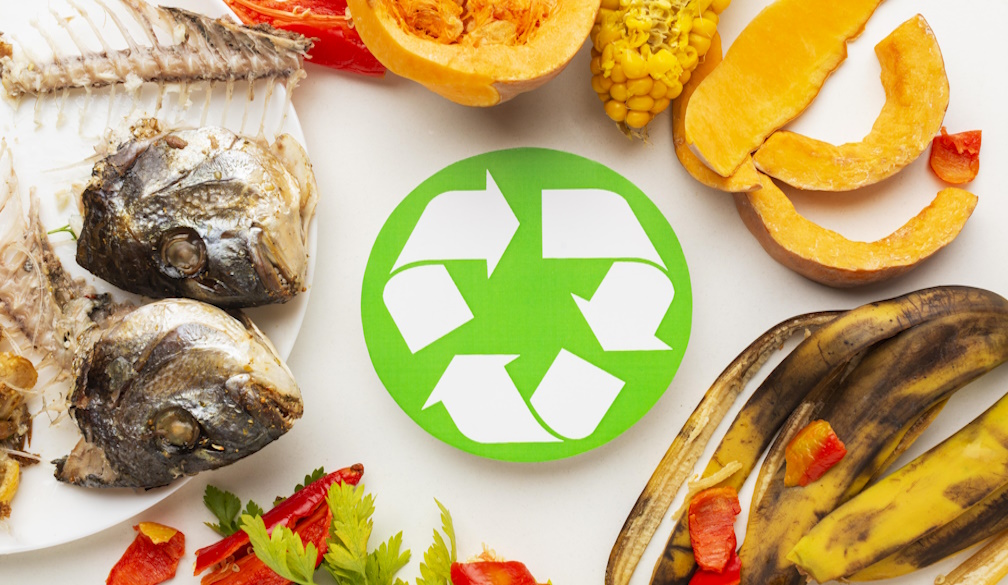
Short answer: Around 60% of Thailand's food waste was never edible in the first place. It is bones, shells, rinds, and husks. Meal planning cannot touch half of the problem. The fix that works in a Thai household is not buying less. It has somewhere for the scraps to go.
Weigh the scraps from one ordinary Thai dinner. The number is uncomfortable.
A whole grilled chicken leaves a pile of bones. Half a kilo of prawns for tom yum leaves shells and heads. A green papaya for som tam leaves the skin and seeds.
Add the pineapple crown, lemongrass stalks, galangal ends, and coriander roots that went into the curry paste.
A family of four can fill a kilogram of kitchen waste without anyone leaving food on their plate.
That is the part of the story almost every campaign ignores.
Thailand generated around 10.24 million tonnes of food waste in 2023, roughly 155 kilograms per person in the country, based on Pollution Control Department figures.
The standard response is a list we have all read by now:
- Plan your meals
- Write a shopping list
- Stop buying too much
- Eat your leftovers
All sensible. All aimed at less than half the problem.
The argument of this piece: Thai households do not waste food mainly because they are careless at the market. They waste it because Thai cooking produces a large volume of scraps nobody could have eaten, because the climate gives fresh food a brutally short life, and because almost every kitchen in the country is missing the same final step.
Sixty Percent of the Problem Has Nothing to Do With Overbuying
Here is the figure that reframes everything.
Of the food waste Thailand produces, only about 40% is ever edible. The rest is bones, shells, rinds, husks, and seeds, according to Pollution Control Department data cited in a 2025 national study published in PLOS One.
Think about what that means for the advice we keep repeating.
Meal planning cannot shrink a durian husk. A shopping list does not reduce the volume of prawn shells in a household that eats prawns.
Buying only what you need still leaves you with the crown of the pineapple, the tough outer leaves of the cabbage, and the bones from the fish you bought precisely because you needed it.
The discipline campaigns ask for are real and worth practising. It works on 40% of the pile, then stops.
This is not a Thai failing. It is a feature of a cuisine built on whole ingredients, fresh aromatics, and bone-in protein rather than pre-processed packs. A kitchen that makes its own curry paste will always generate more raw scrap than one that opens a jar.
What this means for you: If you have been following the standard checklist and your bin is still heavy, you are not doing it wrong. You have hit the ceiling of what that checklist can do.
The Thai Kitchen Runs on Fresh, and Fresh Has a Short Clock
Thai households shop differently.
Many buy at a local market every day or two rather than doing one big weekly run, and fridges are correspondingly small. That habit is genuinely good for reducing waste, because you buy closer to what you actually cook.
Then the heat gets a vote.
UNEP's Food Waste Index Report 2024 found that hotter countries tend to show higher household food waste per person, pointing to greater consumption of fresh food with substantial inedible parts and to weaker cold chains. The same report estimated Thai household food waste at 86 kilograms per person per year.
Consider what happens in a real Bangkok kitchen in April.
You cook rice at seven in the evening. By nine the next morning, in a room that never drops below 30 degrees, it has already turned. Curry that would sit safely on a bench in Melbourne for a day is a gamble here by lunchtime.
The window for eating leftovers is not two or three days. It is often a single meal.
What this means for you: A household that would happily eat leftovers ends up binning them anyway. The intention was fine. The thermometer overruled it.
One Wet Bag Ruins the Whole Bin
Bangkok collects roughly 10,000 tonnes of waste every day, and the BMA has stated that close to half of it is food waste mixed in with everything else.
That mixing is the real damage.
Dry cardboard, clean plastic bottles, and aluminium cans all carry resale value. Pour last night's tom yum over them in a 33-degree bin, and that value collapses.
The paper is pulp. The plastic is greasy. The whole bag now smells strongly enough that nobody wants to sort it by hand.
One wet bag behaves like a drop of ink in a glass of water. It does not just add itself to the mixture. It changes everything it touches.
The endpoint is landfill, where organic matter breaks down without oxygen and releases methane, a far more aggressive greenhouse gas than carbon dioxide over the short term. If you want the fuller picture of the environmental cost of food waste, it extends well past methane to the water, fuel, and farmland spent producing food nobody ate.
What this means for you: Separating wet scraps from everything else is the single highest-leverage thing you can do with your bin, because it rescues the recyclable value of everything sitting next to them.
Bangkok Just Put a Price on It
For decades, this was a purely moral argument. That changed in October 2025.
Under the 2025 Bangkok Ordinance on waste management fees:
|
Household situation |
Monthly fee |
|
Standard household, waste not separated |
60 baht |
|
Registered with "This House Doesn't Mix" and sorting into four categories |
20 baht |
Registration runs through the BKK Waste Pay platform, and the city has published the full scheme details and registration steps for residents.
The context behind the change is worth knowing. The BMA has said it spends in the order of 7 billion baht a year on waste collection and disposal while recovering only around 500 million baht in fees. The gap is the argument.
Forty baht a month will not change anyone's life. That is not the point.
The point is that separating food waste is now the default expectation rather than an optional virtue, backed by random compliance checks, and roughly two million Bangkok households sit in the affected category.
Which raises the question the policy does not answer.
Once you have separated your scraps into their own bag, what are you supposed to do with them for the next two days?
Why "Just Start a Compost Heap" Fails Here
The traditional answer is a compost pile in the garden.
It works beautifully in a Chiang Mai house with land. It fails almost immediately in the buildings where most Bangkok residents actually live.
Picture the realistic version.
You are in a 40-square-metre condo with a balcony you can cross in three steps. You put a compost bin out there in June.
Within 48 hours in that heat and humidity, ants have found it. Within a week, you have fruit flies, probably cockroaches, and a smell your neighbour two metres away is entitled to complain about. Rain gets in and turns the whole thing anaerobic and sour.
The bin goes in the bin.
Even the green food waste bags the city provides run into the same physics. The bag is correct. The bag is also sitting in a hot kitchen until collection day.
What this means for you: The problem was never willingness. The standard solution assumes a garden, a temperate climate, and a neighbour who is not sharing your wall.
The Last Step Most Kitchens Are Missing
This is where the picture is completed.
The gap in a Thai household is not restraint at the market and not good intentions about leftovers. It is processing at the point where the scraps are actually created.
Electric composters close that gap by doing indoors, in a sealed unit, what a garden heap does outdoors over months.
Microbial units break scraps down into a fertiliser output rather than simply drying them, and the better ones handle odour with active control systems rather than filters you replace every quarter. Household models such as Hass Electrical Food Waste Composters are built around one to two kilograms a day, which maps almost exactly onto the output of a family of four cooking Thai food at home.
Here is how the three realistic options compare for an urban household.
|
Bag it and bin it |
Outdoor compost heap |
Electric composter |
|
|
What it needs |
Nothing |
Garden space, shade, drainage |
Wall socket, about 0.4 sq m of floor |
|
Time to usable output |
Never |
2 to 6 months |
Around 24 hours |
|
What breaks it |
Odour, pests, higher fee, landfill methane |
Heat, monsoon rain, ants and cockroaches, neighbours |
Upfront cost |
|
Best for |
Nobody, now that fees have changed |
Houses with land, outside the city |
Condos, townhouses, dense suburbs |
The output matters as much as the disposal. Scraps that went to landfill as a liability come back as fertiliser for the plants on the same balcony that could not host a compost heap.
The Real Shift
For twenty years, Thailand's food waste conversation has been a conversation about guilt. Eat everything. Order less. Do not be wasteful.
That framing was always slightly wrong, and the data says so plainly. Most of what leaves a Thai kitchen is never going to be eaten by anyone. The bones were always going to be bones.
The countries making genuine progress on this stopped asking households to feel worse and started giving them somewhere for the scraps to go.
Bangkok has now done the first half of that by pricing separation into every monthly bill. The second half happens in individual kitchens, one at a time.
Your grandmother did not throw food scraps in a plastic bag. She put them back into the soil.
The technology in a modern composter is new. The idea is not.
Questions Thai Households Ask About Food Waste
If most food waste is inedible scraps, is meal planning still worth doing?
Yes, but treat it as half the job rather than the whole job.
Planning and shopping lists work on the roughly 40% of food waste that was edible, which is the portion that also cost you money at the market. Pair it with a disposal method that handles the other 60%, and you have covered the full pile instead of a slice of it.
Why does leftover food spoil so much faster in Thailand?
Ambient temperature. A kitchen sitting between 30 and 34 degrees is close to ideal for bacterial growth.
Cooked rice and coconut-based curries are particularly unforgiving. This is why leftover advice written for temperate countries translates badly here, and why fridge discipline matters more in Bangkok than in Sydney or London.
How do I get the 20 baht rate instead of 60 baht?
Register your household through the BKK Waste Pay app or at your district office, then sort waste into the four required categories: food waste, recyclables, hazardous waste, and general waste.
Registration requires your 11-digit house number, name, phone number, and photographs of your sorted waste. The BMA carries out random checks, and repeated non-compliance suspends the discount.
Can I actually compost on a Bangkok balcony?
An open compost bin usually fails within weeks because of heat, humidity, monsoon rain, and insects, and it tends to create problems with neighbours in high-density buildings.
A sealed electric unit is the practical alternative for condos and townhouses, because it contains odour and pests rather than inviting them.
How much food waste does a Thai family of four produce in a day?
Commonly, between one and two kilograms, once you include bones, shells, skins, and trimmings from home cooking.
That is the reason most household composters are specified with a 2 kg daily capacity. If your household eats out most nights, your volume will sit at the lower end.
Do electric food waste composters smell?
A well-designed unit should not, because odour control is the feature that determines whether the machine stays in the kitchen or ends up in storage.
Look for active odour management systems rather than replaceable carbon filters alone, since filters add a recurring cost every few months and lose effectiveness as they load up.
What do I do with the fertiliser it produces?
Use it on balcony plants, herb pots, or a garden bed, or share it with neighbours who garden.
Output from microbial composters is organic material rather than dried food, so it behaves like compost. Mix it into the soil rather than laying it on top, and start with a light ratio until you see how your plants respond.
Does any of this actually reduce emissions, or is it just moving waste around?
The emissions benefit comes from keeping organic matter out of landfills.
Buried food waste decomposes without oxygen and releases methane. Composting it aerobically avoids that pathway, which is why waste separation sits inside national and city climate plans rather than being framed purely as a tidiness measure.
