NewsPronto

 
Times Advertising


.

The Conversation

What are the 'reopen' protesters really saying?

  • Written by Diana Daly, Assistant Professor of Information, University of Arizona
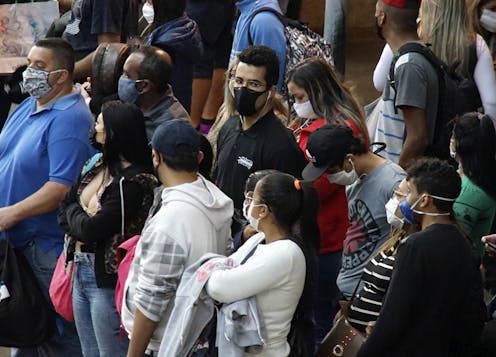
Protesters in Harrisburg, Pennsylvania, on April 20 call for the governor to lift restrictions meant to help combat the spread of the coronavirus.AP Photo/Matt Slocum

The “anti-lockdown” and #Reopen protests in the U.S. have powerful and secretive backers, but there are real Americans on the streets expressing their opinions.

As an ethno...

Read more: What are the 'reopen' protesters really saying?

The impulse to garden in hard times has deep roots

  • Written by Jennifer Atkinson, Senior Lecturer, Environmental Studies, University of Washington
During coronavirus lockdowns, gardens have served as an escape from feelings of alienation.Richard Bord/Getty Images

The coronavirus pandemic has set off a global gardening boom.

In the early days of lockdown, seed suppliers were depleted of inventory and reported “unprecedented” demand. Within the U.S., the trend has beencompared to...

Read more: The impulse to garden in hard times has deep roots

Why the WHO, often under fire, has a tough balance to strike in its efforts to address health emergencies

  • Written by Andrew Lakoff, Professor of Sociology, University of Southern California – Dornsife College of Letters, Arts and Sciences
Director-General of the World Health Organization (WHO), Tedros Adhanom Ghebreyesus, right, has his temperature taken as he arrives at Ruhenda airport in Butembo in eastern Congo, June 15, 2019. AP Photo/Al-hadji Kudra Maliro

The Trump administration recently declared, in the midst of the coronavirus emergency, that it would suspend the United...

Read more: Why the WHO, often under fire, has a tough balance to strike in its efforts to address health...

Spring signals female bees to lay the next generation of pollinators

  • Written by Lila Westreich, Ph.D. Candidate, School of Environment and Forest Sciences, University of Washington
Northern amber bumble bee queen (_Bombus borealis_) on a dandelion flower.Sarah A. Johnson, CC BY-ND

The first days of spring – brighter and warmer – are a biological trigger for female bees to wake up from hibernation and begin to build future colonies.

These enormous bees, sometimes two to three times larger than a worker bee, are...

Read more: Spring signals female bees to lay the next generation of pollinators

The 'first scientist's 800-year-old tonic for what ails us: The truth

  • Written by Richard Gunderman, Chancellor's Professor of Medicine, Liberal Arts, and Philanthropy, Indiana University
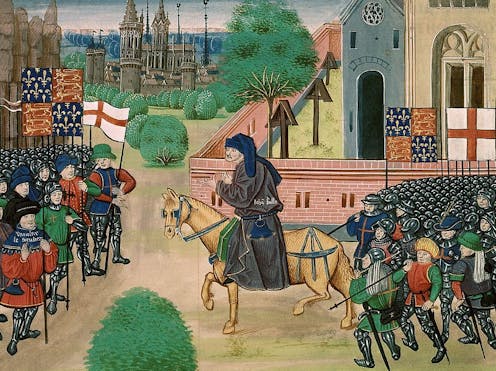
English scientist Roger Bacon believed everyone has a responsibility to think for themselves. Bibliothèque interuniversitaire de santé, CC BY

It seems that science has been taking a beating lately. From decades of denial by the tobacco industry that smoking causes cancer to more recent attempts to use the COVID-19 pandemic to score pol...

Read more: The 'first scientist's 800-year-old tonic for what ails us: The truth

Why are kids asking such big questions during the pandemic?

  • Written by Jana Mohr Lone, Director of the Center for Philosophy for Children; Affiliate Associate Professor of Philosophy, University of Washington
All children harbor intense curiosity.Erdark/Getty Images

Why do people have to die?

Are mistakes always bad?

Can you be happy and sad at the same time?

Kids often ask questions like these that are hard if not impossible to answer. When children raise uncomfortable questions or questions that seem to have no answers, adults tend to respond with...

Read more: Why are kids asking such big questions during the pandemic?

We found and tested 47 old drugs that might treat the coronavirus: Results show promising leads and a whole new way to fight COVID-19

  • Written by Nevan Krogan, Professor and Director of Quantitative Biosciences Institute & Senior Investigator at the Gladstone Institutes, University of California, San Francisco
Testing in cells is an important and exciting first step.elkor/E+ via Getty Images

The more researchers know about how the coronavirus attaches, invades and hijacks human cells, the more effective the search for drugs to fight it. That was the idea my colleagues and I hoped to be true when we began building a map of the coronavirus two months ago....

Read more: We found and tested 47 old drugs that might treat the coronavirus: Results show promising leads...

Why apparel brands' efforts to police their supply chains aren't working

  • Written by Jason Judd, Executive Director, Cornell Univeristy ILR School New Conversations Project, Cornell University
Consumers don't always know what's behind a label.Wachiwit/Getty Images

The Research Brief is a short take about interesting academic work.

The big idea

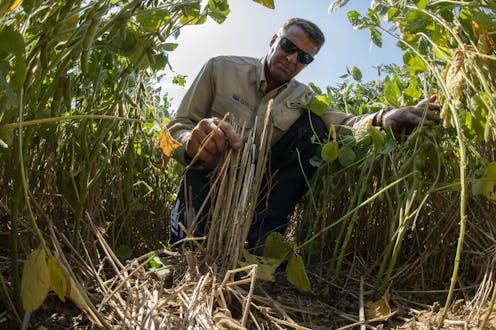
For years, apparel brands have promised to police their supply chains to root out unsafe conditions and worker abuse. But new research from Cornell University’s School of Industrial and Labor...

Read more: Why apparel brands' efforts to police their supply chains aren't working

Coronavirus: Why is it so hard to aid small businesses hurt by a disaster?

  • Written by Maria K. Watson, Research Assistant Professor in Urban Planning, Texas A&M University
Eric Wang of Burmese Restaurant Thamee in Washington, D.C., was among the millions of small business owners hoping to get SBA aid.Eric Baradat/AFP via Getty Images

The U.S. government has committed hundreds of billions of dollars to help small businesses weather the coronavirus pandemic. But early reports suggest larger companies are gobbling up...

Read more: Coronavirus: Why is it so hard to aid small businesses hurt by a disaster?

More Articles ...

  1. Infected with the coronavirus but not showing symptoms? A physician answers 5 questions about asymptomatic COVID-19
  2. Language differences spark fear amid the coronavirus pandemic
  3. Refugees tell stories of problems – and unity – in facing the coronavirus
  4. How could an explosive Big Bang be the birth of our universe?
  5. How Apple and Google will let your phone warn you if you've been exposed to the coronavirus
  6. Masks and distancing make it tough for the hard-of-hearing, but here's how to help
  7. Can your community handle a natural disaster and coronavirus at the same time?
  8. Brazilian mystics say they're sent by aliens to 'jump-start human evolution' – but their vision for a more just society is not totally crazy
  9. Endangered tigers face growing threats from an Asian road-building boom
  10. Archaeologists have a lot of dates wrong for North American indigenous history – but we're using new techniques to get it right
  11. Empty pews take a financial toll on many US congregations
  12. I was a nurse on the front lines of Ebola, and I saw that nurses need support for the trauma and pain they experience
  13. Wait times remain stubbornly long in hospital emergency rooms
  14. Top football recruits bring in big money for colleges – COVID-19 could threaten revenue
  15. Are we living in a dystopia?
  16. What does 'survival of the fittest' mean in the coronavirus pandemic? Look to the immune system
  17. As states weigh human lives versus the economy, history suggests the economy often wins
  18. Scientist at work: Trapping urban coyotes to see if they can be 'hazed' away from human neighborhoods
  19. Very good dogs don't necessarily make very good co-workers
  20. Climate change threatens drinking water quality across the Great Lakes
  21. Why are white supremacists protesting to 'reopen' the US economy?
  22. Kids have a right to a basic education, according to a new legal milestone
  23. COVID-19 is a dress rehearsal for entrepreneurial approaches to climate change
  24. How the Trump administration accidentally insured over 200,000 through Obamacare
  25. 3 volunteering guidelines to heed during the coronavirus pandemic
  26. 3 crisis-leadership lessons from Abraham Lincoln
  27. Measuring maternal grief in Africa
  28. Who's at risk of not being counted in the 2020 census: 6 essential reads
  29. Scientists at work: Uncovering the mystery of when and where sharks give birth
  30. Coronavirus impact: Meat processing plants weigh risks of prosecution if they're blamed for spreading infection
  31. Welcome to your sensory revolution, thanks to the pandemic
  32. Failure to count COVID-19 nursing home deaths could dramatically skew US numbers
  33. Lethargic global response to COVID-19: How the human brain's failure to assess abstract threats cost us dearly
  34. 5 things college students should include in a plan for their wellness
  35. How the US military could help fight the coronavirus outbreak
  36. 5 lessons from the coronavirus about inequality in America
  37. A global mask shortage may leave farmers and farm workers exposed to toxic pesticides
  38. From pews to patients – churches have long served as hospitals, particularly in times of crisis
  39. Jewish history explains why some ultra-Orthodox communities defy coronavirus restrictions
  40. Coronavirus bailouts will cost taxpayers hundreds of billions of dollars – unlike past corporate rescues that actually made money for the US Treasury
  41. The coronavirus genome is like a shipping label that lets epidemiologists track where it's been
  42. Are people with pets less likely to die if they catch the coronavirus?
  43. How to listen to your loved ones with empathy when you yourself are feeling the strain of social distancing
  44. Tomanowos, the meteorite that survived mega-floods and human folly
  45. Coronavirus drifts through the air in microscopic droplets – here's the science of infectious aerosols
  46. How the Hubble Space Telescope opened our eyes to the first galaxies of the universe
  47. As the coronavirus interrupts global supply chains, people have an alternative – make it at home
  48. Mass graves for coronavirus victims shouldn't come as a shock – it's how the poor have been buried for centuries
  49. 6 tips for parents who home-school
  50. 'Reopen' protest movement created, boosted by fake grassroots tactics