NewsPronto

 
Men's Weekly

.

The Conversation

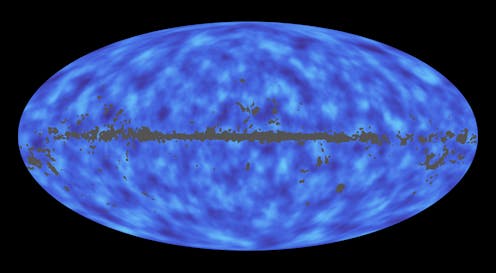
Watching the planet breathe: Studying Earth's carbon cycle from space

  • Written by Berrien Moore III, Vice President, Weather & Climate Programs; Dean, College of Atmospheric & Geographic Sciences; Director, National Weather Center, University of Oklahoma
imageAverage carbon dioxide concentrations, Oct. 1 - Nov. 11, 2014, measured by the Orbiting Carbon Observatory-2 satellite.NASA

Carbon is a building block of life on our planet. It is stored in reservoirs on Earth – in rocks, plants and soil – in the oceans, and in the atmosphere. And it cycles constantly between these reservoirs.

Understand...

Read more: Watching the planet breathe: Studying Earth's carbon cycle from space

How workers – not companies – are bearing the growing burden of government

  • Written by Jay L. Zagorsky, Economist and Research Scientist, The Ohio State University

Tax day is here once more, and tens of millions of Americans will rush to file their income taxes by this year’s deadline of April 18 (rather than April 15 for a variety of reasons).

Although most of us probably identify the federal income tax with the revenue that ultimately fills the goverment’s coffers and allows it to spend our...

Read more: How workers – not companies – are bearing the growing burden of government

Is there room for broadband in the Trump infrastructure agenda?

  • Written by Krishna Jayakar, Co-Director, Institute for Information Policy and Associate Professor of Telecommunications, Pennsylvania State University
imageThere's still a lot of the U.S. waiting to be wired up.asharkyu/Shutterstock.com

A promise to restore America’s crumbling infrastructure was a key part of President Donald Trump’s campaign speeches. He pledged to rebuild America’s roads and bridges, ports and highways, which are undoubtedly in need of repair. Less clear in his...

Read more: Is there room for broadband in the Trump infrastructure agenda?

Beyond instant runoff: A better way to conduct multi-candidate elections

  • Written by Christoph Borgers, Professor of Mathematics, Tufts University
imageA vote is cast in New Hampshire 2012 primary. AP Photo/Matt Rourke

Last November, Maine voters approved, by a slim majority, a ballot initiative to adopt a voting system called “instant runoff.”

This system has been proposed as an alternative to our traditional election method – called “plurality voting” – by...

Read more: Beyond instant runoff: A better way to conduct multi-candidate elections

Do Ivanka Trump and Jared Kushner have too much power?

  • Written by Henry F. (Chip) Carey, Associate Professor, Political Science , Georgia State University
imageDonald and Ivanka Trump walk to board Marine One on the South Lawn of the White House, Feb. 1, 2017. AP Photo/Evan Vucci

Much attention has been focused recently on President Trump’s “new” foreign policy.

This policy change is symbolized by the U.S. missile attack on Syria’s Shayrat airfield, which followed Syrian President...

Read more: Do Ivanka Trump and Jared Kushner have too much power?

Building jobs in the Rust Belt: The role of education

  • Written by Dana Mitra, Professor of Education Theory and Policy, Pennsylvania State University
imageJob shadowing is one way that students can understand career options in their Rust Belt communities.U.S. Army Corps of Engineers / flickr, CC BY-SA

When my father-in-law struggled in school in a mill town along the Ohio River, his parents suggested that he head across the bridge and work in the steel mill. It was a path that once created stable...

Read more: Building jobs in the Rust Belt: The role of education

In the wake of Syrian missile strike, a look inside Russia's alternate media reality

  • Written by Cynthia Hooper, Associate Professor of History, College of the Holy Cross

On April 11 the White House released an intelligence report accusing Russia of trying to cover up the use of chemical weapons by Syrian President Bashar Al-Assad through a global disinformation campaign replete with “false narratives.”

As a professor of Soviet history with an interest in media studies, I’ve been following...

Read more: In the wake of Syrian missile strike, a look inside Russia's alternate media reality

Why Easter is called Easter, and other little-known facts about the holiday

  • Written by Brent Landau, Lecturer in Religious Studies, University of Texas at Austin
imageWhat is the origin of Easter eggs?Katie Morrow, CC BY-NC-ND

This Sunday, April 16, Christians will be celebrating Easter, the day on which the resurrection of Jesus is said to have taken place. The date of celebration changes from year to year.

The reason for this variation is that Easter always falls on the first Sunday after the first full moon...

Read more: Why Easter is called Easter, and other little-known facts about the holiday

How following economics 101 could have prevented United's PR nightmare

  • Written by Volodymyr Bilotkach, Senior Lecturer in Economics, Newcastle University
imageThe not so friendly skies?United plane via www.shutterstock.com

On April 9, a passenger was forcibly removed from a United Airlines flight from Chicago O’Hare to Louisville after the carrier was unable to find volunteers to accommodate four of its employees on standby.

Dramatic videos of the incident have gone viral on YouTube and social...

Read more: How following economics 101 could have prevented United's PR nightmare

How economics 101 could have prevented United's PR nightmare

  • Written by Volodymyr Bilotkach, Senior Lecturer in Economics, Newcastle University
imageThe not so friendly skies?United plane via www.shutterstock.com

On April 9, a passenger was forcibly removed from a United Airlines flight from Chicago O’Hare to Louisville after the carrier was unable to find volunteers to accommodate four of its employees on standby.

Dramatic videos of the incident have gone viral on YouTube and social...

Read more: How economics 101 could have prevented United's PR nightmare

More Articles ...

  1. Will Trump's cuts inspire more DIY foreign aid?
  2. Enzymes versus nerve agents: Designing antidotes for chemical weapons
  3. An electric fix for removing long-lasting chemicals in groundwater
  4. The sound of inclusion: Why teachers' words matter
  5. Three reasons for optimism in Somalia
  6. San Francisco is using a Montana sheriff's playbook to sue Trump on sanctuary cities
  7. The key to writing a Pulitzer Prize-winning story? Get emotional
  8. Who wears the pants in a relationship matters – especially if you're a woman
  9. Maximizers vs. minimizers: The personality trait that may guide your medical decisions – and costs
  10. Using randomness to protect election integrity
  11. Melding mind and machine: How close are we?
  12. What Trump’s foreign aid cuts would mean for global democracy
  13. Are the rich more selfish than the rest of us?
  14. Why can't America just take out Assad?
  15. Strikes against Syria: Did Trump need permission from Congress?
  16. US airstrike on Syria: What next?
  17. Trump’s attack on Syria: Four takeaways
  18. The Case for Christ: What's the evidence for the resurrection?
  19. To conserve tropical forests and wildlife, protect the rights of people who rely on them
  20. US foreign aid, explained
  21. Cutting UN peacekeeping operations: What will it say about America?
  22. 'Making Europe Great Again,' Trump's online supporters shift attention to the French election
  23. DNA dating: How molecular clocks are refining human evolution's timeline
  24. During World War I, a silent film spoke volumes about freedom of speech
  25. Who is a better ally for the US – Russia or China?
  26. The face of Latin American migration is rapidly changing. US policy isn't keeping up
  27. North Korea cyberspace offensives pose challenge in US-China relations
  28. Donor-advised funds: Charities with benefits
  29. Techniques of 19th-century fake news reporter teach us why we fall for it today
  30. What's at stake as President Trump sits down with China’s Xi
  31. Yes, we can do 'sound' climate science even though it's projecting the future
  32. With new technology, mathematicians turn numbers into art
  33. Bosnia's 25-year struggle with transitional justice
  34. The unique case for rural charter schools
  35. How the Trump budget undercuts security risks posed by pandemics
  36. Facial recognition is increasingly common, but how does it work?
  37. Farmers can profit economically and politically by addressing climate change
  38. How Christianity shaped the experience and memories of World War I
  39. The unique strategy Netflix deployed to reach 90 million worldwide subscribers
  40. Ecuador's populist electoral victory for Moreno shows erosion of democracy
  41. How Ayn Rand's 'elitism' lives on in the Trump administration
  42. 1917: Woodrow Wilson's call to war pulled America onto a global stage
  43. Healthy soil is the real key to feeding the world
  44. Can better advice keep you safer online?
  45. From shell-shock to PTSD, a century of invisible war trauma
  46. How World War I ushered in the century of oil
  47. 'Default' choices have big impact, but how to make sure they’re used ethically?
  48. Can the study of epigenomics lead to personalized cancer treatment?
  49. The federal government will stop collecting data on LGBT seniors. That's bad news for their health
  50. Should Americans fear the 'nuclear option' in Congress?