NewsPronto

 
Times Advertising


.

The Conversation

Arecibo telescope's fall is indicative of global divide around funding science infrastructure

  • Written by Raquel Velho, Assistant Professor of Science and Technology Studies, Rensselaer Polytechnic Institute
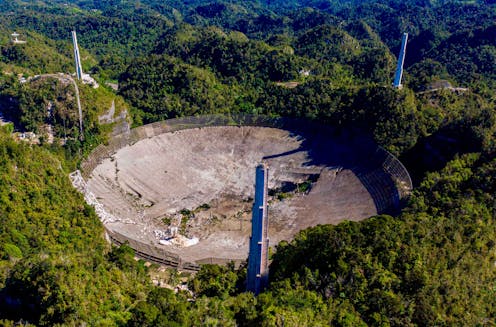
imageOnce featured in movies, TV shows and video games, the Arecibo Observatory was the pride of Puerto Rico.RICARDO ARDUENGO / Contributor / AFP via Getty Images

A mere two weeks after the National Science Foundation declared it would close the Arecibo single-dish radio telescope – once the largest in the world – the observatory took a...

Read more: Arecibo telescope's fall is indicative of global divide around funding science infrastructure

The Marshall Islands could be wiped out by climate change – and their colonial history limits their ability to save themselves

  • Written by Autumn Bordner, Research Fellow, University of California, Berkeley
imageThe Marshall Islands and other small island nations are urgently threatened by rising seas.Stefan Lins/Flickr, CC BY

Along U.S. coastlines, from California to Florida, residents are getting increasingly accustomed to “king tides.” These extra-high tides cause flooding and wreak havoc on affected communities. As climate change raises sea...

Read more: The Marshall Islands could be wiped out by climate change – and their colonial history limits...

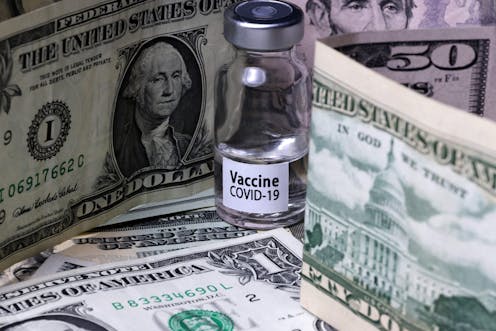
Why paying people to get the coronavirus vaccine won't work

  • Written by Ana Santos Rutschman, Assistant Professor of Law, Saint Louis University
imageAlthough monetary incentives work, there are potential drawbacks.Joel Saget/AFP via Getty Images

The first COVID-19 vaccine to gain emergency use authorization in the U.S. could roll out within days, as Pfizer and BioNTech’s candidate was endorsed by an external advisory panel to the Food and Drug Administration on Dec. 10. Two days earlier,...

Read more: Why paying people to get the coronavirus vaccine won't work

Scientists suggest US embassies were hit with high-power microwaves – here's how the weapons work

  • Written by Edl Schamiloglu, Distinguished Professor of Electrical and Computer Engineering, Associate Dean for Research and Innovation, School of Engineering, University of New Mexico, University of New Mexico
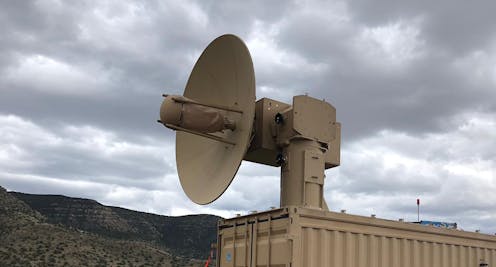
imageThis U.S. Air Force microwave weapon is designed to knock down drones by frying their electronics.AFRL Directed Energy Directorate

The mystery ailment that has afflicted U.S. embassy staff and CIA officers off and on over the last four years in Cuba, China, Russia and other countries appears to have been caused by high-power microwaves, according...

Read more: Scientists suggest US embassies were hit with high-power microwaves – here's how the weapons work

Why does the Electoral College exist, and how does it work? 5 essential reads

  • Written by Jeff Inglis, Politics + Society Editor, The Conversation US
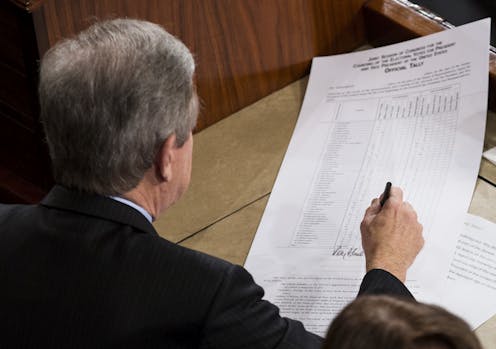
imageMissouri Republican Sen. Roy Blunt signs an official tally of the Electoral College votes from the 2016 presidential election, in January 2017.AP Photo/Zach Gibson

On Dec. 14, the members of the Electoral College will meet in state capitols across the country and cast their ballots for president and vice president. The expected vote total: 306 for...

Read more: Why does the Electoral College exist, and how does it work? 5 essential reads

Why shielding businesses from coronavirus liability is a bad idea

  • Written by Timothy D. Lytton, Distinguished University Professor & Professor of Law, Georgia State University
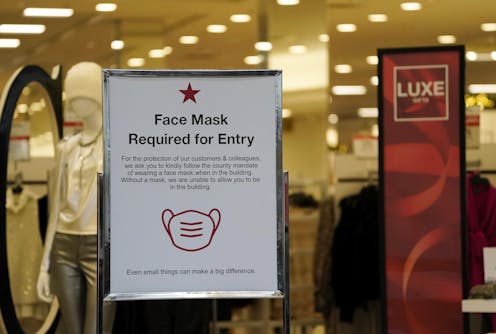
imagePosting signs like this are often enough to avoid liability. AP Photo/David Zalubowski

Congress may be close to a deal on another coronavirus bailout, but Senate Republican demands for liability protections for businesses remain a major obstacle.

Senate Majority Leader Mitch McConnell has long warned of an “avalanche” of lawsuits that...

Read more: Why shielding businesses from coronavirus liability is a bad idea

5 years after Paris: How countries’ climate policies match up to their promises, and who's aiming for net zero emissions

  • Written by Morgan Bazilian, Professor of Public Policy and Director, Payne Institute, Colorado School of Mines
imageEven if every country meets its commitments, the world will still be on track to warm by more than 3 degrees Celsius this century, a new UNEP report shows.Kevin Frayer/Getty Images

Saturday marks the fifth anniversary of the Paris climate agreement – the commitment by almost every country to try to keep global warming well below 2 degrees...

Read more: 5 years after Paris: How countries’ climate policies match up to their promises, and who's aiming...

Oregon just decriminalized all drugs – here's why voters passed this groundbreaking reform

  • Written by Scott Akins, Professor, Sociology Department, Oregon State University
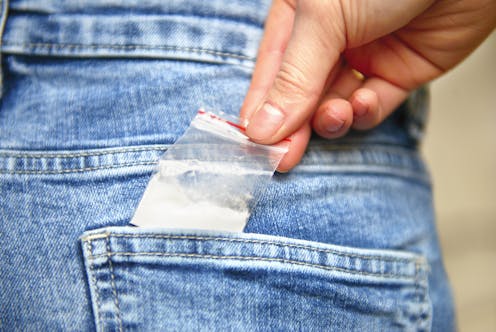
imageAccording to Oregon law, possessing a small amount of drugs for personal consumption is now a civil – rather than criminal – offense. Peter Dazeley via Getty

Oregon became the first state in the United States to decriminalize the possession of all drugs on Nov. 3, 2020.

Measure 110, a ballot initiative funded by the Drug Policy...

Read more: Oregon just decriminalized all drugs – here's why voters passed this groundbreaking reform

Why do scientists care about worms?

  • Written by Helen Robertson, Postdoctoral Scholar of Organismal Biology and Anatomy, University of Chicago
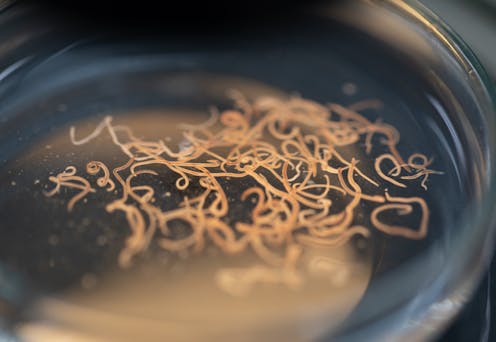
imageWhether in the wild or in the lab, worms have an interesting story to tell.Sinhyu/iStock via Getty Images

I traveled to a marine research station on a picturesque Swedish fjord many times over the four years I worked on my Ph.D. What brought me back again and again? Buried in the mud off the west coast of Sweden lives a small orangey brown worm,...

Read more: Why do scientists care about worms?

More Articles ...

  1. Why we're so bad at counting the calories we eat, drink or burn
  2. Why the Virgin of Guadalupe is more than a religious icon to Catholics in Mexico
  3. Latinos are especially reluctant to get flu shots – how a small clinic in Indiana found ways to overcome that
  4. We discovered a 115,000-year-old iguana nest fossil in the Bahamas
  5. Kids want to learn more about mental illness and how to cope with parents who live with it
  6. Foreign policy is Biden's best bet for bipartisan action, experts say – but GOP is unlikely to join him on climate change
  7. Workers are looking for direction from management – and any map is better than no map
  8. Bitter battles between stinkbugs and carnivorous mice could hold clues for controlling human pain
  9. Fragments of energy – not waves or particles – may be the fundamental building blocks of the universe
  10. The Electoral College system isn't 'one person, one vote'
  11. Daily DIY sniff checks could catch many cases of COVID-19
  12. 4 ways to close the COVID-19 racial health gap
  13. Computer science jobs pay well and are growing fast. Why are they out of reach for so many of America's students?
  14. When can children get the COVID-19 vaccine? 5 questions parents are asking
  15. Can Joe Biden win the transition?
  16. In 'The Queen's Gambit' and beyond, chess holds up a mirror to life
  17. The iconic American inventor is still a white male – and that's an obstacle to race and gender inclusion
  18. Nigerians got their abusive SARS police force abolished – but elation soon turned to frustration
  19. The Taliban are megarich – here's where they get the money they use to wage war in Afghanistan
  20. How remote learning is making educational inequities worse
  21. Peatlands keep a lot of carbon out of Earth's atmosphere, but that could end with warming and development
  22. Genetic engineering transformed stem cells into working mini-livers that extended the life of mice with liver disease
  23. We scanned the DNA of 8,000 people to see how facial features are controlled by genes
  24. From permafrost microbes to survivor songbirds – research projects are also victims of COVID-19 pandemic
  25. Substack isn't a new model for journalism – it’s a very old one
  26. New electoral districts are coming – an old approach can show if they're fair
  27. Racism at the county level associated with increased COVID-19 cases and deaths
  28. How sensors monitor and measure our bodies and the world around us
  29. Donors grow more generous when they support nonprofits facing hostile environments abroad
  30. Brazil's president rejects COVID-19 vaccine, undermining a century of progress toward universal inoculation
  31. The Atlantic: The driving force behind ocean circulation and our taste for cod
  32. Why Biden will find it hard to undo Trump's costly 'America first' trade policy
  33. Intimate partner violence has increased during pandemic, emerging evidence suggests
  34. How do archaeologists know where to dig?
  35. I'm an astronomer and I think aliens may be out there – but UFO sightings aren't persuasive
  36. How Hanukkah came to be an annual White House celebration
  37. This DIY contact tracing app helps people exposed to COVID-19 remember who they met
  38. Wisconsin's not so white anymore – and in some rapidly diversifying cities like Kenosha there's fear and unrest
  39. As the pandemic rages, the US could use a little bit more 'samfundssind'
  40. How COVID-19 vaccines will get from the factory to your local pharmacy
  41. How to fight Holocaust denial in social media – with the evidence of what really happened
  42. Trump plan to revive the gallows, electric chair, gas chamber and firing squad recalls a troubled history
  43. What are emergency use authorizations, and do they guarantee that a vaccine or drug is safe?
  44. How TikTok is upending workplace social media policies – and giving us rebel nurses and dancing cops
  45. In a year of Black Lives Matter protests, Dutch wrestle (again) with the tradition of Black Pete
  46. Tiny treetop flowers foster incredible beetle biodiversity
  47. How a flu virus shut down the US economy in 1872 – by infecting horses
  48. What makes the world's biggest surfable waves?
  49. The chattering classes got the 'Hillbilly Elegy' book wrong – and they're getting the movie wrong, too
  50. Vaccines against SARS-CoV-2 will have side effects – that's a good thing