

NewsPronto

 
The Times


.

USA Conversation

The Conversation USA

The Conversation USA

Weird space weather seems to have influenced human behavior on Earth 41,000 years ago – our unusual scientific collaboration explores how

  • Written by Raven Garvey, Associate Professor of Anthropology, University of Michigan
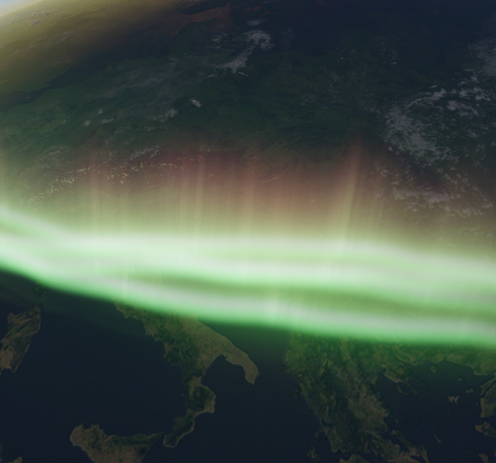
imageWandering magnetic fields would have had noticeable effects for humans.Maximilian Schanner (GFZ Helmholtz Centre for Geosciences, Potsdam, Germany)

Our first meeting was a bit awkward. One of us is an archaeologist who studies how past peoples interacted with their environments. Two of us are geophysicistswho investigate interactions between solar...

Read more: Weird space weather seems to have influenced human behavior on Earth 41,000 years ago – our...

More Articles ...

  1. Sculptor galaxy image provides brilliant details that will help astronomers study how stars form
  2. Many Texas communities are dangerously unprepared for floods − lack of funding plays a big role
  3. How universities can keep protests from turning violent: 3 lessons from the 2024 pro-Palestinian encampments
  4. Europe is stuck in a bystander role over Iran’s nuclear program after US, Israeli bombs establish facts on the ground
  5. How 17M Americans enrolled in Medicaid and ACA plans could lose their health insurance by 2034
  6. A law from the era of Red Scares is supercharging Trump administration’s power over immigrants and noncitizens
  7. News quiz text reminders
  8. ABC’s and CBS’s settlements with Trump are a dangerous step toward the commander in chief becoming the editor-in-chief
  9. Is there any hope for the internet?
  10. 2026 FIFA World Cup expansion will have a big climate footprint, with matches from Mexico to Canada – here’s what fans can do
  11. When big sports events like FIFA World Cup expand, their climate footprint expands too
  12. When big sports events expand, like FIFA’s 2026 World Cup matches across North America, their climate footprint expands too
  13. Listening to nonhumans: What music can teach about humanity’s relationships with nature and the divine
  14. Zohran Mamdani’s last name reflects centuries of intercontinental trade, migration and cultural exchange
  15. Trump’s Brazil tariffs point more to his enduring bond with far-right Bolsonaro than economic concerns
  16. Most Pennsylvania voters ignore judicial elections − a political scientist explains why they matter, especially in a battleground state
  17. Who was the first pirate?
  18. When disasters fall out of the public eye, survivors continue to suffer – a rehabilitation professional explains how sustained mental health support is critical to recovery
  19. FEMA’s flood maps often miss dangerous flash flood risks, leaving homeowners unprepared
  20. How citizenship chaos was averted, for now, by a class action injunction against Trump’s birthright citizenship order
  21. Why it can be hard to warn people about dangers like floods – communication researchers explain the role of human behavior
  22. IRS says churches may endorse political candidates despite a decades-old federal statute barring them from doing that
  23. Why do so many American workers feel guilty about taking the vacation they’ve earned?
  24. Inequality has risen from 1970 to Trump − that has 3 hidden costs that undermine democracy
  25. Spacecraft equipped with a solar sail could deliver earlier warnings of space weather threats to Earth’s technologies
  26. AI in health care could save lives and money − but change won’t happen overnight
  27. Muscle weakness in cancer survivors may be caused by treatable weakness in blood vessels – new research
  28. Spotted lanternflies love grapevines, and that’s bad for Pennsylvania’s wine industry
  29. School smartphone bans reflect growing concern over youth mental health and academic performance
  30. This tropical plant builds isolated ‘apartments’ to prevent battles among the aggressive ant tenants it relies on for survival
  31. Justice Department efforts to strip citizenship from naturalized Americans likely violate constitutional rights
  32. Trump’s ‘big’ bill gives millions of taxpayers a new charitable tax break, but whether it will help nonprofits is unclear
  33. The AI therapist will see you now: Can chatbots really improve mental health?
  34. Wildfire smoke can make your outdoor workout hazardous to your health – an exercise scientist explains how to gauge the risk
  35. Why recycling solar panels is harder than you might think − an electrical engineer explains
  36. How weather changes cause migraines – a neurologist explains the triggers and what you can do to ease the pain
  37. Dune patterns in California desert hold clues that help researchers map Mars’ shifting sands
  38. Jimmy Swaggart’s rise and fall shaped the landscape of American televangelism
  39. That $20 dress direct from China now costs $30 after Trump closed a tariff loophole – and the US will soon end the ‘de minimis’ exemption for the rest of the world, too
  40. A weakened Iran and Hezbollah gives Lebanon an opening to chart path away from the region’s conflicts − will it be enough?
  41. AI and art collide in this engineering course that puts human creativity first
  42. My city was one of hundreds expecting federal funds to help manage rising heat wave risk – then EPA terminated the grants
  43. Trump administration’s lie detector campaign against leakers is unlikely to succeed and could divert energy from national security priorities
  44. ‘Big Beautiful Bill’ will have Americans paying higher prices for dirtier energy
  45. Exploring questions of meaning, ethics and belief through Japanese anime
  46. How the Catholic Church helped change the conversation about capital punishment in the United States
  47. How Philadelphia’s current sanitation strike differs from past labor disputes in the city
  48. How Philadelphia’s sanitation strike differed from past labor disputes in the city
  49. Scientific norms shape the behavior of researchers working for the greater good
  50. How slashing university research grants impacts Colorado’s economy and national innovation – a CU Boulder administrator explains