
NewsPronto

 
The Times


.

USA Conversation

The Conversation USA

The Conversation USA

The hidden cost of convenience: How your data pulls in hundreds of billions of dollars for app and social media companies

  • Written by Kassem Fawaz, Associate Professor of Electrical and Computer Engineering, University of Wisconsin-Madison
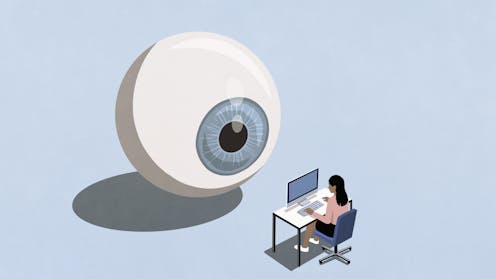
imageMany apps and social media platforms collect detailed information about you as you use them, and sometimes even when you're not using them.Malte Mueller/fStop via Getty images

You wake up in the morning and, first thing, you open your weather app. You close that pesky ad that opens first and check the forecast. You like your weather app, which...

Read more: The hidden cost of convenience: How your data pulls in hundreds of billions of dollars for app and...

More Articles ...

  1. Why the US bombed a bunch of metal tubes − a nuclear engineer explains the importance of centrifuges to Iranian efforts to build nuclear weapons
  2. Bill Moyers’ journalism strengthened democracy by connecting Americans to ideas and each other, in a long and extraordinary career
  3. Invasive carp threaten the Great Lakes − and reveal a surprising twist in national politics
  4. 1 in 4 Americans reject evolution, a century after the Scopes monkey trial spotlighted the clash between science and religion
  5. Who’s the most American? Psychological studies show that many people are biased and think it’s a white English speaker
  6. Here’s a way to save lives, curb traffic jams and make commutes faster and easier − ban left turns at intersections
  7. Why the traditional college major may be holding students back in a rapidly changing job market
  8. What’s at risk for Arctic wildlife if Trump expands oil drilling in the fragile National Petroleum Reserve-Alaska
  9. 1 in 3 Florida third graders have untreated cavities – how parents can protect their children’s teeth
  10. How can the James Webb Space Telescope see so far?
  11. From the marriage contract to breaking the glass under the chuppah, many Jewish couples adapt their weddings to celebrate gender equality
  12. Universities in every state care for congressional papers that document US political history − federal cuts put their work at risk
  13. Iran emerged weakened and vulnerable after war with Israel − and that could mean trouble for country’s ethnic minorities
  14. Supreme Court upholds childproofing porn sites
  15. What the Supreme Court ruling against ‘universal injunctions’ means for court challenges to presidential actions
  16. Michelin Guide scrutiny could boost Philly tourism, but will it stifle chefs’ freedom to experiment and innovate?
  17. What Trump’s budget proposal says about his environmental values
  18. How Zohran Mamdani’s win in the New York City mayoral primary could ripple across the country
  19. Cyberattacks shake voters’ trust in elections, regardless of party
  20. Why energy markets fluctuate during an international crisis
  21. Scandinavia has its own dark history of assimilating Indigenous people, and churches played a role – but are apologizing
  22. Jews were barred from Spain’s New World colonies − but that didn’t stop Jewish and converso writers from describing the Americas
  23. Supreme Court rules that states may deny people covered by Medicaid the freedom to choose Planned Parenthood as their health care provider
  24. Toxic algae blooms are lasting longer than before in Lake Erie − why that’s a worry for people and pets
  25. Toxic algae blooms are lasting longer in Lake Erie − why that’s a worry for people and pets
  26. Natural hazards don’t disappear when the storm ends or the earthquake stops – they evolve
  27. Hurricane Helene set up future disasters, from landslides to flooding – cascading hazards like these are now upending risk models
  28. Grilling with lump charcoal: Is US-grown hardwood really in that bag?
  29. Uranium enrichment: A chemist explains how the surprisingly common element is processed to power reactors and weapons
  30. Yelp’s addition of a ‘Black-owned’ tag led to a slight drop in business ratings in Detroit
  31. Self-censorship and the ‘spiral of silence’: Why Americans are less likely to publicly voice their opinions on political issues
  32. Detroit restaurants identified as ‘Black-owned’ on Yelp saw a slight drop in business ratings
  33. Using TikTok could be making you more politically polarized, new study finds
  34. What if universal rental assistance were implemented to deal with the housing crisis?
  35. I’m a physician who has looked at hundreds of studies of vaccine safety, and here’s some of what RFK Jr. gets wrong
  36. Israel-Iran war recalls the 2003 US invasion of Iraq – a war my undergraduate students see as a relic of the past
  37. A preservative removed from childhood vaccines 20 years ago is still causing controversy today − a drug safety expert explains
  38. What is reconciliation − the legislative shortcut Republicans are using to push through their ‘Big Beautiful Bill’?
  39. What happens next in US-Iran relations will be informed by the two countries’ shared history
  40. How do scientists calculate the probability that an asteroid could hit Earth?
  41. Trump administration aims to slash funds that preserve the nation’s rich architectural and cultural history
  42. Grover Norquist’s lasting influence on the GOP and US economic policy
  43. Checking in on New England’s fishing industry 25 Years after ‘The Perfect Storm’ hit movie theaters
  44. Why power skills – formerly known as ‘soft skills’ – are the key to business success
  45. Checking in on New England fisheries 25 years after ‘The Perfect Storm’ movie
  46. Blocking exports and raising tariffs is a bad defense against industrial cyber espionage, study shows
  47. Mitochondria can sense bacteria and trigger your immune system to trap them – revealing new ways to treat infections and autoimmunity 
  48. More than half of US teens have had at least one cavity, but fluoride programs in schools help prevent them – new research
  49. Philly psychology students map out local landmarks and hidden destinations where they feel happiest
  50. Ceasefires like the one between Iran and Israel often fail – but an agreement with specific conditions is more likely to hold