

NewsPronto

 
The Times


.

USA Conversation

The Conversation USA

The Conversation USA

Who are Ismaili Muslims and how do their beliefs relate to the Aga Khan’s work?

  • Written by Shariq Siddiqui, Assistant Professor of Philanthropic Studies, Indiana University
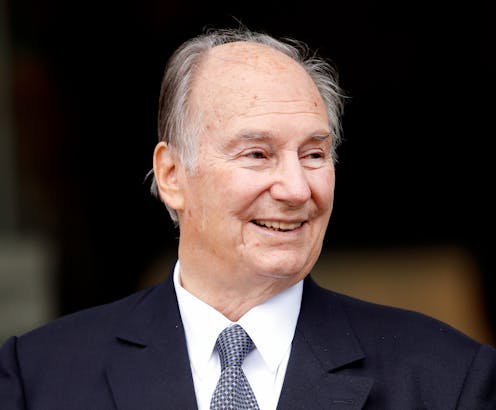
imagePrince Karim Aga Khan at an event on Oct. 2, 2019, in London.Max Mumby/Indigo/Getty Images

Prince Karim Aga Khan, who died on Feb. 4, 2025, served as the religious leader of Ismaili Muslims around the world since being appointed as the 49th hereditary imam in 1957. He came to be known around the world for his enormous work on global development...

Read more: Who are Ismaili Muslims and how do their beliefs relate to the Aga Khan’s work?

More Articles ...

  1. Evolving intelligent life took billions of years − but it may not have been as unlikely as many scientists predicted
  2. Congress, not the president, decides on government spending − a constitutional law professor explains how the ‘power of the purse’ works
  3. How Americans really feel about deporting immigrants – 3 charts explain the conflicting headlines from recent polls
  4. How to find climate data and science the Trump administration doesn’t want you to see
  5. Nonprofits get more donations when they vary their Facebook fundraising messages − new research
  6. Parents can soon use QR codes to reveal heavy metal content in baby food
  7. ‘Emilia Pérez’ was nominated for 13 Oscars. Why do so many people hate it?
  8. ‘For You’: What to know about news on TikTok
  9. Enzymes are the engines of life − machine learning tools could help scientists design new ones to tackle disease and climate change
  10. 60 years of progress in expanding rights is being rolled back by Trump − a pattern that’s all too familiar in US history
  11. From Jewish summer camp to gospel to Chabad, Bob Dylan’s faith doesn’t fit in a box − but he’s long had a connection to Israel
  12. Can the president really kill off the penny – and should he?
  13. Syria’s mass graves: Accounting for the dead and disappeared is crucial for the nation to heal
  14. Trump and Maduro refresh a complex relationship governed by self-interest and tainted by Venezuela election fraud
  15. Inflation is heating up again, putting pressure on Trump to cool it on tariffs
  16. How Valentine’s Day was transformed by the Industrial Revolution and ‘manufactured intimacy’
  17. Why federal courts are unlikely to save democracy from Trump’s and Musk’s attacks
  18. How much does scientific progress cost? Without government dollars for research infrastructure, breakthroughs become improbable
  19. In spite of anti-DEI pressures, top corporations continued to diversify in 2024: new research
  20. China flexes its media muscle in Africa – encouraging positive headlines as part of a soft power agenda
  21. Repatriation to Indigenous groups is more than law, it’s human rights − an archaeologist describes the day that lesson hit home
  22. Teenagers turning to AI companions are redefining love as easy, unconditional and always there
  23. Address science misinformation not by repeating the facts, but by building conversation and community
  24. Helping teachers learn what works in the classroom − and what doesn’t − will get a lot harder without the Department of Education’s Institute of Education Sciences
  25. Even as polarization surges, Americans believe they live in a compassionate country
  26. The New Yorker turns 100 − how a poker game pipe dream became a publishing powerhouse
  27. Decluttering can be stressful − a clinical psychologist explains how personal values can make it easier
  28. Why are migrants dying trying to cross into the US? These are the 3 main risks they face
  29. NOAA’s vast public weather data powers the local forecasts on your phone and TV – a private company alone couldn’t match it
  30. Legal fight against AI-generated child pornography is complicated – a legal scholar explains why, and how the law could catch up
  31. Mirror life is a scientific fantasy leading to a dangerous reality − a synthetic biologist explains how mirror bacteria could conquer life on Earth
  32. Rural Americans don’t live as long as those in cities − new research
  33. Whether Christians should prioritize care for migrants as much as for fellow citizens has been debated for centuries
  34. How opioid deaths tripled in Philly over a decade − and what may be behind a recent downturn
  35. Art and science illuminate the same subtle proportions in tree branches
  36. If FEMA didn’t exist, could states handle the disaster response alone?
  37. Here’s how researchers are helping AIs get their facts straight
  38. Poor sleep and addiction go hand in hand − understanding how could lead to new treatments for opioid use disorder
  39. A boycott campaign fuels tension between Black shoppers and Black-owned brands – evoking the long struggle for ‘consumer citizenship’
  40. Why the price of your favorite chocolate will continue to rise
  41. Teen girls are facing an increased risk of suicide − and stress related to sexual identity might be contributing to it
  42. Are animals smart? From dolphin language to toolmaking crows, lots of species have obvious intelligence
  43. How the human neck became a locus of power, beauty and frailty
  44. Russia’s shrinking world: The war in Ukraine and Moscow’s global reach
  45. 5 premium online research tools all Philly students can use for free
  46. Gut-wrenching love: What a fresh look at the ‘Good Samaritan’ story says for ethics today
  47. US sovereign wealth fund: A feasible idea to invest strategically, or a giant opportunity for waste?
  48. Efficiency − or empire? How Elon Musk’s hostile takeover could end government as we know it
  49. Seed oils are toxic, says Robert F. Kennedy Jr. – but it’s not so simple
  50. Map wars in the Middle East: How cartographers charted and helped shape a regional conflict