NewsPronto

 
Men's Weekly

.

USA Conversation

The Conversation USA

The Conversation USA

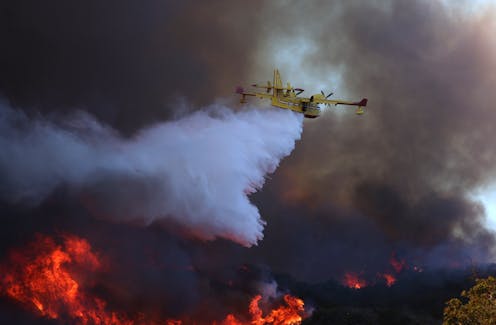
Urban wildfires disrupt streams and their tiny inhabitants − losing these insects is a warning of bigger water problems

  • Written by Lauren Magliozzi, Researcher in Environmental Engineering, University of Colorado Boulder
imageAsh from fires often washes into streams, where it can wreak havoc on ecosystems.Lauren Magliozzi, CC BY-ND

A tiny, vibrant world thrives along the rocky bottom of most streams. As sunlight filters through the water, mayfly nymphs, no larger than your fingernail, cling to algae-coated cobbles. Their brushlike mouthparts scrape the greenish coating,...

Read more: Urban wildfires disrupt streams and their tiny inhabitants − losing these insects is a warning of...

More Articles ...

  1. In domestic violence cases, police are more likely to make arrests when pets are abused, too
  2. People with physical and mobility disabilities need to work out, but there are a lot of obstacles in their way
  3. South Sudan’s long-delayed election will be a landmark moment − but economic decline and political strife put vote at risk
  4. Kamala’s kicks, Tim’s lids, and the red ties that bind Trump and Vance – what’s behind the fashion choices of each candidate
  5. ‘Coconut farmers for Harris,’ influencers and vertical signs – Smithsonian curators’ encounters at the Democratic National Convention
  6. Polaris Dawn mission to Earth’s orbit will test SpaceX’s capabilities for a commercial space program
  7. 4 ways Wissahickon Valley Park makes Philly more resilient against climate change
  8. The Polaris Dawn mission to Earth’s orbit will test SpaceX’s capabilities for a commercial space program
  9. No, the world isn’t heading toward a new Cold War – it’s closer to the grinding world order collapse of the 1930s
  10. How organized labor shames its traitors − the story of the ‘scab’
  11. US is unlikely to stop giving military aid to Israel − because it benefits from it
  12. What links aging and disease? A growing body of research says it’s a faulty metabolism
  13. Gift card scams generate billions for fraudsters and industry as regulators fail to protect consumers − and how one 83-year-old fell into the ‘fear bubble’
  14. Why gift cards fall into a gap in the 2-tier banking regulation system − and a brief history of why that gap exists
  15. From thoughts to words: How AI deciphers neural signals to help a man with ALS speak
  16. ‘Time poverty’ can keep college students from graduating − especially if they have jobs or children to care for
  17. Italian teenager Carlo Acutis’ upcoming canonization reflects the Vatican’s desire to appeal to a new generation of Catholics
  18. Can a political party get any attention when its rival holds a national convention? Yes, but it’s not easy
  19. How debt and taxes conspired to rob Nairobi’s slum-dwelling youth of the promise of a better life
  20. Treating Nord Stream blasts as a whodunit misses the point – and plays into Russia’s plan to distract and divide
  21. Want to fight gender inequality? A review of data from 118 counties shows that development aid works
  22. Want to fight gender inequality? A review of data from 118 countries shows that development aid works
  23. As human population grows, people and wildlife will share more living spaces around the world
  24. Thwaites Glacier won’t collapse like dominoes as feared, study finds, but that doesn’t mean the ‘Doomsday Glacier’ is stable
  25. Rural voters don’t necessarily love Walz, despite the camo hat and small-town upbringing
  26. Squid have tiny teeth in their suckers − scientists could use their unique properties to make self-healing materials
  27. Space missions are getting more complex − lessons from Amazon and FedEx can inform satellite and spacecraft management in orbit
  28. China leans into using AI − even as the US leads in developing it
  29. America’s Iran policy is a failure − piecemeal deterrence and sanctions can go only so far
  30. Democratic Party’s embrace of organized labor in 2024 elections has long roots that had started to wither
  31. Los Angeles is in a 4-year sprint to deliver a car-free 2028 Olympics
  32. Politicians step up attacks on the teaching of scientific theories in US schools
  33. Do Charli XCX’s and Kid Rock’s endorsements make a difference? 19% of young people admit they might
  34. AI pioneers want bots to replace human teachers – here’s why that’s unlikely
  35. Blood sugar fluctuations after eating play an important role in anxiety and depression
  36. The mystic and the mathematician: What the towering 20th-century thinkers Simone and André Weil can teach today’s math educators
  37. Readers prefer to click on a clear, simple headline − like this one
  38. 75 years ago, the KKK and anti-communists teamed up to violently stop a folk concert in NY
  39. Does Democratic VP candidate Walz swear too damn much?
  40. Sharks are taking a bite out of anglers’ catch in the Gulf of Mexico, but culling isn’t likely to help
  41. Biden administration’s negotiated price cuts for 10 common prescription drugs likely to save Medicare billions, beginning in 2026
  42. Why don’t more politicians retire? A medical anthropologist explains how the US could benefit from a mandatory retirement age
  43. Could we use volcanoes to make electricity?
  44. Ancient Rome had ways to counter the urban heat island effect – how history’s lessons apply to cities today
  45. Astronomers have warned against colonial practices in the space industry − a philosopher of science explains how the industry could explore other planets without exploiting them
  46. Anthropology students present their research in poetry, plays and op-eds in this course
  47. Who is the ‘Laughing Buddha’? A scholar of East Asian Buddhism explains
  48. Banana apocalypse, part 2 – a genomicist explains the tricky genetics of the fungus devastating bananas worldwide
  49. US voters say they’re ready for a woman president − but sexist attitudes still go along with opposition to Harris
  50. Editing fetal genomes is on the horizon − a medical anthropologist explains why ethical discussions with the target communities should happen sooner rather than later