No more call to cancel: the government wants to crack down on ‘subscription traps’
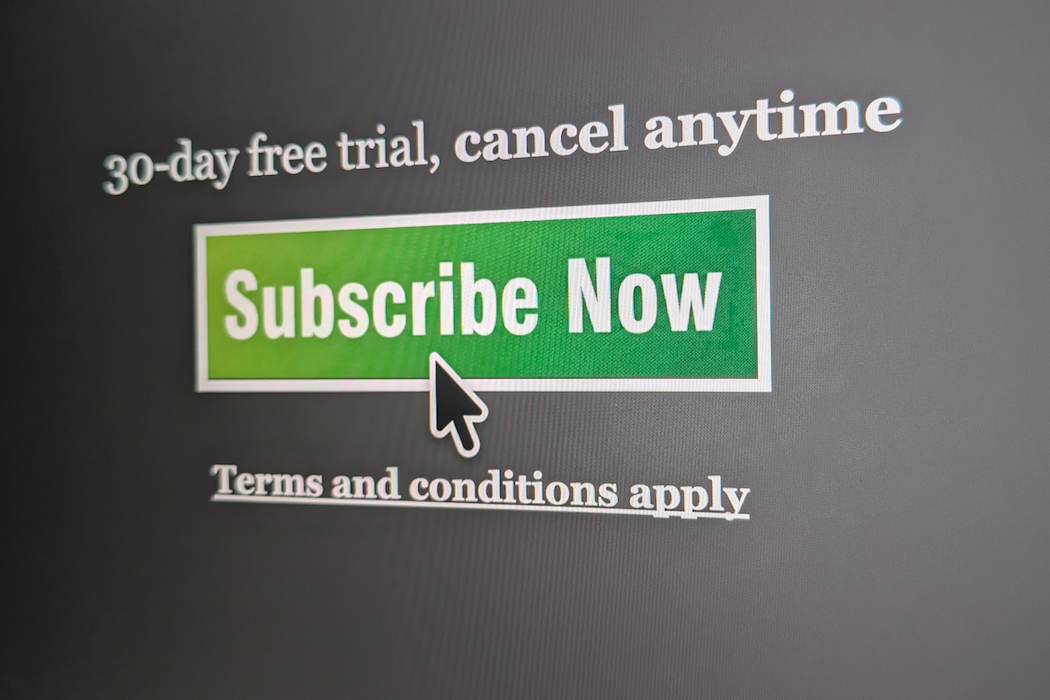
It often seems like a great idea at the time. There’s a streaming service, paywalled news site or premium version of an app you want to try, offering a “no strings attached” free trial.
You sign up – with a few easy clicks and your credit card. The trial period passes, and for whatever reason, you decide this product isn’t for you.
But when you try to cancel, you’re forced to navigate confusing web pages, asked whether you’re “really sure about this” an unreasonable number of times, or even told to call a generic customer hotline.
Sound familiar? According to the Consumer Policy Research Centre, three in four Australians with subscriptions have had a negative experience when trying to cancel them.
Making it hard to cancel – commonly called a “subscription trap” – isn’t currently illegal. But now the federal government has announced a plan to ban subscription traps and other hidden fees.
Easy to sign up, tricky to leave
Subscription traps are sometimes referred to as the “Hotel California” problem, referencing the famous 1977 song by US rock band The Eagles.
Echoing that song’s lyrics, while it is often easy to sign up – it can be really hard to leave.
The traps can take many different forms. One example is when consumers sign up for a service quickly and easily online, but can only cancel on the phone (sometimes needing to ring another country).
Delay, delay, delay
Announcing the proposed new laws at a press conference, Assistant Minister for Competition Andrew Leigh also singled out cases where the cancellation takes 28 days to come into effect. Leigh said:
A simple rule for businesses: if you can’t cancel a subscription through the same process that you started the subscription, then perhaps there’s a subscription trap going on.
Another example, known as “confirm shaming”, involves requiring consumers to click through multiple screens before they can cancel.
Typically, each of those screens has a message asking consumers to reconsider, often reiterating the service’s purported benefits and even offering new discounts on the price not previously available.
Why it’s a problem
Individually, all these difficulties may seem trivial. But cumulatively they are problematic.
Consumers are spending time trying to cancel subscriptions for services they don’t use and businesses are making money from services consumers don’t want.
Consumers are also being locked into those services by artificially created friction and techniques that rely on triggering uncertainty or doubt – “do you really want to cancel?”
The proposed new laws will ask the process of cancelling to be straightforward.
What new laws are proposed in Australia?
The proposed ban on subscription traps is part of a broader package of federal law reforms targeting unfair trading.
Consultation on a draft of the new law is set to take place in 2026 (following an earlier consultation in 2024).
The federal government has indicated the law will include a general ban on unfair practices that manipulate consumer decision making, while also targeting specific deceptive practices, such as certain kinds of subscription traps.
It should not apply to the kinds of subscription where there are legitimate reasons for slowing down the cancellation process, for example, where pushing the wrong button might delete all your photos or digital content.
What do other countries do?
Several other jurisdictions already have responses to subscription traps.
Californian law now includes a suite of protections for consumers, including requiring notice:
- of automatic renewal
- at the end of a free charge period before a fee is incurred.
California’s “click to cancel” rules also mean consumers must be able to cancel using the same method of communication they used to subscribe. And businesses must offer consumers information on how to cancel.
In the European Union, rules on unfair commercial practices have led to changes in the previously complicated process required to unsubscribe from Amazon Prime – reducing cancelling a subscription to just two clicks.
In the meantime what should Australians do to manage subscriptions?
Until Australia gets its own unfair business practices law, Australians can protect themselves from being trapped by subscriptions.
But it takes some work, including recording important information at the time you subscribe:
- if there is a free trial, make a note of when that expires and remember to cancel before being charged a fee
- take a screen shot of what you were promised and the price – if what is delivered is different from what was promised you should be able to cancel at any time for a refund
- record contact details for the service provider at the time you sign up.
Above all, persevere in cancelling subscriptions you don’t want. Remember, those pleading messages such as “why cancel?” or “don’t leave us” are designed to manipulate your emotions. So try to ignore them.
Authors: The Conversation