

GMG Unveils Graphene Aluminium-Ion Battery That Fully Charges in 6 Minutes
- Written by Media Outreach
Brisbane, Australia - Newsfile Corp. - December 15, 2025 - Graphene Manufacturing Group Ltd. (TSXV: GMG) (OTCQX: GMGMF) ("GMG" or the "Company") is pleased to provide the latest progress update on the Graphene Aluminium-Ion Battery technology ("G+AI") being developed by GMG and the University of Queensland ("UQ") under a Joint Development Agreement with Rio Tinto, one of the world's largest metals and mining groups, and with the support of the Battery Innovation Center of Indiana ("BIC") in the United States of America. Based on its current state of development as reflected below, the GMG G+AI Battery has similar performance characteristics to those provided by High Power Lithium Titanate Oxide ("LTO") batteries, which are sold at a premium price of up to US$1500/kWh. However, the GMG G+AI Battery can be produced at a substantially lower cost and therefore can be priced below that of LTO batteries. In 2025, sales of LTO batteries, which are used in many applications globally, totalled US$ 5.6[1] billion. Battery Performance Update: GMG is pleased to announce that it has progressed its G+AI Battery technology and believes that, once development is completed, it can meet the key target specification requirements for the main targeted battery use case as per Figure 1, including:  Figure 1: G+AI Battery Use Case - heavy mobile equipment To view an enhanced version of this graphic, please visit: https://images.newsfilecorp.com/files/8082/278044_gmg_figure1.jpg GMG is pleased to share the energy densities of the current GMG G+AI pouch cell at 60 minutes and 6-minute charging compared to other chemistry batteries on the market (Figure 2), and a voltage vs capacity graph (Figure 3) of its latest G+AI Battery technology based on data provided by the third-party BIC battery testing laboratory. Based on that testing, the current stage of development, batteries produced by GMG and BIC had an energy density of 58 Wh/kg when charged in 1 hour and 26 Wh/kg when charged in 6 minutes. In 6-minute fast charging, the battery cells achieved 62% capacity in 3.2 minutes. The batteries had a nominal voltage of approximately 3.0 Volts and maintained performance over hundreds of cycles at 6-minute fast charging, without the significant degradation typically observed in lithium and sodium-ion batteries at such high charging rates.
  Figure 2: Different Battery Chemistry Performance at 6 min and 60 min Charge[2] To view an enhanced version of this graphic, please visit: https://images.newsfilecorp.com/files/8082/278044_3e8dbe4f44c75b4b_002full.jpg Standard commercial Lithium Nickel Manganese Cobalt ("LNMC") and Lithium Iron Phosphate ("LFP") battery cells for electric vehicles and stationary storage are not designed for continuous 6-minute charging (10C); typical recommended charge rates are ≤1 hour (1C), often 2 hours (0.5C), with only limited fast charge operation. Only specialized high-power cell designs like LTO battery cells can tolerate charge rates of 6 minutes (10C).[3]
 Figure 3: Battery performance curves of GMG's G+AI Battery at 60 min and...
- Charging in under 6 minutes;
- Energy density > 100 Wh/kg after 1 hour of charging;
- Long Cycle Life (10,000 cycles);
- Safe (no Lithium);
- Lower Thermal Runaway Risk; and
- Likely no thermal management system will be needed.
 Figure 1: G+AI Battery Use Case - heavy mobile equipment To view an enhanced version of this graphic, please visit: https://images.newsfilecorp.com/files/8082/278044_gmg_figure1.jpg GMG is pleased to share the energy densities of the current GMG G+AI pouch cell at 60 minutes and 6-minute charging compared to other chemistry batteries on the market (Figure 2), and a voltage vs capacity graph (Figure 3) of its latest G+AI Battery technology based on data provided by the third-party BIC battery testing laboratory. Based on that testing, the current stage of development, batteries produced by GMG and BIC had an energy density of 58 Wh/kg when charged in 1 hour and 26 Wh/kg when charged in 6 minutes. In 6-minute fast charging, the battery cells achieved 62% capacity in 3.2 minutes. The batteries had a nominal voltage of approximately 3.0 Volts and maintained performance over hundreds of cycles at 6-minute fast charging, without the significant degradation typically observed in lithium and sodium-ion batteries at such high charging rates.
 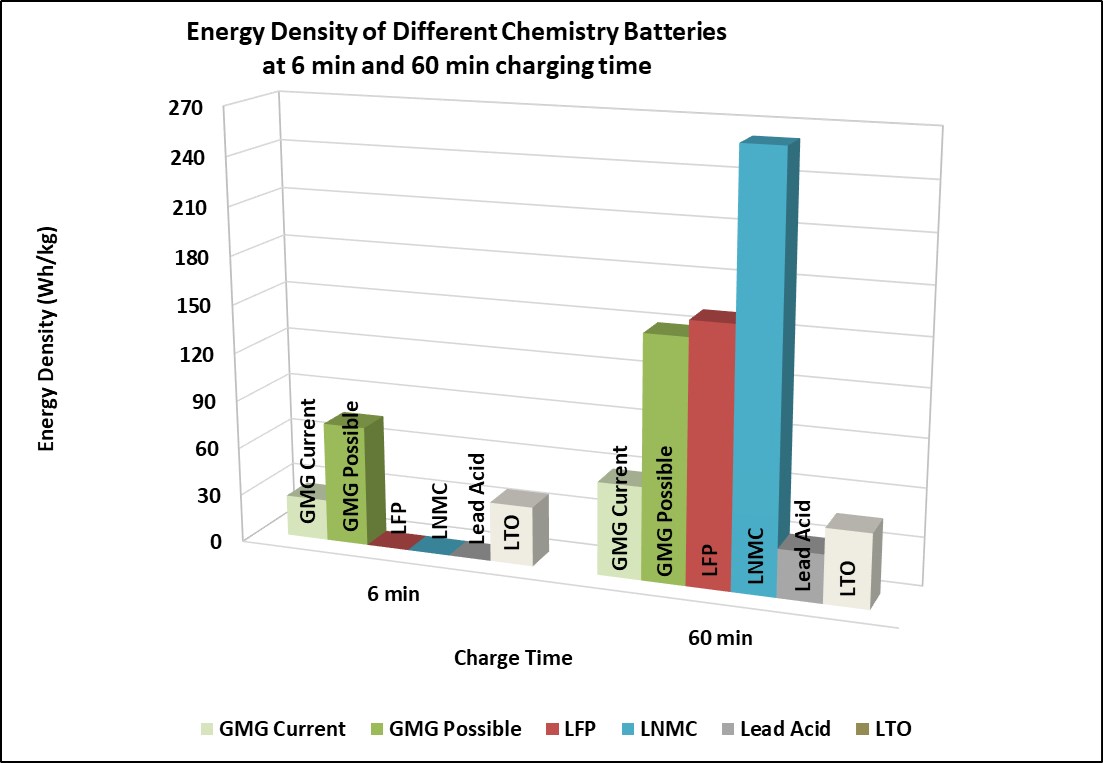 Figure 2: Different Battery Chemistry Performance at 6 min and 60 min Charge[2] To view an enhanced version of this graphic, please visit: https://images.newsfilecorp.com/files/8082/278044_3e8dbe4f44c75b4b_002full.jpg Standard commercial Lithium Nickel Manganese Cobalt ("LNMC") and Lithium Iron Phosphate ("LFP") battery cells for electric vehicles and stationary storage are not designed for continuous 6-minute charging (10C); typical recommended charge rates are ≤1 hour (1C), often 2 hours (0.5C), with only limited fast charge operation. Only specialized high-power cell designs like LTO battery cells can tolerate charge rates of 6 minutes (10C).[3]
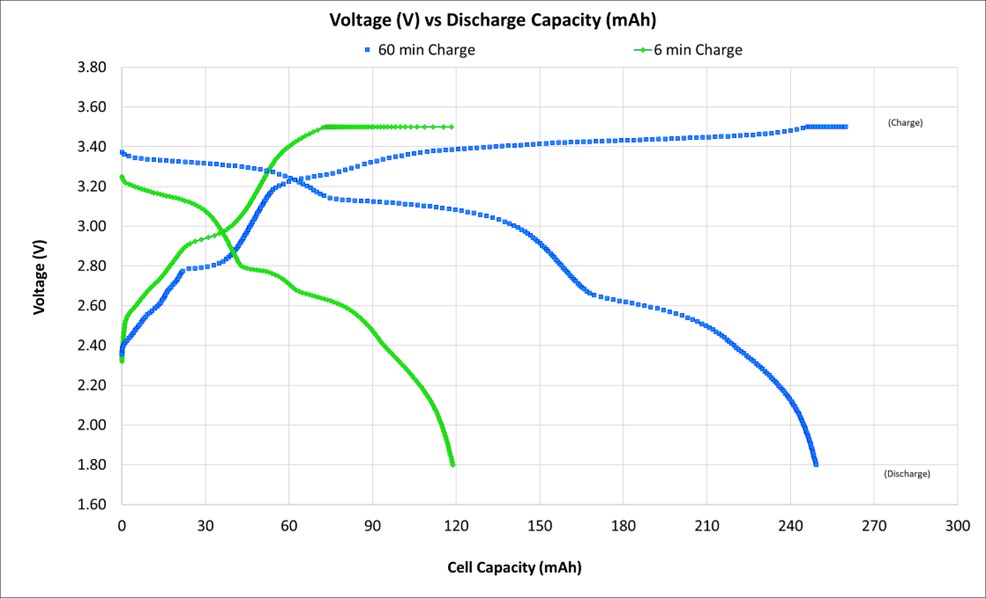 Figure 3: Battery performance curves of GMG's G+AI Battery at 60 min and...
Read more: GMG Unveils Graphene Aluminium-Ion Battery That Fully Charges in 6 Minutes