

Gender conformity starts young – and boys and girls fall in line in different ways
- Written by Adam Stanaland, Assistant Professor of Psychology, University of Richmond
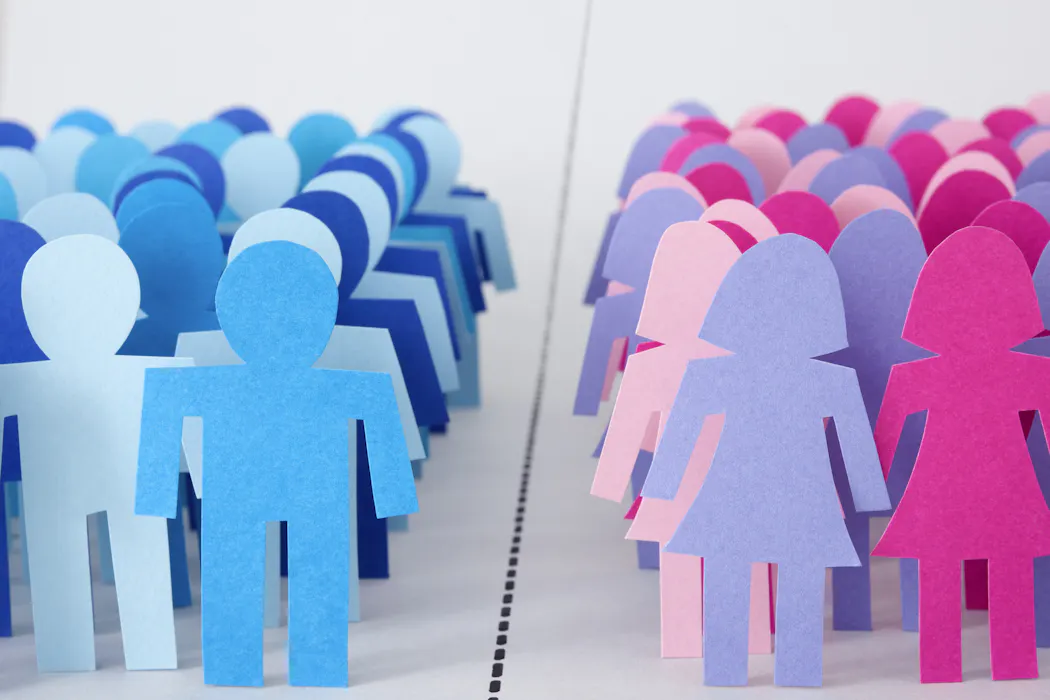 The messages children receive about how to properly perform their gender carry into adulthood.Fotografia Basica/iStock via Getty Images Plus
Many people have felt the subtle pressure to be “man enough” or “woman enough” in the eyes of others. And research has shown this pressure can have personal and social consequences.
When men feel their manhood is challenged, they can respond with compensatory aggression and other harmful behaviors. When women step outside stereotypical femininity – or even just consider doing so – they often receive backlash.
As researchers who studyhow gender stereotypes and norms affect people in often unexpected ways, we wondered about the processes by which children feel motivated to conform to stereotypical gender norms. When does this start, and how might it manifest?
In recently published research we conducted with our colleague Andrei Cimpian, we found that when children perceive that their sense of being a “normal” or “proper” member of their gender group is threatened, they feel pushed to conform to stereotypical gender roles in different ways, with lasting consequences.
 Children begin learning how to negotiate gender stereotypes and norms early on.Petri Oeschger/Moment via Getty Images
Girl questions and boy questions
Borrowing from research on adults, we decided that the best way to assess children’s motivation to conform to gender norms was to challenge their status as a “typical” member of their gender group.
To do this, we asked 147 children ages 5 to 10 in New York City to play two games: a “Girl Questions Game” and a “Boy Questions Game.” Each featured difficult trivia about topics that are stereotypically gendered, such as “Which of these flowers is a poppy flower?” (Girl Questions Game) and “Which of these football teams was the 2016 champion?” (Boy Questions Game).
We randomly assigned children to receive feedback suggesting their performance was either gender-typical or gender-atypical, the latter of which was our version of a threat to their gender conformity. For example, a boy in this threat condition received feedback that he had aced the Girl Questions Game but flopped the Boy Questions Game.
Next, we assessed how they responded to this feedback. Would the boy publicly share or hide his achievement in a “Girl Questions Game Book of Winners”? Would he proudly wear a “Girl Questions Game Winner” sticker, or would he prefer to switch stickers? Would he be worried about what his peers would think?
Responding to gender conformity threats
We found three distinct ways children responded to threats to their gender conformity.
First, girls and boys of all ages were extra concerned about not fitting in with their gender group. This means they anticipated more rejection from their peers and reported lower self-esteem.
Second, certain children actively tried to demonstrate that they fit in with their gender group. Younger girls ratcheted up their femininity, while older boys ratcheted up their masculinity. For example, older boys would tell us they liked action figures more than dolls, or that they wanted to retry the Boy Questions Game over the Girl Questions Game.
This is in line with previous research showing that many young girls are immersed in “princess culture” and are especially motivated to prove their femininity, though this declines with age. In contrast, older boys increasingly learn as they age that masculinity is a precarious social status that is hard-won and must be actively proven.
Third, boys of all ages avoided seeming atypical from their gender group, actively distancing themselves from anything feminine. We didn’t see girls distancing themselves from anything masculine in the same way.
This response mirrors a cultural double standard in the U.S.: Girls are often encouraged to be athletic, assertive or like “tomboys,” while boys face no socially acceptable equivalent in the other direction. There is no benign male version of tomboy. The closest word is “sissy,” which is not typically considered a compliment.
 Boys are often not given much leeway to express their femininity.Maskot/Getty Images
Building secure gender identities
Our findings show that the seeds of adult gender conformity – including some of its most harmful expressions, such as certain men’s aggression and some women’s anxiety around pursuing careers in male-dominated fields – are planted early.
Boys as young as 5 already recognize that femininity is something to avoid. By middle childhood – around age 7 – they seem to understand that masculinity is a status that must be actively proven and defended, a mindset that can manifest as aggression, sexual violence and resistance to seeking help in adulthood.
For girls, our findings suggest that they are motivated to prove stereotypical femininity at younger ages, but this may dissipate with age. This may be because girls are sometimes encouraged to pursue achievement in historically “masculine” domains, such as sports andin STEM. Or they may realize that masculinity affords men – and boys – success in these fields, so they seek to move away from femininity and toward masculinity.
However, it’s possible that girls in other settings are more pressured to perform femininity and avoid masculinity – that is, to engage in feminine stereotypes – in ways we were not able to capture in our study. It’s also unclear to us why girls’ responses to perceived threats to gender conformity may weaken with age, given that adult women are affected by these threats. Our future goal is to further test how gender conformity develops in more diverse geographic and cultural contexts, as well as among more gender-diverse children.
All said, we believe middle childhood may thus present a critical window for intervention. Programs that help children, especially boys, build secure identities that don’t depend on gender performance could help them have a healthier relationship with gender norms. In this way, children may be less vulnerable to responding to perceived threats to their gender conformity in ways that harm them through adulthood.
Nevertheless, what’s clear is that children don’t simply observe gender norms – they internalize them, actively defend them, and begin to do this earlier than people think.
The authors do not work for, consult, own shares in or receive funding from any company or organization that would benefit from this article, and have disclosed no relevant affiliations beyond their academic appointment.
Authors: Adam Stanaland, Assistant Professor of Psychology, University of Richmond