

A connection to nature fuels well-being worldwide, according to a study of 38,000 people
- Written by Stylianos Syropoulos, Assistant Professor of Psychology, Arizona State University
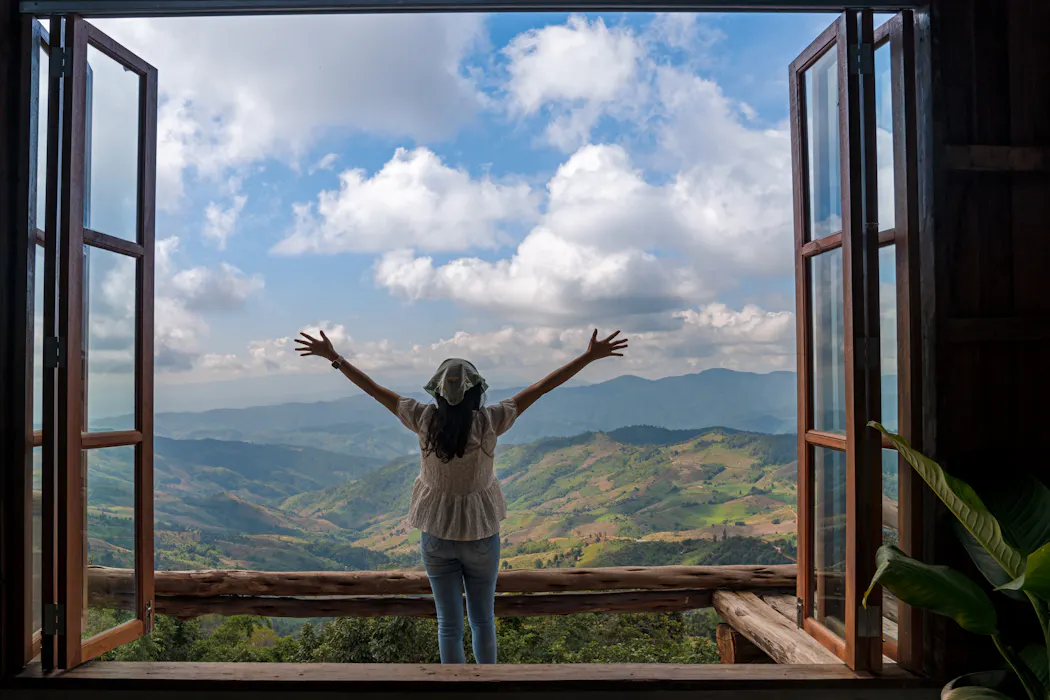 Across cultures, languages and economic systems, feeling connected to the natural world is consistently linked to living a more hopeful, purposeful and resilient life. nymphoenix/iStock via Getty Images Plus
When life feels overwhelming, many people instinctively turn to nature. A walk in a park. Sitting by the ocean. Watching a sunset. Is this just a pleasant feeling, or is there something deeper at work?
A multitude of studies have linked spending time in nature with different aspects of mental health and wellness. For example, immersing oneself in outdoor natural spaces seems to lift depression and influence brain activity patterns. The effect may be especially relevant in children. But most research on this question has looked at people living in so-called WEIRD societies – Western, educated, industrialized, rich and democratic.
As environmental psychologists based in the U.S. and in Germany, we were part of a team of more than 100 researchers who set out to examine this phenomenon on a global scale and determine how consistent it is around the world.
Across countries as diverse as Brazil, Japan, Nigeria, Germany and Indonesia, we saw a clear pattern: People who felt more connected to nature also reported higher well-being.
Worldwide oneness with nature
Researchers who study people’s relationship with the natural world often use the term “nature connectedness.” This phrase doesn’t simply mean going hiking or visiting a park. Nature connectedness refers to the extent to which people see nature as part of who they are – whether they feel an emotional bond with the natural world and experience a sense of oneness with it.
Someone who has a high degree of nature connectedness might agree with statements like, “My relationship to nature is an important part of who I am.” It reflects identity and meaning, not just exposure.
In a new study, people who had a stronger sense of nature connectedness tended to have a higher degree of mindfulness.We drew on data collected between 2020 and 2022 from more than 38,000 participants through a large international collaboration that was established to gauge how people responded to the COVID-19 pandemic. Participants came from 75 countries and were on average in their teens, 20s or 30s. They completed questionnaires that explored the link between people’s bond with nature and several aspects of well-being.
The questionnaires probed people’s sense of purpose in life; their feelings of hope, life satisfaction and optimism; their sense of resilience and their ability to cope with stress they felt; as well as whether they practice mindfulness as they go through their everyday life.
Across this large international sample, we found that people who felt more connected to nature consistently reported higher levels of well-being and mindfulness. This was true not just for feeling satisfied with life but also for deeper aspects of flourishing, such as having a sense of direction and meaning. And these associations held even when accounting for age and gender.
Does national context matter?
We also explored whether specific characteristics of a country strengthen the benefits of feeling connected with nature.
For example, we looked at things such as how well countries take care of their air, and water systems and ecosystems, as well as whether citizens have equal access to education, democratic participation, and other key social and financial resources, and whether cultures tend to prioritize collective well-being over individual priorities. There were some differences, but the main takeaway was pretty clear: A connection with nature and well-being shows up across a wide range of economic, cultural and environmental contexts.
In other words, the psychological benefits of feeling connected to nature do not appear to be limited to wealthy Western nations or specific cultural worldviews.
 Bonding with nature may make people more resilient.Mike Tauber/Tetra Images via Getty Images
Why might connection matter?
One reason why feeling a connection with nature may be linked to well-being is that nature connectedness fosters mindfulness – the ability to be present and attentive.
In our data, people who had a stronger sense of nature connectedness tended to have a higher degree of mindfulness, which is itself strongly linked to mental health.
Another possibility is that bonding with nature may also make people more resilient. People who feel connected to something larger than themselves may find it easier to cope with stress and uncertainty. A sense of belonging – even to the natural world – can provide psychological grounding in a world characterized by stressors. There may also be a feedback loop: Feeling better may encourage people to engage more deeply with nature, strengthening the bond over time.
Implications for policy and everyday life
These findings matter beyond academic debates. Around the world, policymakers are increasingly recognizing the links between human health and environmental sustainability. International agreements such as the Convention on Biological Diversity, a landmark treaty signed by 196 countries in 1992, emphasize the importance of restoring humanity’s relationship with nature.
These policy actions seek to protect Earth’s ecosystems, but our results suggest they may also benefit people’s psychological well-being. Similarly, designing cities with accessible green spaces, incorporating nature-based experiences into schools and supporting community engagement with local environments may do more than beautify neighborhoods – they may also help people flourish.
Across cultures, languages and economic systems, feeling connected to the natural world is consistently linked to living a more hopeful, purposeful and resilient life. At a time when mental health challenges are rising globally, reconnecting with nature is not a luxury but a fundamental – and widely shared – human need.
The authors do not work for, consult, own shares in or receive funding from any company or organization that would benefit from this article, and have disclosed no relevant affiliations beyond their academic appointment.
Authors: Stylianos Syropoulos, Assistant Professor of Psychology, Arizona State University