
NewsPronto

 
Men's Weekly

.

The Conversation

Why the 'brain-eating' amoeba found in freshwater lakes – while rare – is so deadly

  • Written by Bill Sullivan, Professor of Pharmacology & Toxicology, author of Pleased to Meet Me: Genes, Germs, and the Curious Forces that Make Us Who We Are, Indiana University
Computer-generated representation of the amoeba _Naegleria fowleri_, which causes deadly brain infections.Centers for Disease Control and Prevention

Composed of a single cell, amoeba seem harmless enough: They look like playful critters waltzing under the spotlight of a microscope until they come upon a group of bacteria. Then, these previously...

Read more: Why the 'brain-eating' amoeba found in freshwater lakes – while rare – is so deadly
Conspiracy theories and fear of needles contribute to vaccine hesitancy for many parents

  • Written by Timothy Callaghan, Assistant Professor, Texas A&M University School of Public Health, Texas A&M University
Anti-vaccine protesters at a rally.Ted S. Warren/AP Photo

Over 1,160 cases of measles have been confirmed in the U.S. in 2019. That is more measles cases in just seven months than any full year this decade, and, more problematically, more than all U.S. measles cases from 2010-2013 and 2015-2017 combined.

Lawmakers in some states, such as Washington a...

Read more: Conspiracy theories and fear of needles contribute to vaccine hesitancy for many parents

Fed rate cut bails out Trump for policies that are slowing the economy

  • Written by Rodney Ramcharan, Associate Professor of Finance and Business Economics, University of Southern California

The Federal Reserve appears to be bailing out the president.

Responding to concerns of a slowing economy – in part caused by President Donald Trump’s trade wars – the Fed cut short-term interest rates for the first time since 2008, lowering its benchmark rate 25 basis points to 2.25%.

The cut sends a message to financial markets...

Read more: Fed rate cut bails out Trump for policies that are slowing the economy

If Germany atoned for the Holocaust, the US can pay reparations for slavery

  • Written by Bernd Reiter, Professor, University of South Florida
Slavery is not so far removed. Anderson and Minerva Edwards met in the 1860s as enslaved laborers in Texas, had 16 children and lived into their 90s in a cabin a few miles from the plantations they once worked. They are photographed here in 1937.U.S. Library of Congress

The idea of paying reparations for slavery is gaining momentum in the United...

Read more: If Germany atoned for the Holocaust, the US can pay reparations for slavery

What’s the scoop on kids and dirt? Get enough to help, but not enough to hurt, a doctor advises

  • Written by Cosby Stone, Instructor in Allergy/Immunology, Vanderbilt University Medical Center, Vanderbilt University
Kids may need more exposure to dirt and microbes than previously thought.MNStudio/shutterstock.com

Whenever I am asked what I do for a living, the phrase “I’m an allergist” is almost immediately followed by “So, where are all of these allergies coming from?”

Maybe I’ll get sick of that question some day, but I...

Read more: What’s the scoop on kids and dirt? Get enough to help, but not enough to hurt, a doctor advises

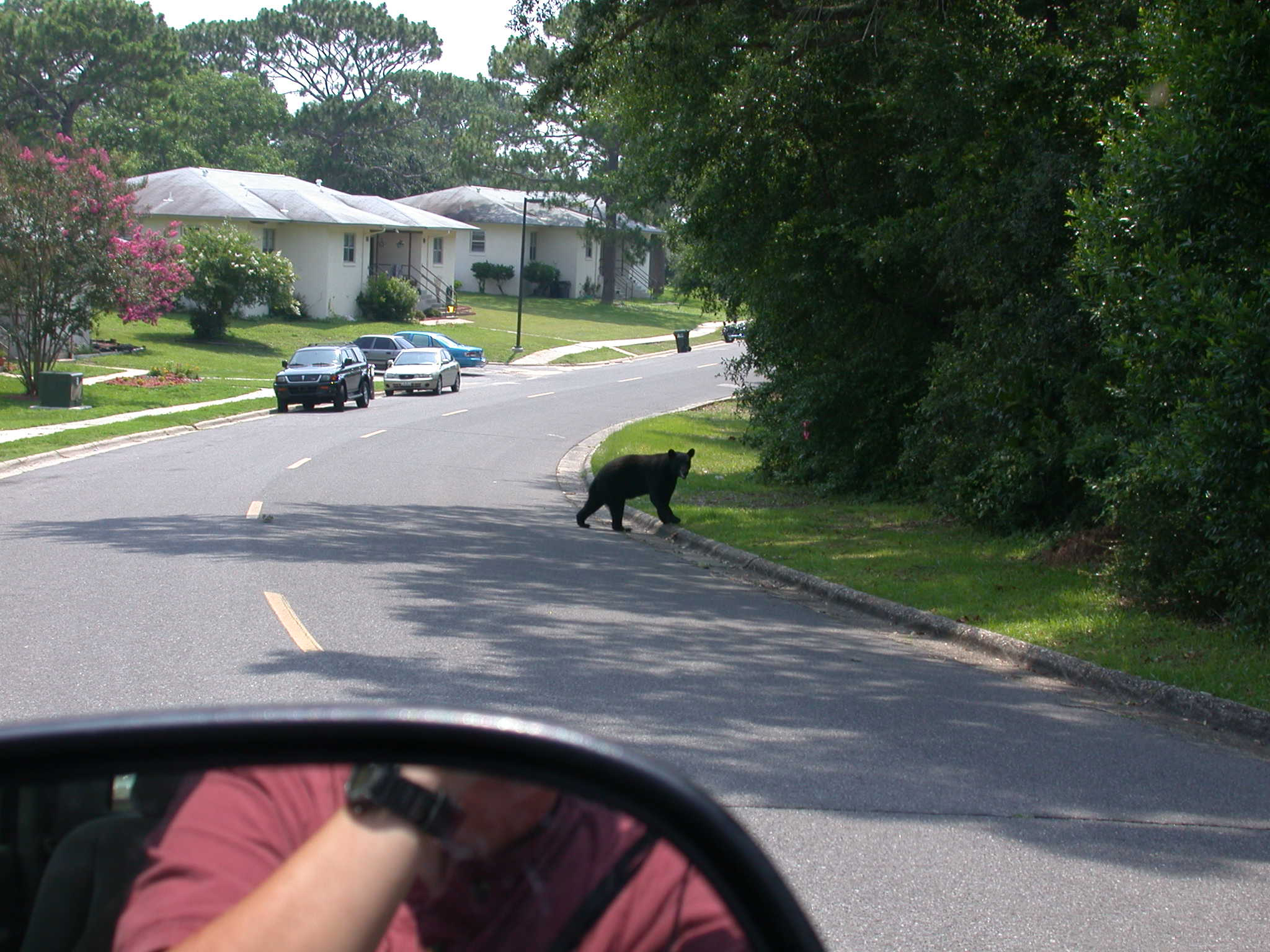
Black bears adapt to life near humans by burning the midnight oil

  • Written by Kathy Zeller, Postdoctoral Researcher in Environmental Conservation, University of Massachusetts Amherst
Black bear near military housing at Eglin Air Force Base in the Florida Panhandle, May 17, 2010.USAF/Kathy Gault

Amid reports that human activities are pushing many wild species to the edge of extinction, it’s easy to miss the fact that some animal populations are expanding. Across North America, a number of species that were reduced by...

Read more: Black bears adapt to life near humans by burning the midnight oil

Political polarization is about feelings, not facts

  • Written by Robert B. Talisse, W. Alton Jones Professor of Philosophy, Vanderbilt University
Animosity between partisan voters has grown in recent years.Gutzemberg/Shutterstock.com

Politicians and pundits from all quarters often lament democracy’s polarized condition.

Similarly, citizens frustrated with polarized politics also demand greater flexibility from the other side.

Decrying polarization has become a way of impugning...

Read more: Political polarization is about feelings, not facts

School spankings are banned just about everywhere around the world except in US

  • Written by Lucy Sorensen, Assistant Professor in Public Administration and Policy, University at Albany, State University of New York
Corporal punishment in schools around the world is disappearing, but a handful of countries have held on to the practice.Cat Act Art/Shutterstock.com

In 1970, only three countries – Italy, Japan and Mauritius – banned corporal punishment in schools. By 2016, more than 100 countries banned the practice, which allows teachers to legally...

Read more: School spankings are banned just about everywhere around the world except in US

All public universities get private money, but some get much more than the rest

  • Written by Kevin McClure, Associate Professor of Higher Education, University of North Carolina Wilmington
The University of North Carolina at Chapel Hill has more than $3 billion in its endowment.AP Photo/Gerry Broome

U.S. universities raised nearly US$47 billion in the academic fiscal year that ended in mid-2018. This new record haul marked a 7% increase from the prior year.

As usual, private universities generally led the way. But public universities...

Read more: All public universities get private money, but some get much more than the rest

Yes, flesh-eating bacteria are in the warm coastal waters – but it doesn't mean you'll get sick

  • Written by Brian Labus, Assistant Professor of Epidemiology and Biostatistics, University of Nevada, Las Vegas
Rising water temperature encourage the spread of bacteria in ocean waters.Jean Faucett/Shutterstock.com

Like humans, many bacteria like to spend time at the beach. The so-called flesh-eating bacteria, Vibrio vulnificus, don’t just like the beach; they need it, and rely on seasalt for survival. And as with human beachgoers, the warmer the...

Read more: Yes, flesh-eating bacteria are in the warm coastal waters – but it doesn't mean you'll get sick

More Articles ...

  1. How organized labor can reverse decades of decline
  2. More Central American migrants take shelter in churches, recalling 1980s sanctuary movement
  3. The rhetorical trick Trump used on the 'Squad' and how it could affect the vote
  4. Opioid epidemic may have cost states at least $130 billion in treatment and related expenses – and that's just the tip of the iceberg
  5. Curious Kids: How are cats declawed, and is it painful?
  6. Budgeting for charity: A new way for the government to encourage giving
  7. The difference between 'left' and 'liberal' – and why voters need to know
  8. How did the presidential campaign get to be so long?
  9. How ICE enforcement has changed under the Trump administration
  10. Why Facebook's new 'privacy cop' is doomed to fail
  11. Why Trump's stoking of white racial resentment is effective – but makes all working-class Americans worse off
  12. Restricting SNAP benefits could hurt millions of Americans – and local communities
  13. Curious Kids: How does the stuff in a fire extinguisher stop a fire?
  14. A Confederate statue graveyard could help bury the Old South
  15. No, Lyme disease is not an escaped military bioweapon, despite what conspiracy theorists say
  16. Lead-based paint found in half of all inspected schools
  17. From 'Pretty Little Liars' to 'The OC,' television producers need to stop encouraging teen drinking – here's how they can
  18. A World War II battle holds key lessons for modern warfare
  19. Shark Week looms, but don't panic
  20. CBD and genetic testing provide hope for 'intractable' epilepsy in children
  21. How technology could be a solution to caregiver shortage for seniors
  22. How college towns could benefit more from throngs of student volunteers
  23. The internet is rotting – let's embrace it
  24. The Mueller hearing and the death of facts
  25. Webcams in nursing home rooms may deter elder abuse – but are they ethical?
  26. What in the world is a slime eel?
  27. Investors, consumers and workers are changing capitalism for the better by demanding companies behave more responsibly
  28. US health care: An industry too big to fail
  29. The Supreme Court decision that kept suburban schools segregated
  30. Facebook algorithm changes suppressed journalism and meddled with democracy
  31. Is Boris Johnson, Britain's new prime minister, anti-immigrant, a homophobe, a bigot – or just politically expedient?
  32. Without school, a 'lost generation' of Rohingya refugee children face uncertain future
  33. Resource depletion is a serious problem, but 'footprint' estimates don't tell us much about it
  34. Why are Atlantic and Gulf coast property owners building back bigger after hurricanes?
  35. Heart transplant doctors could help more people by accepting donations from the obese
  36. 5 ways to protect yourself from cybercrime
  37. How fireflies glow – and what signals they're sending
  38. Our database of police officers who shoot citizens reveals who's most likely to shoot
  39. Micro-naps for plants: Flicking the lights on and off can save energy without hurting indoor agriculture harvests
  40. 'Avengers: Endgame' is nowhere near the worldwide box office record – here's why
  41. Why does the US sentence people to hundreds of years in prison?
  42. Asylum restrictions: The president can enforce the law, but can't change it
  43. Waiting for an undersea robot in Antarctica to call home
  44. Could a tax on stock trades pay off the nation's student debt?
  45. What's really behind baseball's home run surge?
  46. What is at stake in the Strait of Hormuz?
  47. Smokey (the) Bear is still keeping his watchful eye on America's forests after 75 years on the job
  48. What Amazon's decision to retrain a third of its employees means for the future of work
  49. Curious Kids: Why do birds sing?
  50. Why do birds sing?