
NewsPronto

 
The Times


.

USA Conversation

The Conversation USA

The Conversation USA

Why Texas Hill Country, where a devastating flood killed more than 120 people, is one of the deadliest places in the US for flash flooding

  • Written by Hatim Sharif, Professor of Civil and Environmental Engineering, The University of Texas at San Antonio
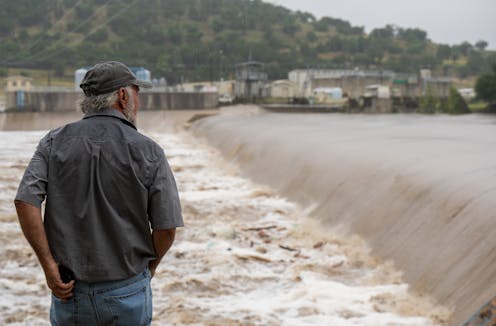
imageA Kerrville, Texas, resident watches the flooded Guadalupe River on July 4, 2025.Eric Vryn/Getty Images

Texas Hill Country is known for its landscapes, where shallow rivers wind among hills and through rugged valleys. That geography also makes it one of the deadliest places in the U.S. for flash flooding.

In the early hours of July 4, 2025, a flash...

Read more: Why Texas Hill Country, where a devastating flood killed more than 120 people, is one of the...

More Articles ...

  1. Why Texas Hill Country, where a devastating flood killed dozens, is one of the deadliest places in the US for flash flooding
  2. Conservatives notch 2 victories in their fight to deny Planned Parenthood federal funding through Medicaid
  3. One ‘big, beautiful’ reason why Republicans in Congress just can’t quit Donald Trump
  4. Astronomers have discovered another puzzling interstellar object − this third one is big, bright and fast
  5. War, politics and religion shape wildlife evolution in cities
  6. Military force may have delayed Iran’s nuclear ambitions – but history shows that diplomacy is the more effective nonproliferation strategy
  7. Capitalism and democracy are weakening – reviving the idea of ‘calling’ can help to repair them
  8. What MAGA means to Americans
  9. From glass and steel to rare earth metals, new materials have changed society throughout history
  10. Philadelphians with mental illness want to work, pray, date and socialize just like everyone else – here’s how creating more inclusive communities is good for public health
  11. Speedballing – the deadly mix of stimulants and opioids – requires a new approach to prevention and treatment
  12. Employers are failing to insure the working class – Medicaid cuts would leave them even more vulnerable
  13. Employers are failing to insure the working class – Medicaid cuts will leave them even more vulnerable
  14. Parents who oppose sex education in schools often don’t discuss it at home
  15. Hurricane forecasters are losing 3 key satellites ahead of peak storm season − a meteorologist explains why it matters
  16. The Supreme Court upholds free preventive care, but its future now rests in RFK Jr.’s hands
  17. What damage did the US do to Iran’s nuclear program? Why it’s so hard to know
  18. The rule of law is key to capitalism − eroding it is bad news for American business
  19. Legal wrangling over estate of Jimmy Buffett turns his widow’s huge inheritance into a cautionary tale
  20. AI is advancing even faster than sci-fi visionaries like Neal Stephenson imagined
  21. Despite claims they’d move overseas after the election, most Americans are staying put
  22. Philadelphia’s $2B affordable housing plan relies heavily on municipal bonds, which can come with hidden costs for taxpayers
  23. Humans and animals can both think logically − but testing what kind of logic they’re using is tricky
  24. Mexican flags flown during immigration protests bother white people a lot more than other Americans
  25. Keeping brain-dead pregnant women on life support raises ethical issues that go beyond abortion politics
  26. In LGBTQ+ storybook case, Supreme Court handed a win to parental rights, raising tough questions for educators
  27. Pop, soda or coke? The fizzy history behind America’s favorite linguistic debate
  28. The hidden cost of convenience: How your data pulls in hundreds of billions of dollars for app and social media companies
  29. Why the US bombed a bunch of metal tubes − a nuclear engineer explains the importance of centrifuges to Iranian efforts to build nuclear weapons
  30. Bill Moyers’ journalism strengthened democracy by connecting Americans to ideas and each other, in a long and extraordinary career
  31. Invasive carp threaten the Great Lakes − and reveal a surprising twist in national politics
  32. 1 in 4 Americans reject evolution, a century after the Scopes monkey trial spotlighted the clash between science and religion
  33. Who’s the most American? Psychological studies show that many people are biased and think it’s a white English speaker
  34. Here’s a way to save lives, curb traffic jams and make commutes faster and easier − ban left turns at intersections
  35. Why the traditional college major may be holding students back in a rapidly changing job market
  36. What’s at risk for Arctic wildlife if Trump expands oil drilling in the fragile National Petroleum Reserve-Alaska
  37. 1 in 3 Florida third graders have untreated cavities – how parents can protect their children’s teeth
  38. How can the James Webb Space Telescope see so far?
  39. From the marriage contract to breaking the glass under the chuppah, many Jewish couples adapt their weddings to celebrate gender equality
  40. Universities in every state care for congressional papers that document US political history − federal cuts put their work at risk
  41. Iran emerged weakened and vulnerable after war with Israel − and that could mean trouble for country’s ethnic minorities
  42. Supreme Court upholds childproofing porn sites
  43. What the Supreme Court ruling against ‘universal injunctions’ means for court challenges to presidential actions
  44. Michelin Guide scrutiny could boost Philly tourism, but will it stifle chefs’ freedom to experiment and innovate?
  45. What Trump’s budget proposal says about his environmental values
  46. How Zohran Mamdani’s win in the New York City mayoral primary could ripple across the country
  47. Cyberattacks shake voters’ trust in elections, regardless of party
  48. Why energy markets fluctuate during an international crisis
  49. Scandinavia has its own dark history of assimilating Indigenous people, and churches played a role – but are apologizing
  50. Jews were barred from Spain’s New World colonies − but that didn’t stop Jewish and converso writers from describing the Americas