

NewsPronto

 
The Times


.

USA Conversation

The Conversation USA

The Conversation USA

Weaponized storytelling: How AI is helping researchers sniff out disinformation campaigns

  • Written by Mark Finlayson, Associate Professor of Computer Science, Florida International University
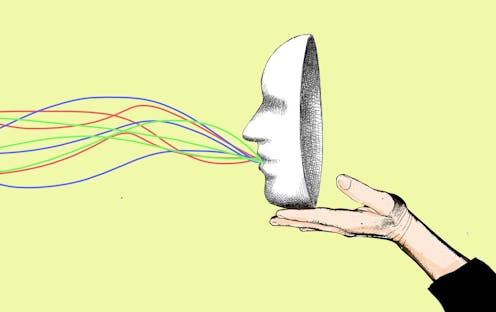
imageThe human proclivity for storytelling makes disinformation difficult to combat.Westend61 via Getty Images

It is not often that cold, hard facts determine what people care most about and what they believe. Instead, it is the power and familiarity of a well-told story that reigns supreme. Whether it’s a heartfelt anecdote, a personal testimony...

Read more: Weaponized storytelling: How AI is helping researchers sniff out disinformation campaigns

More Articles ...

  1. There’s no evidence work requirements for Medicaid recipients will boost employment, but they are a key piece of Republican spending bill
  2. How trafficked American guns fuel Mexico’s cartel violence – podcast
  3. More Colorado workplaces are becoming safe places for employees in recovery
  4. RFK Jr. says annual COVID-19 shots no longer advised for healthy children and pregnant women – a public health expert explains the new guidance
  5. 3 things to watch as South Koreans head toward the polls following turbulent political period
  6. Guns bought in the US and trafficked to Mexican drug cartels fuel violence in Mexico and the migration crisis
  7. Billy Joel has excess fluid in his brain – a neurologist explains what happens when this protective liquid gets out of balance
  8. Chronic stress contributes to cognitive decline and dementia risk – 2 healthy-aging experts explain what you can do about it
  9. Trump wants to cut funding to sanctuary cities and towns – but they don’t actually violate federal law
  10. The hidden power of cultural exchanges in countering propaganda and fostering international goodwill
  11. Public health and private equity: What the Walgreens buyout could mean for the future of pharmacy care
  12. A common parasite can decapitate human sperm − with implications for male fertility
  13. When Elvis and Ella were pressed onto X-rays – the subversive legacy of Soviet ‘bone music’
  14. High electricity prices zapping your budget? Here are 5 ways to save
  15. Critical minerals don’t belong in landfills – microwave tech offers a cleaner way to reclaim them from e-waste
  16. Texas’ annual reading test adjusted its difficulty every year, masking whether students are improving
  17. Anti-trans measures don’t just target transgender men and women – a sociologist explains how ‘male’ or ‘female’ categories miss the mark for nonbinary Americans
  18. Trump’s West Point speech brought partisanship to the home of the US military − 3 essential reads
  19. Trump’s West Point speech brought partisanship to the home of the US military − 2 essential reads
  20. Queer country: LGBTQ+ musicians are outside the spotlight as Grand Ole Opry turns 100
  21. Could a bold anti-poverty experiment from the 1960s inspire a new era in housing justice?
  22. Christianity has long revered saints who would be called ‘transgender’ today
  23. Pope Leo XIV is the first member of the Order of St. Augustine to be elected pope – but who are the Augustinians?
  24. Air traffic controller shortages in Newark and other airports partly reflect long, intense training − but university-based training programs are becoming part of the solution
  25. Mountain chickadee chatter: Scientists are decoding the songbird’s complex calls
  26. For opioid addiction, treatment underdosing can lead to fentanyl overdosing – a physician explains
  27. Managing forests and other ecosystems under rising threats requires thinking across wide-ranging scenarios
  28. Europeans are concerned that the US will withdraw support from NATO. They are right to worry − Americans should, too
  29. Why some towns lose local news − and others don’t
  30. MAHA report on children’s health highlights harms of ultraprocessed foods – a food scientist explains the research
  31. Harvard fights to keep enrolling international students – 4 essential reads about their broader impact
  32. How does a person become famous when they’re just a kid?
  33. 5 years after George Floyd’s murder: How the media narrative has changed around the killing and the protests that followed
  34. Supreme Court’s one-sentence order closes the door to Catholic charter school – but leaves it open for future challenges
  35. Can you upload a human mind into a computer? A neuroscientist ponders what’s possible
  36. Here’s how we figured the number of guns illegally trafficked from the US across the border to Mexico
  37. Gun trafficking from the US to Mexico: The drug connection
  38. US gun trafficking to Mexico: Independent gun shops supply the most dangerous weapons
  39. Split Supreme Court blocks Oklahoma’s Catholic charter school − but future cases could hinge on whether charters are, at their core, public or private
  40. US solar manufacturers lag skyrocketing market demand
  41. In 2025, Tornado Alley has become almost everything east of the Rockies − and it’s been a violent year
  42. How abortion laws focusing on fetal viability miss the mark on women’s experiences
  43. From furry friends to fish, turning up the heat helps animals fight germs − how Mother Nature’s cure offers humans a lesson on fever
  44. Like many populist leaders, Trump accuses judges of being illegitimate obstacles to safety and democracy
  45. Golden Dome: An aerospace engineer explains the proposed nationwide missile defense system
  46. Golden Dome: An aerospace engineer explains the proposed US-wide missile defense system
  47. Israelis have a skewed view on extent of Gaza’s hunger plight − driven by censorship and media that downplay humanitarian crisis
  48. NOAA’s 2025 hurricane forecast warns of a busy season – a storm scientist explains why and what meteorologists are watching
  49. WHO is finalizing a new treaty that prepares for the next pandemic − but the US isn’t signing
  50. Young food entrepreneurs are changing the face of rural America