

NewsPronto

 
The Times


.

USA Conversation

The Conversation USA

The Conversation USA

Harris and Trump differ widely on gun rights, death penalty and other civil liberties questions

  • Written by Donovan A. Watts, Assistant Professor of Political Science, Auburn University
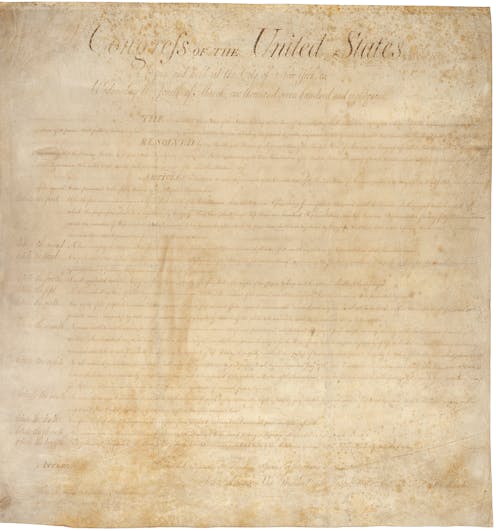
imageThe Bill of Rights secures key liberties for U.S. citizens against the government's power.U.S. Congress via Wikimedia Commons

As the election nears, voters are considering the two leading presidential candidates’ records on a wide range of issues, including civil liberties – a broad term used to describe the constitutionally protected...

Read more: Harris and Trump differ widely on gun rights, death penalty and other civil liberties questions

More Articles ...

  1. What’s in a pantsuit? Kamala Harris’ and Donald Trump’s fashion choices say a lot about their personalities − and vision for the future
  2. North Carolina is not really a red or blue state − and that makes political predictions much more difficult
  3. This Atlanta neighborhood hired a case manager to address rising homelessness − and it’s improving health and safety for everyone
  4. Many wealthy members of Congress are descendants of rich slaveholders − new study demonstrates the enduring legacy of slavery
  5. Both Harris and Trump have records on space policy − an international affairs expert examines where they differ when it comes to the final frontier
  6. Why the margin of error matters more than ever in reading 2024 election polls – a pollster with 30 years of experience explains
  7. How beef became a marker of American identity
  8. Americans use the Book of Revelation to talk about immigration – and always have
  9. Halloween candy binges can overload your gut microbiome – a gut doctor explains how to minimize spooking your helpful bacteria
  10. As more Americans go ‘no contact’ with their parents, they live out a dilemma at the heart of Shakespeare’s ‘King Lear’
  11. How pollsters have adapted to changing technology and voters who don’t answer the phone
  12. Florida and North Carolina are making it easier for people to vote after the hurricanes – but some risks remain
  13. Colonialism’s legacy has left Caribbean nations much more vulnerable to hurricanes
  14. Women are at a higher risk of dying from heart disease − in part because doctors don’t take major sex and gender differences into account
  15. Victorian ghost photographs amused viewers with spooky thrills
  16. Civilian support for military coups isn’t a bug – it’s a feature
  17. On Ukraine, candidate Trump touts his role as dealmaker while Harris sticks with unwavering support
  18. Don’t panic reading ‘electoral process porn’: There are plenty of safeguards to make sure voters’ wishes are respected
  19. Nebraska Democrats hope Omaha will be a ‘blue dot’ on the state’s red electoral map − and their lawn sign is a vibe
  20. The whip-poor-will has been an omen of death for centuries − what happened to this iconic bird of American horror?
  21. Tim Walz’s candidacy for vice president underscores the political power of teachers
  22. Presidential election could help decide fate of the 70,000 Afghans living temporarily in the US
  23. Aurora and Springfield aren’t the first cities to become flash points in US immigration debate − here’s what happened in other places used as political soapboxes
  24. Election officials are hard at work to deliver fair, secure and accurate elections – despite a constant flow of attacks
  25. ‘Childless cat ladies’ have long contributed to the welfare of American children − and the nation
  26. Wild animals can experience trauma and adversity too − as ecologists, we came up with an index to track how it affects them
  27. More kids than ever need special education, but burnout has caused a teacher shortage
  28. Tracking vampire worms with machine learning − using AI to diagnose schistosomiasis before the parasites causing it hatch in your blood
  29. Could fungi actually cause a zombie apocalypse?
  30. Some people love to scare themselves in an already scary world − here’s the psychology of why
  31. During the American Revolution, Brits weren’t just facing off against white Protestant Christians − US patriots are diverse and have been since Day 1
  32. Hemingway, after the hurricane
  33. What the history of blasphemy laws in the US and the fight for religious freedom can teach us today
  34. AI, cryptocurrencies and data privacy: Comparing the Trump and Harris records on technology regulation
  35. To make nuclear fusion a reliable energy source one day, scientists will first need to design heat- and radiation-resilient materials
  36. MicroRNA − a new Nobel laureate describes the scientific process of discovering these tiny molecules that turn genes on and off
  37. Microplastic pollution is everywhere, even in the exhaled breath of dolphins – new research
  38. Aquaculture could harm animal welfare or protect it, depending on what species the farms raise
  39. Black Myth: Wukong – how China’s gaming revolution is fueling its tech power
  40. Bouncing between war-torn countries: Displacement in Lebanon and Syria highlights cyclical nature of cross-border refuge
  41. What is Chabad-Lubavitch? A Jewish studies scholar explains
  42. Overseas US voters get ignored by political campaigns − but could be crucial supporters
  43. Philly hospitals test new strategy for ‘tranq dope’ withdrawal – and it keeps patients from walking out before their treatment is done
  44. How to be a boss at giving performance reviews
  45. Coastal cities have a hidden vulnerability to storm-surge and tidal flooding − entirely caused by humans
  46. What is Temporary Protected Status? A global migration expert explains why the US offers some foreign nationals temporary protection
  47. 4 ways AI can be used and abused in the 2024 election, from deepfakes to foreign interference
  48. Presidential elections provide opportunities to teach about power, proportions and percentages
  49. Socially distanced layout of the world’s oldest cities helped early civilization evade diseases
  50. Color complexity in social media posts leads to more engagement, new research shows