

NewsPronto

 
The Times


.

USA Conversation

The Conversation USA

The Conversation USA

Why batteries come in so many sizes and shapes

  • Written by Wesley Chang, Assistant Professor of Mechanical Engineering and Mechanics, Drexel University
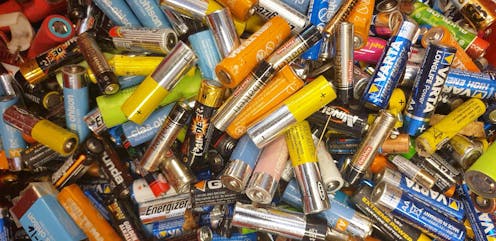
imageMaybe you have a drawer in your house that looks like this?Peter Fiskerstrand/Wikimedia, CC BY-SA

If you’ve looked in your utility drawer lately, you may have noticed the various shapes, sizes and types of batteries that power your electronic devices. First, there are the round, non-rechargeable button cells for your watches and small items....

Read more: Why batteries come in so many sizes and shapes

More Articles ...

  1. A natural deception: 3 marketing myths the supplement industry wants you to swallow
  2. In 1877, a stained-glass window depicted Jesus as Black for the first time − a scholar of visual images unpacks its history and significance
  3. During the 2024 eclipse, biologists like us want to find out how birds will respond to darkness in the middle of the day
  4. Philadelphia’s minimum wage has been stuck at $7.25 an hour since 2009 – here’s why efforts to raise it have failed
  5. Climate engineering carries serious national security risks − countries facing extreme heat may try it anyway, and the world needs to be prepared
  6. For some Christians, a solar eclipse signals the second coming of Christ
  7. Would you sit on a jury to review government regulations? Citizen oversight panels could make this process more open and democratic
  8. What is metabolism? A biochemist explains how different people convert energy differently − and why that matters for your health
  9. Online child safety laws could help or hurt – 2 pediatricians explain what’s likely to work and what isn’t
  10. Why rural white Americans’ resentment is a threat to democracy
  11. Israeli strike on World Central Kitchen aid convoy shows growing danger of humanitarian work in conflict zones
  12. Growing quickly helped the earliest dinosaurs and other ancient reptiles flourish in the aftermath of mass extinction
  13. Nex Benedict’s suicide coincides with a wave of anti-LGBTQ+ laws – and some people’s misunderstanding about transgender and nonbinary individuals
  14. Even hands-free, phones and their apps cause dangerously distracted driving
  15. Could sharing a bedroom with your pets be keeping you from getting a good night’s sleep?
  16. A century after the EEG was discovered, it remains a crucial tool for understanding the brain
  17. Military personnel swear allegiance to the Constitution and serve the American people – not one leader or party
  18. For the Maya, solar eclipses were a sign of heavenly clashes − and their astronomers kept sophisticated records to predict them
  19. Beyoncé’s ‘Blackbiird’ breathes new life into a symbol that has inspired centuries of Black artists, musicians and storytellers
  20. Who are today’s climate activists? Dispelling 3 big myths for Earth Month
  21. March Madness brings unique gambling risks for college students
  22. Hope is not the same as optimism, a psychologist explains − just look at MLK’s example
  23. How Trump’s lawyers would fail my constitutional law class with their Supreme Court brief on criminal immunity
  24. The most important voice on Beyoncé’s new album
  25. America’s green manufacturing boom, from EV batteries to solar panel production, isn’t powered by renewable energy − yet
  26. Affordable stroke-risk screening could save the lives of many children in sub-Saharan Africa with sickle cell disease
  27. China’s universities just grabbed 8 of the top 10 spots in one worldwide science ranking – without changing a thing
  28. China’s universities just grabbed 6 of the top 10 spots in one worldwide science ranking – without changing a thing
  29. ‘Fake news’ legislation risks doing more harm than good amid a record number of elections in 2024
  30. Why aren’t there solar-powered cars?
  31. Undersea cables are the unseen backbone of the global internet
  32. Looking to photograph a solar eclipse with your smartphone? Try these features and think about creative angles
  33. Alabama court’s ruling that embryos are children opens up a host of other legal issues, including parental rights
  34. Is this the least productive congress ever? Yes, but it’s not just because they’re lazy
  35. How going back to the SAT could set back college student diversity
  36. Heart rate zones aren’t a perfect measure of exercise intensity, but regularly getting your heart pumping is still important for fitness
  37. Hospice care for those with dementia falls far short of meeting people’s needs at the end of life
  38. How federal tax dollars meant to fight climate change could end up boosting Louisiana’s fossil fuel production
  39. Mi experiencia en Malasia muestra cómo la religión puede fusionarse con el nacionalismo populista para silenciar la disidencia
  40. Exploding stars are rare but emit torrents of radiation − if one happened close enough to Earth, it could threaten life on the planet
  41. What is Volt Typhoon? A cybersecurity expert explains the Chinese hackers targeting US critical infrastructure
  42. DNA says you’re related to a Viking, a medieval German Jew or a 1700s enslaved African? What a genetic match really means
  43. Many travel nurses opt for temporary assignments because of the autonomy and opportunities − not just the big boost in pay
  44. A new US-run pier off Gaza could help deliver 2 million meals a day – but it comes with security risks
  45. Why Jersey girls − and guys − still don’t pump their own gas
  46. Competitive workplaces don’t work for gender equality
  47. Moscow terror attack showed growing reach of ISIS-K – could the US be next?
  48. Tweaking US trade policy could hold the key to reducing migration from Central America
  49. Failure of Francis Scott Key Bridge provides future engineers a chance to learn how to better protect the public
  50. For over a century, baseball’s scouts have been the backbone of America’s pastime – do they have a future?