

NewsPronto

 
The Times


.

USA Conversation

The Conversation USA

The Conversation USA

Silicone wristbands can help scientists track people’s exposure to pollutants like ‘forever chemicals’

  • Written by Yaw Edu Essandoh, Ph.D. Student in Public and Environmental Affairs, Indiana University
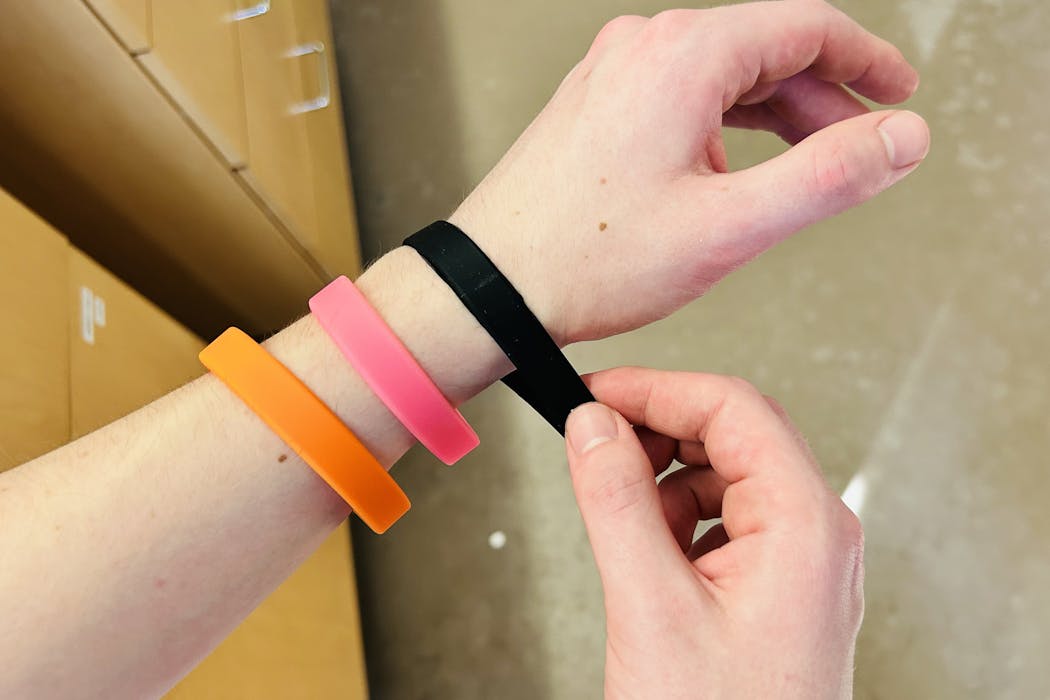
imageWearing silicone wristbands that absorb pollutants could help scientists monitor for chemicals in the air. Venier Lab

Every morning, people fasten their watch, slip on a bracelet and head out the door without thinking much about what they might encounter along the way. The air they breathe, the dust on their hands and the surfaces they touch all...

Read more: Silicone wristbands can help scientists track people’s exposure to pollutants like ‘forever...

More Articles ...

  1. Big beautiful refund? 5 tax code changes that may put more money in your pocket
  2. Arming a Kurdish insurgency would be a risky endeavor – for both the US and Iran’s minority Kurds
  3. War in Middle East brings uncertainty and higher energy costs to already weakening US economy
  4. China’s muted response over war in Iran reflects Beijing’s delicate calculus as a concerned onlooker
  5. How Instagram addictiveness lawsuit could reshape social media – platform design meets product liability
  6. Today’s obsession with authenticity isn’t new – being true to yourself has troubled philosophers for centuries
  7. Venezuela’s fragile environment faces rising risks as US pushes for oil and critical minerals and illegal gold mining spreads
  8. When Washington and the states are in conflict, the ultimate winner is not always certain
  9. Telehealth is widely used by older adults insured by Medicare, new research shows
  10. Public health needs steady budgets – and federal funding uncertainty causes real harms, even if the money is later restored
  11. Family-friendly workplaces are great − but ‘families of 1’ get ignored
  12. Measuring poverty on a spectrum instead of an arbitrary line conveys a more accurate picture of inequality
  13. Trump offered a restrictive deal to universities that almost all rejected – but the Compact for Academic Excellence in Higher Education may not be entirely dead
  14. How does Iran go about selecting a new supreme leader? And who is in the running?
  15. Persian Gulf desalination plants could become military targets in regional war
  16. Researchers are combining drones and AI to make removing land mines faster and safer
  17. Why are some stars always visible while others come and go with the seasons?
  18. How Denver’s Northeast Park Hill community reduced youth violence by 75%
  19. Operational secrecy kept the US from making evacuation plans – and that means Americans in the Mideast could wait days
  20. Billions of dollars, decades of progress spent eliminating devastating diseases may be lost with undoing of USAID
  21. We designed an AI tutor that helps college students reason rather than give them answers
  22. Nearly a third of Pennsylvania gamblers are at risk of problem gambling − but few seek treatment
  23. 2025 was hotter than it should have been – 5 influences and a dirty surprise offer clues to what’s ahead
  24. GLP-1 drugs may fight addiction across every major substance, according to a study of 600,000 people
  25. Hezbollah − degraded, weakened but not yet disarmed − destabilizes Lebanon once again
  26. When unpaid cooking, cleaning and child care get a dollar value, income inequality in the US shrinks – but the gap has grown since 1965
  27. Trauma patients recover faster when medical teams know each other well, new study finds
  28. Housing First helps people find permanent homes in Detroit − but HUD plans to divert funds to short-term solutions
  29. Congress once fought to limit a president’s war powers − more than 50 years later, its successors are less willing to assert their authority
  30. AI and 3D printing help researchers create heat- and pressure-resistant materials for aerospace and defense applications
  31. With Artemis II facing delays, NASA announces big structural changes to the lunar program
  32. I study why zebrafish larva prefer to circle left or right, to understand how and why human brains encode right- and left-handedness
  33. Brazilian jiu-jitsu is having its #MeToo moment
  34. Front lines of humor: Dark humor voices Ukrainians’ hopes for victory
  35. Far from random, China’s global port network is clustering near the world’s riskiest trade routes
  36. CIA agents successfully executed a plan for regime change in Iran in 1953 – but Trump hasn’t revealed any signs of a plan
  37. Public defender shortage is leading to hundreds of criminal cases being dismissed
  38. Welcome to the ‘gray zone’ − home to nefarious international acts that fall short of outright conflict
  39. Stressed out by politics? You’re not imagining it, and research shows that social media is largely to blame
  40. Formerly incarcerated Black men say they’re ‘doing OK’ while trying to cope with depression and PTSD
  41. Are heroes born or made? Role models and training can prepare ordinary people to take heroic action
  42. A Plan B for space? On the risks of concentrating national space power in private hands
  43. The inspiring and tragic story of Mabel Stark, America’s most famous female tiger trainer
  44. Iran’s targeting of airport, ports and hotels in reaction to US strikes has forced Gulf nations onto front lines of a war they want no part in
  45. ‘Destruction is not the same as political success’: US bombing of Iran shows little evidence of endgame strategy
  46. Ayatollah Ali Khamenei’s killing plays into Shiite Islam’s reverence for martyrs, but not for all Iranians
  47. Why are so many statues naked? An art historian explains this tradition’s ancient roots
  48. What decades of research reveal about involuntary substance use treatment – and why evidence points elsewhere
  49. Free 10-minute online programs aimed at overcoming depression led to real improvements – new research
  50. The nation is missing millions of voters due to lack of rights for former felons