

Are heroes born or made? Role models and training can prepare ordinary people to take heroic action
- Written by: Catherine A. Sanderson, Poler Family Professor of Psychology, Amherst College
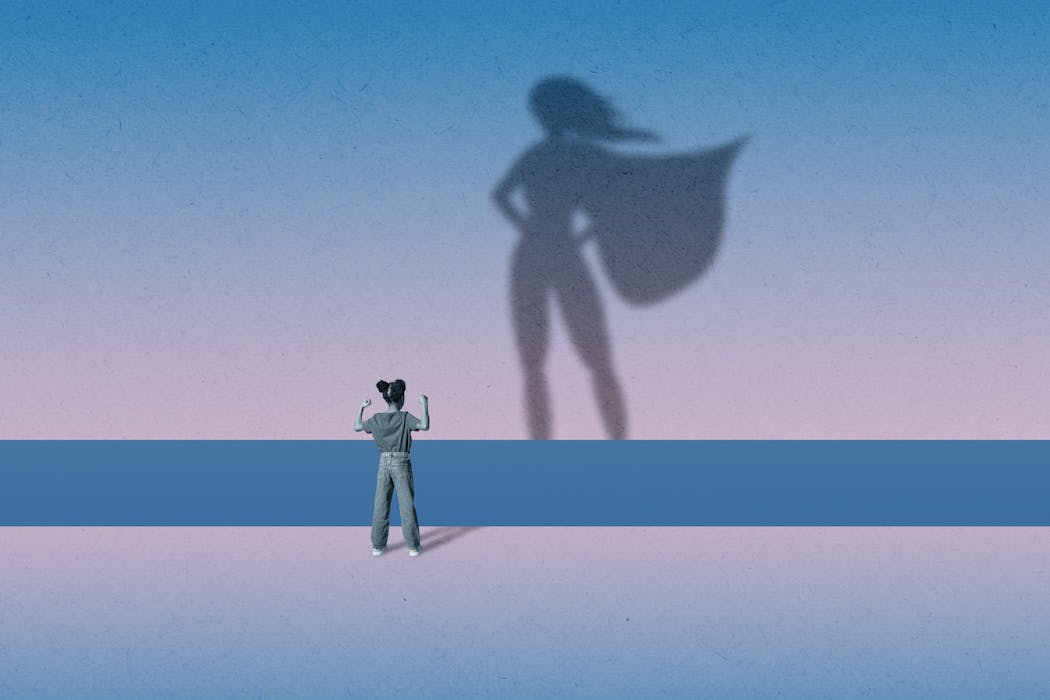 Do you have what it takes to be a hero in the moment?Klaus Vedfelt/DigitalVision via Getty Images
Three young Americans – Anthony Sadler, Alek Skarlatos and Spencer Stone – successfully tackled a gunman on a train in France, saving passengers.
The journalist Viktoriia Roshchyna reported on Ukrainian citizens held unlawfully by Russia; she was captured and died in detention in Russia.
Welles Crowther, often known as the “man in the red bandana,” was a 24-year-old equities trader who guided numerous people in the South Tower on 9/11 to safety before ultimately dying when the tower collapsed.
All of these people are clearly heroes. They engaged in courageous behavior – and risked physical peril – to benefit others or in service of a broader moral cause.
Psychologists like medescribe heroes as people who take some type of intentional action to help other people, even when they may experience a personal cost for doing so. As Stanford psychology professor Phil Zimbardo put it, heroism involves taking a personal risk for the common good.
In some cases, people who take these risks experience potentially negative social consequences such as disapproval, ostracism and career setbacks. I describe people who show moral courage, meaning they are willing to speak up even when they may incur such costs, as moral rebels. Moral rebels are willing to take actions like tell a bully to cut it out, call out a friend who uses a racist slur, or report a colleague who engages in corporate fraud.
But when people think about heroism, they often focus on physical courage, such as jumping into a frozen pond to rescue a drowning child, leaping onto subway tracks to help someone who has fallen, or grabbing a gun from a shooter. What enables someone to engage in this type of physically risky – even life-threatening – behavior?
The characteristics of a hero
People tend to think of heroesas having particular traits: fearlessness, bravery, strength and altruism, along with selflessness, wisdom and resilience. Does the empirical research match up with that common conception?
Researchers in one study compared personality traits among three different groups of non-Jewish adults who lived during the time of the Holocaust: those who had rescued at least one Jewish person, those who had provided no help, and those who left Europe before the start of World War II. Their findings provide clear evidence that heroes stand out in important ways.
People who risked their own lives to help Jewish people scored higher on risk-taking, meaning they felt more comfortable with danger. They also scored higher on independence and perceived control; they felt comfortable making a decision and then taking action. They also rated higher in traits expressing concern about others, including altruism, empathy and social responsibility.
 Governments commend everyday people who act heroically, like Canadian Medal of Bravery recipient Robert Walsh, a teacher who stopped a vicious physical attack.Jim Wilkes/Toronto Star via Getty Images
Although the Holocaust is obviously a unique situation, other research on heroic behavior reveals a similar constellation of traits. For example, one study compared the traits of people who had received the Canadian Medal of Bravery – a national award given to people who have risked their own lives to save another person – to a control group of people who were similar in demographic characteristics. The researchers found that people who engaged in heroism shared particular traits, including greater confidence in their ability to act, a stronger ability to put themselves in someone else’s shoes, and more positive feelings toward other people.
These findings reveal that heroism is at least in part determined by who you are, and that it’s not just a single trait that matters. People who engage in various types of bravery tend to show a particular combination of traits. They feel comfortable taking action even when it involves danger and they feel compassion for other people.
The power of modeling
Although some people may have a greater predisposition to heroism based on their personality, situational factors also play a key role in inspiring heroic behavior.
One study by sociologists examined what motivated members of the majority Hutu population to risk their own lives to help members of the Tutsi population during the 1984 genocide in Rwanda. This analysis of in-depth interviews with people who reported saving at least one person from this violence – often by hiding someone in their own home – identified several key factors predicting their behavior.
First, one of the strongest predictors of whether people helped refugees was having parents or grandparents who had done so during previous episodes of violence in their country. As one man noted, he chose to act because of “what my parents had done in previous years.” People who have seen physical courage modeled by others are more likely to act in heroic ways.
This is strikingly similar to what motivated heroism in Nazi Germany. Historian Mark Klempner’s study of Dutch people who rescued Jewish children revealed that nearly all reported having a parent or relative who had consistently gone out of their way to help other people in different contexts.
Perhaps not surprisingly, religious beliefs also played a role in motivating heroic behavior during the Rwandan genocide. More than half of those in the study who rescued people mentioned the role that their faith played in this decision.
The third factor motivating this type of heroic behavior was social ties. People were far more likely to help friends or neighbors. These personal connections likely fostered greater empathy for people in need, which in turn motivated action, even when doing so created considerable risk.
The role of training
Although people with particular personality traits may have an easier time being brave, as do those whose relatives who modeled such behavior, heroism can also be acquired through training, which is good news for us all. People who take CPR classes, for example, know they have the skills necessary to step up during health emergencies and are therefore more likely to do so.
Two of those three American men who stopped a man with an assault rifle on a train had some type of military training; one served in the Air Force, and another served in the National Guard. Military training is designed precisely to help people become brave – so they can take action, even at great personal risk.
Realizing that heroes can be built through training led psychology researcher Phil Zimbardo to create the Heroic Imagination Project, which focuses on helping people develop the skills needed to step up and act heroically – whether defending what’s right in a work meeting or intervening with a bully at school. For example, children who participate in heroism training become more courageous, suggesting that anyone can learn to be braver.
Most importantly, this approach is based in the belief that heroism does not require a unique set of personality traits; instead, heroism occurs when ordinary people choose to step up in dangerous situations, even when doing so involves considerable risk.
As Matt Langdon, the executive director of the Heroic Imagination Project, notes, “the opposite of a hero is not a villain, but a bystander.”
Catherine A. Sanderson does not work for, consult, own shares in or receive funding from any company or organization that would benefit from this article, and has disclosed no relevant affiliations beyond their academic appointment.
Authors: Catherine A. Sanderson, Poler Family Professor of Psychology, Amherst College
