

School First Aid Supplies: What Every Australian School Needs to Stay Safe and Compliant
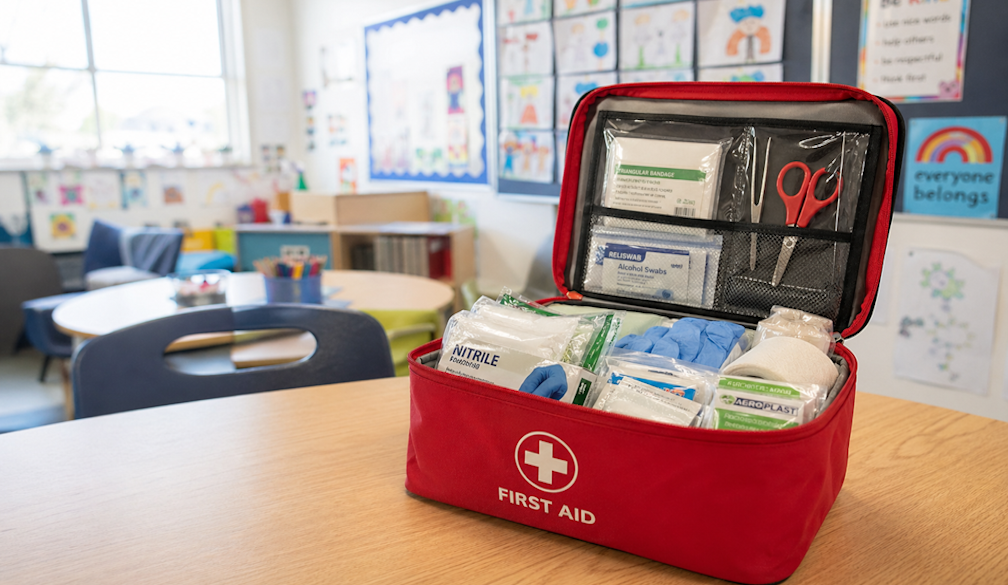
Accidents don't wait for a convenient moment. Whether it's a grazed knee on the oval, an allergic reaction in the canteen, or a more serious injury during sport, schools are one of the busiest environments for workplace incidents in Australia — and the people in them are among the most vulnerable. Having the right school first aid supplies on hand isn't just good practice; in most Australian states and territories, it's a legal requirement under workplace health and safety legislation.
Yet despite the clear mandate, many schools find themselves underprepared — with outdated kits, missing items, or supplies that don't meet current standards. This guide breaks down exactly what schools need, how to organise first aid resources across a campus, and how to keep everything compliant and ready when it matters most.
Why First Aid Preparedness Is Non-Negotiable for Australian Schools
Australian schools operate under a duty of care that extends from the moment students arrive to the moment they leave — and that includes excursions, sporting events, and before/after-school activities. Under Safe Work Australia guidelines, all workplaces must provide first aid equipment appropriate to the nature of the work and the number of people present. For schools, this means thinking beyond a single box of bandages in the front office.
Consider the numbers: a primary school of 500 students, 40 staff members, and dozens of contractors and visitors on any given day represents a significant population requiring coverage. Add in the physical nature of school life — running, climbing, sport, science experiments, woodwork — and the risk profile becomes clear. First aid preparedness isn't about expecting the worst; it's about being ready to respond effectively when it happens.
Beyond compliance, a well-stocked and organised first aid system also reduces recovery time from minor injuries, gives staff confidence to act quickly, and reassures parents that their children are in a safe environment. That peace of mind has real value — and it starts with having the right equipment in the right places.
What Should Be Included in School First Aid Kits?
Not all first aid kits are created equal. A kit designed for a small office isn't going to cut it in a school environment where you might be dealing with everything from insect stings and splinters to head injuries and anaphylaxis. Australian Standard AS 2675 provides a baseline for first aid kit contents, but school-specific needs often go further.
At a minimum, comprehensive school first aid kits should include:
- Adhesive dressings and wound closure strips in a range of sizes
- Sterile gauze swabs and non-adherent wound dressings
- Conforming and crepe bandages
- Eye wash solution and eye pads
- Disposable gloves (multiple pairs)
- Thermal/emergency blanket
- CPR face shield or resuscitation mask
- Scissors and forceps/tweezers
- Cold packs (instant or reusable)
- Triangular bandages and safety pins
- First aid guide or instruction card
Schools with high-risk activities — swimming, manual arts, science labs, or competitive sport may also need specialised additions like burn gel, finger splints, or SAM splints. Reviewing your school first aid kits to ensure they're fit-for-purpose for your school's specific activities is an important step that many administrators overlook until after an incident occurs.
How Many Kits Does a School Actually Need?
One kit in the sick bay simply isn't enough for most schools. The guiding principle from Safe Work Australia is that first aid must be "readily accessible" meaning someone shouldn't have to walk across a large campus or wait several minutes to retrieve supplies during an emergency.
A useful way to think about kit placement is by zone. A large secondary school might logically divide coverage into: the main administration building (with a comprehensive kit), the gymnasium and sports fields (a portable sports kit), science and technology blocks (with specific chemical and burn response supplies), and remote areas like the oval or performing arts centre (smaller satellite kits or bum bags for supervising staff).
For primary schools, particularly those with young students who are more prone to minor injuries, it's worth equipping classroom teachers with small portable kits for outdoor learning and excursions. These don't need to be exhaustive — a compact kit with dressings, gloves, and basic supplies is often sufficient for a teacher supervising an outdoor session, with a more complete kit available on return to base.
The key is to map your school's layout, high-traffic areas, and highest-risk activities — then build a kit distribution plan around that reality, not around what happens to be convenient or cost-effective in the short term.
First Aid Supplies and Trained First Aiders: Two Sides of the Same Coin
Equipment alone doesn't save lives — it's the combination of the right supplies and a trained person who knows how to use them. Australian WHS legislation requires employers (which includes school principals as the responsible person) to ensure an adequate number of trained first aiders relative to the number of people on site.
Minimum Training Requirements for Schools
Most state education departments recommend that schools have at least one trained first aider available at all times during school hours, though the ideal ratio is significantly higher. In practice, training a core group of staff — including teachers, office staff, and physical education coordinators — to hold current HLTAID011 (Provide First Aid) certificates is considered best practice.
It's also worth noting that first aid training and supply management go hand in hand. Staff who are trained are more likely to check kits regularly, identify missing or expired items, and flag when a kit needs restocking. Building a culture of first aid awareness across the staff team — rather than leaving it to one designated person — strengthens a school's overall readiness. Sourcing quality school first aid supplies that staff are familiar with also reduces hesitation at critical moments.
Managing Expiry Dates and Kit Maintenance in Schools
One of the most common compliance failures in school first aid is not the absence of kits — it's the presence of kits with expired or depleted contents. An eye wash solution past its use-by date, or a dressing packet that was opened and never replaced, can render a kit effectively useless when it's needed most.
Schools should implement a formal maintenance schedule with the following components:
- Monthly visual inspections: A designated staff member checks each kit for completeness, condition, and visible expiry dates.
- Post-incident restocking: Any items used in treating an injury are replaced within 24–48 hours.
- Annual full review: All kits are fully audited at the start of each school year, with contents cross-checked against a master list and all approaching-expiry items replaced.
- Inspection log: A signed and dated record is kept for each kit — both for compliance and to identify patterns (e.g., which kits get used most frequently).
Some schools find it easier to work with a supplier that offers pre-packaged refill kits or a scheduled restocking service, which removes the administrative burden of sourcing individual items and ensures consistency across multiple kits.
Anaphylaxis, Asthma, and Other Specific Medical Needs in Schools
Beyond standard first aid, Australian schools face a growing responsibility around students with specific medical needs. Anaphylaxis and asthma are two of the most common — and potentially life-threatening — conditions that schools must be prepared to manage.
Many state education systems now mandate that schools have individual health management plans for students with known anaphylaxis or asthma. This includes ensuring that prescribed medications (such as adrenaline auto-injectors and reliever inhalers) are stored accessibly and that staff know how to use them. Crucially, these are in addition to — not instead of — a well-stocked general first aid kit.
Schools should also consider maintaining a spare, undesignated adrenaline auto-injector for use in the event of an undiagnosed or previously unknown anaphylactic reaction. This is now required in some jurisdictions and is considered best practice across the board.
Defibrillators (AEDs) are another piece of equipment increasingly found in Australian schools. While not a requirement for all schools, they are strongly recommended for secondary schools with large student populations and for any school that hosts community events or sporting competitions. If your school has an AED, ensure it's registered with your state ambulance service and that staff are trained in its use.
Choosing the Right First Aid Supplies for Your School
Not all first aid products are equal in quality, and the school environment demands reliability. When selecting supplies, look for items that meet Australian Standards where applicable, are clearly labelled, and come from reputable suppliers with a track record in the education or healthcare sector.
Think about practical factors specific to your school context:
- Durability: Kits stored in outdoor or high-use areas need weather-resistant cases.
- Portability: Kits for sports carnivals or excursions should be lightweight and easy to carry.
- Visibility: Bright colours and clear labelling mean staff can locate and access supplies quickly under stress.
- Contents specificity: A kit designed specifically for schools will include items relevant to the age group, not just generic workplace supplies.
Buying in bulk from a single, reliable supplier also simplifies restocking, ensures consistency across your campus, and can reduce overall costs. It's worth comparing purpose-built options with generic alternatives — the difference in quality and appropriateness for a school environment is often substantial.
Final Thoughts: Building a First Aid Culture That Lasts
Getting school first aid supplies right isn't a one-off task — it's an ongoing commitment to the wellbeing of everyone in your school community. From selecting the right kits and placing them strategically across your campus, to training staff, managing expiry dates, and preparing for specific medical emergencies, there are many moving parts. But the foundations aren't complicated.
Start with an honest audit of where your school currently stands. Are your kits compliant? Are they accessible? Are they stocked with the right items for your school's specific context? From there, build a maintenance routine and make first aid awareness part of your broader school safety culture — not just something that gets attention after an incident.
The good news is that with quality supplies and a bit of organisation, most Australian schools can achieve genuine first aid readiness without it becoming a major administrative burden. The investment — in time, training, and equipment — pays dividends in confidence, compliance, and the knowledge that when something goes wrong, your school is ready to respond.