
NewsPronto

 
The Times


.

USA Conversation

The Conversation USA

The Conversation USA

How the US can mine its own critical minerals − without digging new holes

  • Written by Yuanzhi Tang, Professor of Biogeochemistry, Georgia Institute of Technology
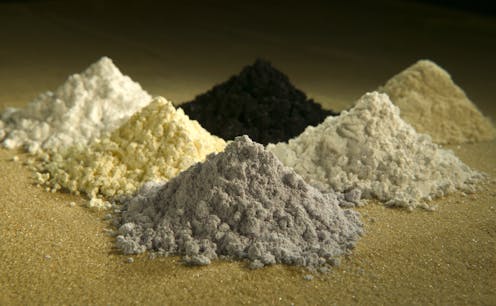
imagePiles of rare earth oxides praseodymium, cerium, lanthanum, neodymium, samarium and gadolinium.Peggy Greb/USDA-ARS

Every time you use your phone, open your computer or listen to your favorite music on AirPods, you are relying on critical minerals.

These materials are the tiny building blocks powering modern life. From lithium, cobalt, nickel and...

Read more: How the US can mine its own critical minerals − without digging new holes

More Articles ...

  1. Can learning cursive help kids read better? Some policymakers think it’s worth a try
  2. Religious charter schools threaten to shift more money away from traditional public schools – and the Supreme Court is considering this idea
  3. Even judges appointed by Trump are ruling against him
  4. Trump targets NPR and PBS as public and nonprofit media account for a growing share of local news coverage
  5. Peace Corps isn’t just about helping others − it’s a key part of US public diplomacy
  6. Being honest about using AI at work makes people trust you less, research finds
  7. Predictive policing AI is on the rise − making it accountable to the public could curb its harmful effects
  8. Ancient Mars may have had a carbon cycle − a new study suggests the red planet may have once been warmer, wetter and more favorable for life
  9. Running with a stroller: 2 biomechanics researchers on how it affects your form − and risk of injury
  10. Pope Francis encouraged Christian-Muslim dialogue and helped break down stereotypes
  11. Worsening allergies aren’t your imagination − windy days create the perfect pollen storm
  12. National security advisers manage decision-making as advocates or honest brokers
  13. A pope of the Americas: What Francis meant to 2 continents
  14. In Yemen, Trump risks falling into an ‘airpower trap’ that has drawn past US presidents into costly wars
  15. Teachers and librarians are among those least likely to die by suicide − public health researchers offer insights on what this means for other professions
  16. Hurricane forecasts are more accurate than ever – NOAA funding cuts could change that, with a busy storm season coming
  17. How was the Earth built?
  18. Philly’s forgotten history as a hub of anarchism with a thriving radical Yiddish press
  19. Kilmar Abrego Garcia’s wrongful deportation case is more about individual rights than the Trump administration’s foreign policy
  20. What is the biggest gaffe, blooper or blunder that a recent president has made? It may depend on what your definition of ‘is’ is
  21. The Women’s Health Initiative has shaped women’s health for over 30 years, but its future is uncertain
  22. Trump and many GOP lawmakers want to end all funding for NPR and PBS − unraveling a US public media system that took a century to build
  23. How millions of people can watch the same video at the same time – a computer scientist explains the technology behind streaming
  24. A Michigan research professor explains how NIH funding works − and what it means to suddenly lose a grant
  25. A law seeks to protect children from sex offenders − 20 years later, the jury is still out
  26. When presidents try to make peace: What Trump could learn from Teddy Roosevelt, Carter, Clinton and his own first term
  27. Children in military families face unique psychological challenges, and the barriers to getting help add to the strain
  28. Despite Supreme Court setback, children’s lawsuits against climate change continue
  29. Whether GDP swings up or down, there are limits to what it says about the economy and your place in it
  30. Some ‘Star Wars’ stories have already become reality
  31. Fleeting fireflies illuminate Colorado summer nights − and researchers are watching
  32. What makes people flourish? A new survey of more than 200,000 people across 22 countries looks for global patterns and local differences
  33. Deporting international students risks making the US a less attractive destination, putting its economic engine at risk
  34. As heated tobacco products reenter the US market, evidence on their safety remains sparse – new study
  35. What causes RFK Jr.’s strained and shaky voice? A neurologist explains this little-known disorder
  36. Is a faith-based charter school a threat to religious freedom, or a necessity to uphold it? The weighty decision lies with the Supreme Court
  37. Guns in America: A liberal gun-owning sociologist offers 5 observations to understand America’s culture of firearms
  38. Terrorists weigh risks to their reputation when deciding which crises to exploit − new research
  39. The woman who turned the Met Gala into the biggest party of the year
  40. Pandas and politics − from World War II to the Cold War, zoos have always been ideological
  41. The legal limits of Trump’s crackdown on sanctuary cities like Philadelphia
  42. Trump seeks to reshape how schools discipline students
  43. In the $250B influencer industry, being a hater can be the only way to rein in bad behavior
  44. From the Chinese Exclusion Act to pro-Palestinian activists: The evolution of politically motivated deportations
  45. AI is giving a boost to efforts to monitor health via radar
  46. Forensics tool ‘reanimates’ the ‘brains’ of AIs that fail in order to understand what went wrong
  47. What is a downburst? These winds can be as destructive as tornadoes − we recreate them to test building designs
  48. How rising wages for construction workers are shifting the foundations of the housing market
  49. Bees, fish and plants show how climate change’s accelerating pace is disrupting nature in 2 key ways
  50. How a reading group helped young German students defy the Nazis and find their faith