

NewsPronto

 
The Times


.

USA Conversation

The Conversation USA

The Conversation USA

Birutė Galdikas: The last of ‘Leakey’s Angels’ in primatology’s most extraordinary chapter

  • Written by Mireya Mayor, Director of Exploration and Science Communication, Florida International University
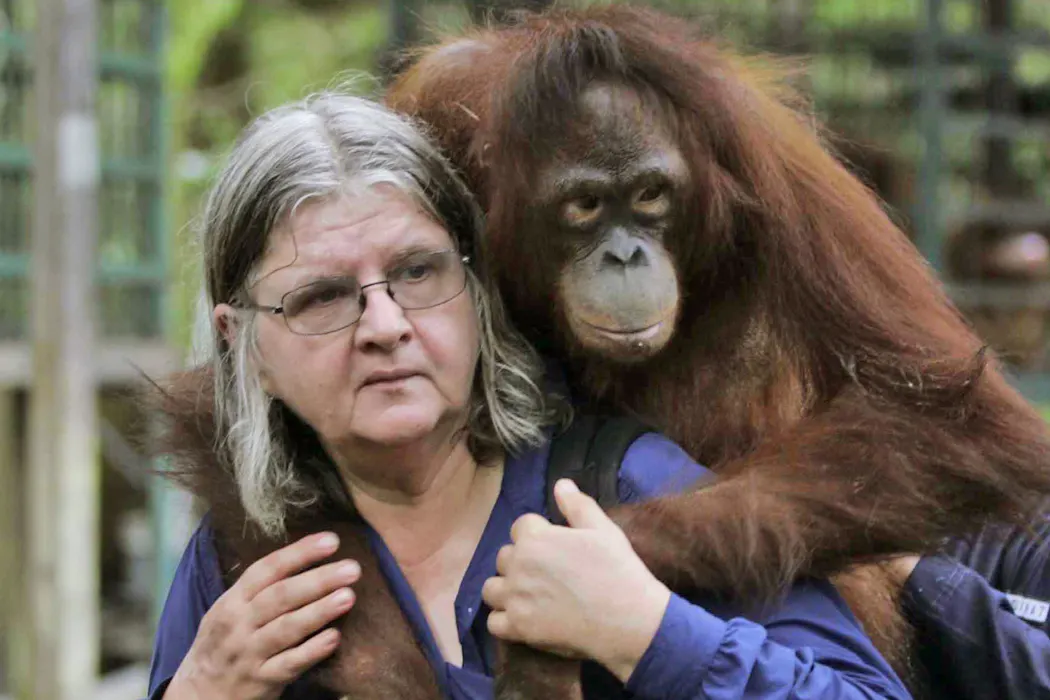
imageBirute Galdikas carries an orangutan named Isabel in Borneo, Indonesia. The 2011 film 'Born To Be Wild 3D' followed her work.AP Photo/Irwin Fedriansyah

Primatologist Birutė Galdikas died on March 24, 2026, and an era of science that began in the forests of Tanzania, Rwanda and Borneo studying humanity’s closest living relatives more than...

Read more: Birutė Galdikas: The last of ‘Leakey’s Angels’ in primatology’s most extraordinary chapter

More Articles ...

  1. War in the Middle East made the case for renewables – what’s happening in each country tells a harder story
  2. Cameras have quietly appeared in thousands of US cities – now, their integration with AI is sounding alarms
  3. Two verdicts in two days: How American courts are rewriting the rules for Big Tech and children
  4. I went to CPAC and found Trump supporters unhappy about Iran, Epstein files and the economy, even while the fans at the MAGA conference celebrate his immigration policies
  5. Mosquitoes carrying malaria are evolving more quickly than insecticides can kill them – researchers pinpoint how
  6. Millions are protesting – but boycotts might be key to changing government policies
  7. The long shadow of Paul Ehrlich’s ‘Population Bomb’ is evident in anti-immigration efforts today
  8. Why do basketball players miss shots they’ve made a thousand times before? Neuroscience has an answer
  9. NASA’s Artemis II mission will take an astronaut crew around the Moon – a space policy expert describes the long road to launch
  10. Vagus nerve stimulation shows promise as a way to counter Alzheimer’s disease- and age-related memory loss
  11. College students are writing with AI – but a pilot study finds they’re not simply letting it write for them
  12. Scientists may be overestimating the amount of microplastics in the environment – and the culprit is lab gloves
  13. Supreme Court’s tariff decision still leaves a ‘mess’ for companies trying to grab refunds
  14. Soaring gas prices and disrupted supply chains will ripple out to increase costs in every store and sector of the economy
  15. 2026’s historic snow drought brings worries about water, wildfires and the future in the West
  16. What the historic snow drought means for water, wildfires and the future of the West
  17. On Passover, some Sephardic Jews revisit not only the story of their ancestors, but also their Ladino language
  18. Teens are driving the demand for online abortion pills via telehealth – new research
  19. New federal student loan limits affect social work graduate students, with impacts for survivors of domestic violence in Colorado and elsewhere
  20. Food aid doesn’t make people loafers – research shows government benefits help low-income people find jobs
  21. A connection to nature fuels well-being worldwide, according to a study of 38,000 people
  22. Anthrax-causing bacteria have dwelled in soil for centuries – cycling through people, animals and earth
  23. Pittsburgh’s post-steel economy is a success – and a warning for other cities
  24. If using ChatGPT is cheating, what about ghostwriting? The old debate behind a new panic
  25. How far can Iran’s ballistic missiles reach? A defense expert explains how the missiles work, and what Iran can and can’t hit
  26. Growing up during Sri Lanka’s civil war taught me that getting along with people across divides is a virtue we can learn
  27. What an ancient devotional text means for the women of Nepal
  28. Drones paired with AI could help search-and-rescue teams find missing persons faster
  29. 60 years of fiber optics: How a carrier of light you can’t see underlies much of the modern world
  30. ‘Vas Madness’ shows the power of messaging on men’s contraceptive decisions
  31. Irrational decision or helpful evolutionary adaptation? A philosopher on the rationality wars behind ‘nudge’ policy
  32. How the National Security Council typically functions to plan and fully assess risks when presidents consider going to war
  33. Is it ‘Ih-ran’ or ‘E-ron’? Inside the politics of pronunciation
  34. Workplace relief is coming for employees with symptoms of menstruation, perimenopause and menopause in Philly
  35. The world’s great fish migrations are collapsing – that’s a problem for millions of people
  36. Psychological toll of betrayal trauma may help explain why women kept silent for decades after alleged abuse by civil rights icon Cesar Chavez
  37. Over 400 million barrels will be added to the oil market soon – what are strategic reserves and what can they do?
  38. Can you survive inside a tornado? This scientist did by accident – he’s lucky to be alive
  39. For the nearly 1 in 4 US adults with chronic pain, employers’ expectations of a healthy body can lead to shame
  40. Immigrant kids can attend school regardless of citizenship – some states are challenging this standard
  41. Trump’s ‘Venezuela solution’ to Cuba would see the island nation returned to a client state
  42. The ever-evolving Latino vote is rapidly shifting away from Trump and Republicans
  43. Why many older adults skip hard candy – how aging can change chewing and swallowing
  44. How dolphins communicate – new discoveries from a long-term study in Sarasota, Florida
  45. What Betsy Ross’ real story tells us about women’s work in the Revolution − and why it still matters 250 years later
  46. 50 years ago, Karen Quinlan’s coma sparked the movement for patients’ rights near the end of life
  47. A web of sensors: How the US spots missiles and drones from Iran
  48. In the Easter story, women are the first to proclaim the resurrection – but churches today are still divided over female preachers
  49. Overconfidence is how wars are lost − lessons from Vietnam, Afghanistan and Ukraine for the war in Iran were ignored
  50. How AI English and human English differ – and how to decide when to use artificial language