Why doesn’t travel insurance cover war?
You might think it was exactly the kind of scenario you’d buy travel insurance for in the first place. A major, unforeseen international event causes travel chaos.
Flights are grounded around the world, leaving you and thousands of other travellers stranded with their travel plans in disarray. The knock-on effects lead to cancelled hotels, hire cars, work events, tour bookings and more.
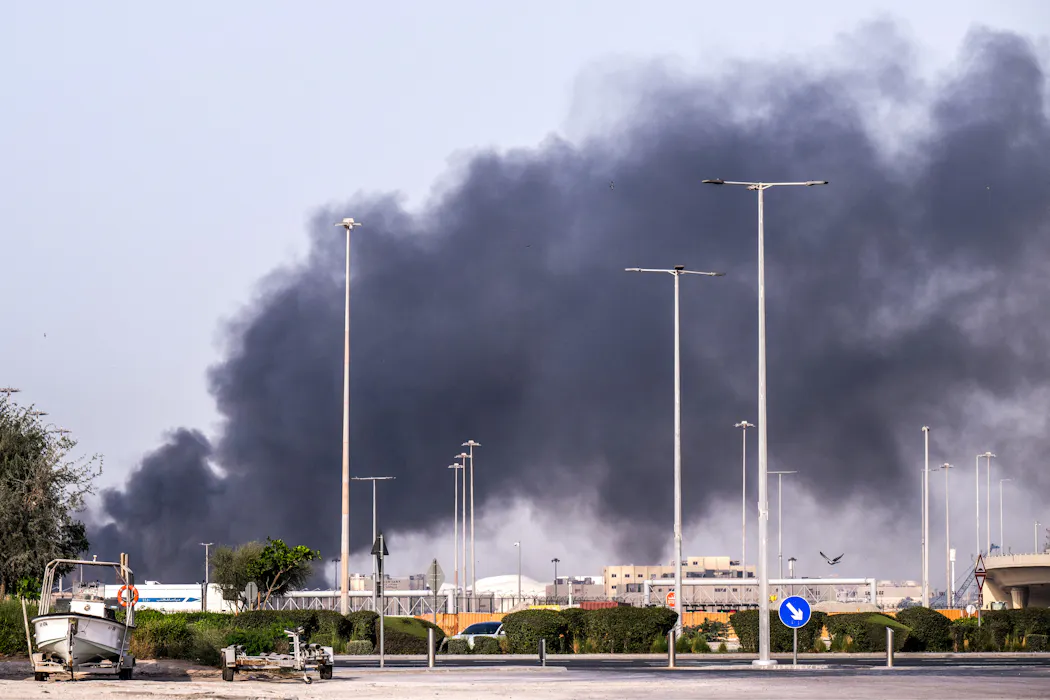
That’s where the world found itself this week, as major conflict between the United States, Israel and Iran broke out in the Middle East.
But some people were caught off-guard, as they discovered cover for any impacts of war was explicitly written out of their insurance policies.
One might argue everyone needs to read the fine print. But it’s also been a long time since Australian travellers have had to grapple with a large-scale conflict affecting an entire region.
For the thousands of Australians currently stranded in or unable to travel through the Middle East, it’s almost impossible to predict how long this conflict and disruption will last.
So, are these exclusions fair? And for impacted travellers – are there any other options for support?
Read more: Booked to travel through the Middle East? Here’s why you shouldn’t cancel your flight
The costs of the unknown
Insurance is there to cover you against the unknown. It works by transferring risks and spreading losses.
Instead of an individual having to bear the devastating cost of something going wrong alone, they pay money (premiums) into a pool, along with many other people who face similar risks.
Insurance companies are happy to take on this risk, because they’ve carefully estimated how many people will actually make a claim, and how much they’ll need to pay them, versus those who’ll pay for cover but will statistically probably never need it.
In short, people take out insurance because they bet they’ll need it. Insurers sell it, because they bet enough people won’t.
What’s in the fine print
Despite this, almost all insurance policies have explicit exclusions: things written into the contract that the policy won’t cover.
It is very common for insurance contracts to exclude claims caused by war.
But with the travel plans of thousands thrown into disarray this week, many now possibly forced to foot the bill, there’s a broader question of fairness.

What makes a fair contract?
The Australian Securities and Investments Commission (ASIC) Act defines contract terms as “unfair” if they:
- cause a significant imbalance in the rights and obligations of the parties under the contract
- are not reasonably necessary to protect the legitimate interests of the party who gets an advantage from the term, and
- would cause financial or other harm to the other party if enforced.
For example, a contract may be unfair if one party can avoid or limit their responsibility, but the other cannot.
A further consideration is whether the conduct of a company could be unconscionable. This is defined as exploiting a consumer’s “special disadvantage” for financial gain.
Are these exclusion clauses fair?
Do travel insurance cover exclusions due to “war” fit the definition of an unfair contract term?
One could argue your insurance company can certainly avoid or limit its liability to pay out your claim, while you cannot.
There are also complex questions around how you actually define terms such as “war” and whether the current conflict in the Middle East qualifies as one.
Until 2021, insurance contracts for consumers were carved out of a key consumer protection under the ASIC Act – the “unfair contract terms” law.
Now, however, these contracts are covered under the ASIC Act. This means a court or tribunal could rule a particular contract term in an insurance contract is “unfair”, voiding it in the contract.
However, those impacted by the current travel chaos may be clutching at straws if they are hoping for any relief via this avenue.
Most policies are bought under “standard form contracts”, meaning they are prepared by one party (the insurer) and not subject to negotiation by the other (the customer). Exclusions for war and conflict are well established and highly standard across the industry.
It’s worth noting that if the chaos is prolonged and has severe impacts, we could see class actions emerge on this issue.
Think carefully before cancelling your flight
If your travel plans have been impacted by the conflict in the Middle East and you’re worried your insurance won’t cover you, there are still some steps you can take.
First, if you are booked to travel through the region, do not cancel your flight without consulting your airline.
Many airlines are already implementing their own refund and rebooking schemes, and cancelling independently could limit or void your access to compensation under Australian Consumer Law.
Other steps you can take
If you have questions about what is or isn’t covered in a particular policy, contact your insurer.
Consider seeking independent legal advice if you have concerns. Community legal services can often provide general advice for free.
To lodge a formal complaint about any financial product, contact the Australian Financial Complaints Authority (AFCA) on 1800 931 678 or via their website. AFCA will make a decision to uphold or reject a consumer’s claim.
Alternatively, you can contact the relevant small claims tribunal in your state or territory.
The Australian government’s Smartraveller website provides up-to-date travel advice for Australians.
Authors: The Conversation
Read more https://theconversation.com/why-doesnt-travel-insurance-cover-war-277363