

NewsPronto

 
The Times


.

USA Conversation

The Conversation USA

The Conversation USA

Quantum sensors use atoms, electrons and light as ultra-steady rulers – detecting faint motion, magnetism and gravity for navigation, medicine and science

  • Written by Alex Krasnok, Assistant Professor of Electrical & Computer Engineering, Florida International University
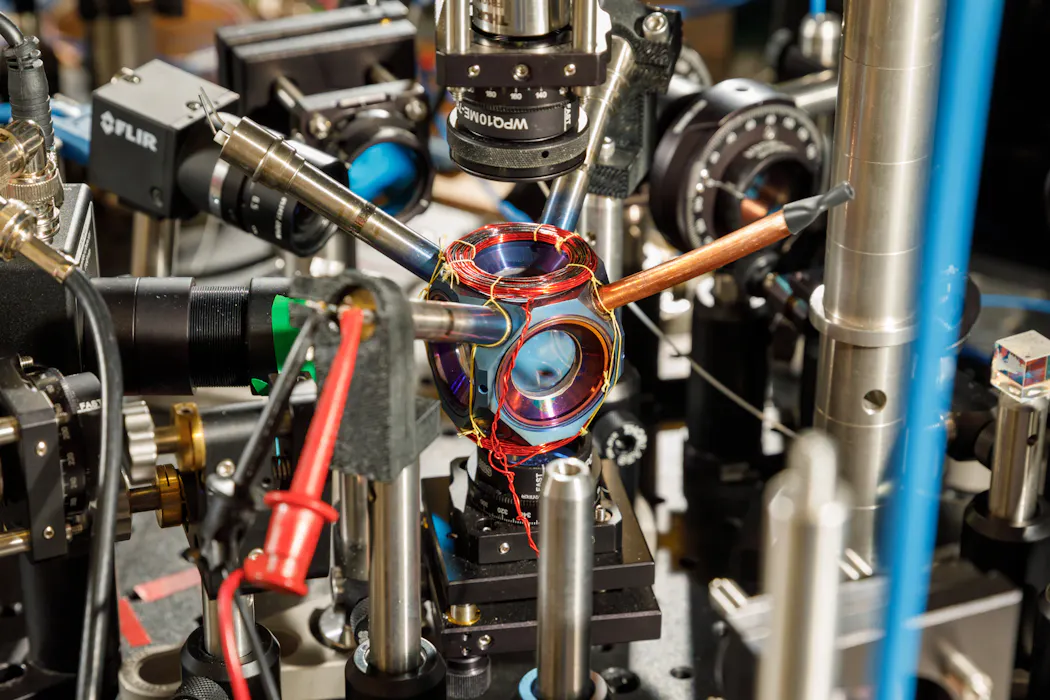
imageThis device measures acceleration and rotation by shining lasers into small clouds of rubidium atoms.Sandia National Laboratories

Quantum computers get a lot of attention, even though they are not ready for prime time, but quantum sensors are already doing useful work. These sensors measure fields, forces and motion so small that ordinary...

Read more: Quantum sensors use atoms, electrons and light as ultra-steady rulers – detecting faint motion,...

More Articles ...

  1. Solar activity follows an 11-year cycle – here’s how it controls eruptions and solar flares
  2. For the first time in a decade, the next election could be less secure than the one preceding it
  3. How you map numbers in your mind isn’t universal, even among people who read the same language
  4. Philadelphia will celebrate Ona Judge Day to honor Martha Washington’s enslaved maid who made a daring escape to freedom
  5. Special courts helps veterans stay out of jail - but staffing losses at VA and cuts to government programs are threatening their work
  6. What Jefferson and Madison would have thought about ‘rededicating’ the US to God
  7. 5 reasons Stephen Colbert is one of the most important satirists in American history
  8. San Diego mosque shooting reflects how online rhetoric, media depictions and political discourse contribute to increased Islamophobia
  9. New SNAP rules requiring that benefits be used at stores selling healthier food could backfire
  10. Formula 1 racing shows the hard part of reaching net-zero carbon emissions isn’t the engineering
  11. How a shifting Nile landscape shaped the rise of the ancient empire of Kush in Sudan
  12. Texas Tech’s new limits on how faculty teach gender identity and sexual orientation challenge more than free speech
  13. AI interviewers can’t connect with people the way human researchers can – they can produce only data, not meaning
  14. Self-censorship, more stress, tougher recruiting – we asked US researchers how the Trump administration’s science policies have affected them
  15. Ebola strain spreading in Congo and Uganda has no approved vaccine
  16. Battleground state with few combatants – why Pennsylvania’s primaries lack competition
  17. Hurricane forecasts have improved dramatically, saving lives, but federal cuts threaten to stretch NOAA to the breaking point
  18. Hurricane forecasts have improved dramatically, saving lives, but federal cuts threaten to stretch NOAA resources to breaking point
  19. Antonia Bembo fled Venice to escape her abusive husband – over three centuries later, her opera finally takes the stage
  20. Dark patterns on the web are designed to manipulate you – why aren’t they all illegal?
  21. What are those orange balls on some power lines?
  22. Flavored vapes led to a major shake-up at the FDA – 3 health policy analysts explain the science behind the controversial products
  23. Uncovering coded antisemitism online takes both human expertise and AI automation
  24. A newly rediscovered moth species in Florida may already be at risk
  25. Companies are hyping AI the same way they talked up sustainability, but there are ways to fix that
  26. Trump’s Cabinet dramatically changed American foreign policy while the president made noise – a scholar of presidential rhetoric explains
  27. Why the Iran war is breaking the US-European strategic alliance
  28. From beef ribs to a ‘heavenly’ walk: Xi-Trump summit symbolism underscored American power and Chinese tradition
  29. Supreme Court preserves access to mifepristone via telehealth – at least for now
  30. Trump-Xi summit: Cautious progress on trade, ties and some ‘win-wins’
  31. You can persuade AI models to accept falsehoods as truth, study shows
  32. Is baby talk bad? Why ‘parentese’ actually helps babies learn language
  33. A fungal disease, along with climate change, threatens Colorado’s prized peaches
  34. AI-generated fantasies of US intervention reveal how desperation has narrowed Cuba’s political horizons
  35. Would a $1 rideshare fee affect wealthier or working-class Philadelphians more? 2 Chicago studies offer some perspective
  36. From medieval plague ships to hantavirus: How outbreaks at sea helped to shape the international public health system
  37. More than just a critical blow to Keir Starmer and Labour, local votes signal a dis-United Kingdom
  38. America’s musical founding father: ‘Liberty songs’ by a self-taught singer and tanner helped fuel the Revolution
  39. Who shops at farmers markets in the US?
  40. A ‘super El Niño?’ Why it’s too early to forecast one with certainty, but not too soon to prepare
  41. How much is a bat worth? Protecting these tiny insect-eaters isn’t just good for farms – their deaths cost taxpayers and the wider economy
  42. Why a growing number of Trump supporters are experiencing voter’s remorse
  43. Astrophysicists use ‘space archaeology’ to trace the history of a spiral galaxy
  44. Will future missions to the Moon be sustainable? It may depend on whom you ask
  45. TikTok’s popular microdramas shrink TV into bite-sized chunks
  46. Is AI really ‘writing’? From a priestess to philosophers, ancient authors would have said ‘no’
  47. How Trump plans to keep tariffs at the center of his economic policy despite stinging court losses
  48. John Adams and Thomas Jefferson disagreed about the American Revolution’s meaning even as they lay dying
  49. Baloch insurgency: Suicide bombs and uptick in violence threaten Pakistan, regional security
  50. Most people don’t know what they don’t know, but think they do – correcting your metaknowledge can make you a better teacher and learner